








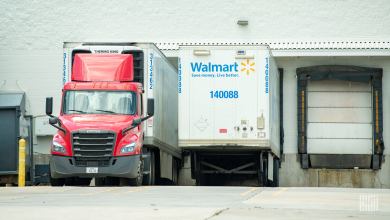
Increasing truckload length of haul suggests shippers have overordered
Long-haul freight typically shrinks around the holiday season as fulfillment becomes a priority. The exact opposite is occurring this season, which may be indicative of shipper overcorrection.
El aumento de la longitud de los camiones sugiere que los cargadores han hecho un exceso de pedidos
Los cargadores siguen acumulando inventarios mientras el
consumo disminuye

Refrigerated remains most challenged truckload mode heading into the holidays
The refrigerated truckload sector’s capacity recovery has stalled this fall while van has continued to stabilize. Here is the reason.

Truckload spot market eerily calm prior to traditional peak season
The trucking spot market is showing signs of softening in a somewhat unexpected time. Should shippers breathe a sigh of relief or is this the calm before the storm?

FreightWaves releases FreightWaves’ TRAC Spot Rates and Market Dashboard
FreightWaves adds spot rate data and a new market analytics application inside its SONAR platform.

FreightWaves anuncia las tarifas spot de TRAC y el Market Dashboard de FreightWaves
FreightWaves anuncia las tarifas spot TRAC en el nuevo
Market Dashboard de SONAR

Surging fuel costs are masking trucking spot rate decline
The cost of diesel fuel, a main component in the cost of trucking, is climbing rapidly. This is a hidden factor that is helping keep spot rates elevated.

Trucking contract rates finally gain traction in October
Contract rates for trucking have been rising since late last year and finally appear to be effecting compliance, but at what cost?

Las tasas de contratación de camiones finalmente ganan tracción en octubre
Las tasas de rechazo de licitaciones caen al punto más bajo
desde julio de 2020

Domestic intermodal to the rescue?
Domestic intermodal container volume growth over the past two months may not signal a definitive end to the rail yard blues, but it is a positive sign for supply chain managers.

Freight flow imbalance is the real capacity issue
While shortages are being blamed for the bulk of the capacity shortages in transportation, the balance of the movement of goods has become incredibly lopsided.
El desequilibrio del flujo de mercancías es el verdadero problema de capacidad
Las tarifas al contado que se mueven hacia Los Ángeles han
disminuido en el último año, mientras que los carriles de
salida aumentan más del 20%.

How did we get here? Why supply chains are so wrecked
Transportation rate growth has gone parabolic as shipping demand continues to strain networks. What are the fundamental reasons for this and how long will these conditions persist?

High costs will limit capacity growth in trucking
Used truck prices continued to hit new highs each of the last six months according to ACT Research. Prices will eventually become too much of a burden for small fleets and owner-operators to bear, if they haven’t already.
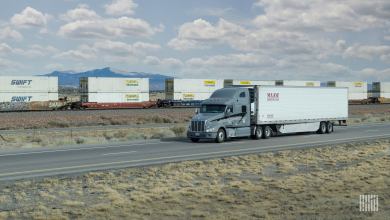
Trucking picks up rail’s slack, but not in the way you think
Congestion around the ports and drayage capacity issues are pushing shippers to use trucks more frequently while loaded container volumes dip. But shipping patterns are changing in more ways than just mode conversion.

Carriers head west for a modern-day gold rush — of freight
Carriers are rejecting a disproportionate amount of long-haul freight heading east versus west. Does this dramatic imbalance have long-term implications?

Are increasing lead times improving carrier compliance?
Increasing the time between the request and requested pickup date is supposed to increase your odds of securing capacity. The aggregate data shows the opposite, but there is more than meets the eye.

FreightWaves improves its carbon intelligence data
FreightWaves SONAR data platform adds GLEC compliance to its carbon calculations.

Maritime booking surge suggests capacity could get tighter this fall
Shippers are requesting as much capacity as ever from maritime shippers in August after slowing their pace through most of the summer. What should we take away from this?

Brokerage revenue soars for carriers amid extended capacity crunch
June proved to be possibly the best month ever for Truckload Carriers Association members. Brokerage revenue growing alongside driver revenues helps paint a picture of success, but what is success for a carrier?

Why is carrier compliance increasing along with spot rates?
Rapidly changing shipping patterns and cost structures have made historical comparisons much more challenging for the freight market.

Short haul freight drives carrier compliance higher
There are numerous reasons carrier compliance rates have been increasing over the past few months. An increase in short-haul freight may be making it easier for carriers to cover more freight.

Refrigerated truckload market is having a polarizing summer
Reefer capacity appears to be easing in the contracted space, but spot rates appear to be as touchy as ever.

Is intermodal going off the rails?
Intermodal volumes are down while tender rejections are up. The rails may be missing a huge growth opportunity, but is there anything they can do about it?

Fuel costs push rates higher faster in 2021
The truckload spot market appears to have hit another peak, but quickly rising fuel costs make this appear much larger than it is.

Southern truckload capacity vanishes before the 4th
Two of the nation’s largest centers for outbound freight demand saw record low levels of carrier acceptance rates this past week. This comes as the worst of the COVID capacity crunch appeared to be in the rearview mirror.
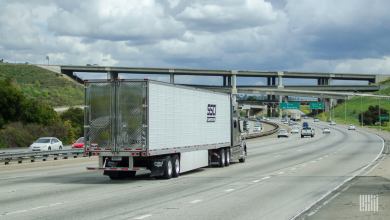
West vs. East coasts: The battle for trucking capacity escalates
Capacity is retightening in California as demand surges once again. There are new patterns emerging that may lead to a battle for capacity between the two coasts.

FreightWaves improves opportunity visibility with latest SCI release
FreightWaves improves its Supply Chain Intelligence product with two new visibility tools.

Panama spread hits all-time high as shippers flee to east coast
Shippers are desperately trying to find a way to get their freight into the U.S. The peak impacts to surface transportation may be in the future.

FreightWaves SONAR releases Capacity Trend Indices
FreightWaves adds a new way to measure capacity changes in the domestic freight market to its SONAR platform.

Rate increases drive trucking compliance higher in May
Shippers may have had a little more success with contracted carriers in May, but it came at a high cost.

Port of Oakland becomes next overflow valve for shippers
Shippers continue to struggle to find a reliable way to get freight into the U.S., which is causing major changes to surface transportation patterns.

SONAR expands its reefer data
FreightWaves adds exclusive new data set to an already extensive amount of reefer data.
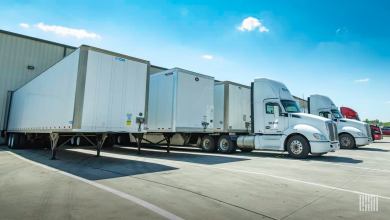
Will rising warehouse and inventory costs feed trucking demand?
In 2019 shippers crammed warehouses full of inventory coinciding with a stagnant freight market. As warehousing capacity tightens, could this contribute to the already tight transportation space?

Transportation sector boom has become self-limiting
The industrial sector is trying to recover faster than transportation can react. There are numerous factors limiting the economic recovery, illustrating that it is harder to turn production back on than off.

Have carriers learned not to overextend their fleet expansion efforts?
Many carriers expanded their fleets after the 2018 freight boom and were rewarded with an extremely challenging oversupplied market in 2019. The current pattern looks eerily similar to early 2018, but are they comparable?

Empty-container rush signals worst yet to come for shipping community
Containers have been in short supply, exacerbated by gross trade imbalances between the U.S. and China. The surging flow of empties moving back to the West Coast implies the ships won’t be slowing anytime soon.

Freight boom is not without downsides for carriers
One of the results of the 2017-18 freight market boom was an increase in the cost of operating that held over into a slower 2019 when capacity became abundant. Costs are on the rise once again as carriers struggle to find drivers to capture market share.

This could be the hottest summer ever — for freight
Imports have fueled the domestic freight economy over the past year. That growth continues out of the traditional peak season with shippers booking maritime capacity in April. Could this translate to a record summer for trucking?

Trucking gets another shot in the arm from quarantined consumers
The relationship between personal consumption and trucking demand has strengthened even further as companies struggle to maintain inventory. This suggests a very active spring and summer for transportation providers.

Transportation costs keep rising as service deteriorates
Transportation rates continue to climb while service is at an all-time low. Shippers will have to be aggressive in devising new strategies to keep costs under control.

What will redistribution of imports mean for surface transportation?
Import volumes are growing rapidly into secondary ports as shippers scramble to build inventory. What are some of the short- and long-term implications to domestic transportation providers?
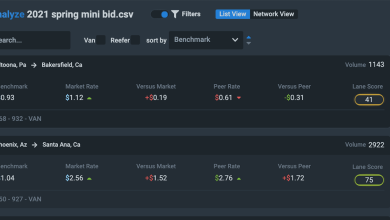
FreightWaves launches SONAR SCI (Supply Chain Intelligence) Lane Acuity
Advancements in tender data science and paid market data now power SONAR SCI (Supply Chain Intelligence) Lane Acuity. SONAR Lane Acuity provides lane-level insight into market stability and rate benchmarking. What is it? Lane Acuity allows users to compare their contract rates to their peers as well as market through cohort benchmarking. That promotes a […]
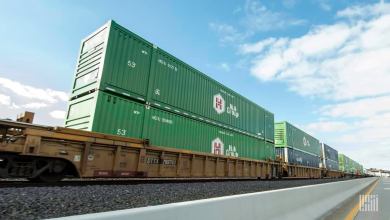
Will intermodal’s cost advantage be enough to grow beyond 2021?
Intermodal shipping is dominated by the largest shippers in the U.S. and operates on a more static network, which gains higher cost efficiency than trucking over longer-mileage runs.
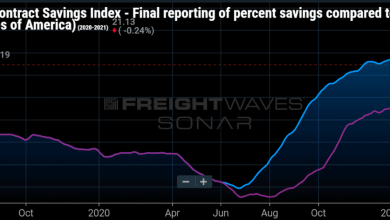
FreightWaves SONAR adds Intermodal Savings Versus Truckload (IMCS) tickers
The intermodal contract saving indices (IMCSI) show the percent savings of shipping via intermodal versus dry van truckload contract rates. To ensure comparability across modes, the calculation only compares truckload and intermodal rates in identical origin-destination pairs. The IMCSI tickers are an aggregation of individual lanes. On “This week in SONAR,” Craig Fuller, FreightWaves CEO, […]

Produce season comes early?
Reefer capacity has tightened to all-time levels, pushing spot rates for produce moves to seasonal peaks ahead of schedule.

FreightWaves adds aggregated predictive scientific rate tickers to SONAR
Though already present at a lane level in the Lane Signal application inside of the SONAR platform, FreightWaves has aggregated a national predictive rate value for van (FWS.USA) and reefer (FWSR.USA) modes and made them accessible to view historically and up to a year into the future. The national rates are averages of the over […]

Spot market rates set to resume slow downward trend after wild winter
The underlying fundamentals of the market are showing signs of moving slowly back toward a more stable scenario and spot rates may be unable to paint the full picture.

Winter storms blow freight market back into disarray
The latest round of winter weather hit transportation hard. How does this compare to other events?

Shippers take to the sky as ocean congestion grows
The import boom appears far from over, and it will have implications long after this wave of unprecedented orders subsides.

Trucking contract rates up 12% year-over-year
Companies are paying significantly more for transportation than they were a year ago with many contracts yet to be implemented.

Flatbed is making a comeback
Although many questions remain for trucking in 2021, flatbed appears to be poised for a much stronger year.

Is West Coast freight here to stay?
Freight volumes have exploded out of southern California over the past two years. Is this pattern sustainable?
Consumer spending drove freight growth in 2020
Consumer spending on goods drove the majority of the freight boom in 2020. Will this trend last in 2021?

When will the next wave of trucking capacity hit the market?
Class 8 truck orders are surging signaling carriers are once again willing to invest in their fleets. Does this mean another overcorrection of capacity is in store?

2020 closes with plenty (of freight) left in the tank
Imports continue to pile up as shippers and carriers take time for the holidays. They may come back to a mess.
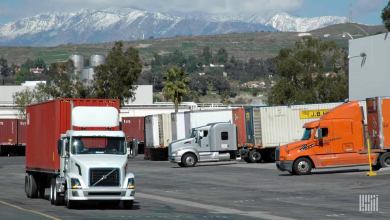
Christmas vacation will exacerbate supply chain bottlenecks
Transportation providers may spend January unclogging supply chains as warehouse capacity has become a precious commodity thanks to the continued influx of imports.

Spot market carries momentum from Thanksgiving into December
Spot rates continued to increase after the holiday period ended even as capacity returned to the market according to the Outbound Tender Reject Index.

Produce spot rates break $10K per load in November
Cold chain distribution shifts following the pandemic along with a much smaller supply of available base capacity has made the reefer carrier a much more valuable commodity this year.

Carrier profits surge thanks to pandemic freight boom
Capacity is historically tight in trucking, pushing spot rates and profit margins higher. How much of this momentum will carriers be able to maintain?

Reefer capacity tapped out prior to vaccine release
Temperature-controlled equipment rates are already breaking records, could the vaccine distribution push them higher?

West Coast imports slowing; trucking and rail volumes remain strong
Trucking and rail volumes remain elevated while the imports fade. Is this is beginning of the end of the 2020 freight boom?

Divided we ship
The election results show just how divided the nation is politically and COVID cases are back on the rise. Shipping activity appears to be insulated from any negative effects at the moment, but for how long?

Fuel price volatility could return amid peak season surge
Record trucking volumes along with shrinking refinery production could make fuel prices an overlooked threat to carrier margins and shipping costs into 2021.

How capital investments are reshaping supply chains
Anthony and Zach bring on Jon Bradford of Dynamo, a venture capital firm specializing in early stage investments, to discuss what effect 2020 has had on investment trends and sentiment in the supply chain.

Will the import boom lead trucking to an active ‘off’ season?
Import volumes continue to fuel the surface transportation boom. Will it last into 2021?

How do presidential elections impact the economy and transportation?
Anthony and Zach discuss the increasing concerns over the driver shortage and how presidential elections influence the economy.

Reefer outpacing van growth in second half of 2020
Reefer carrier revenues are expanding rapidly as capacity tightens faster for the temperature-controlled segment of trucking.
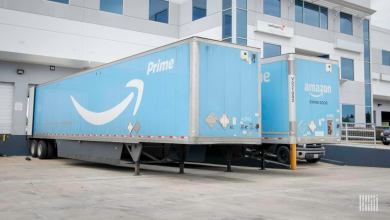
Carriers purchasing trailers over tractors during booming freight market
Carriers are investing in new trailers over tractors during the most recent freight boom. What does this mean for capacity in the future?

Long-haul freight boom leads to pre-peak capacity crunch
Freight volumes are not the only thing putting pressure on capacity.

How long will the import boom last?
Anthony and Zach bring on Maritime expert Henry Byers to discuss the near- and long-term impacts to the domestic freight market resulting from the record-breaking influx of shipments from Asia.

Will we see double-digit rate increases in transportation in 2021?
Trucking spot rates are averaging well over what they were a year ago implying many shippers will see rates increase next year. How much will it be?

Are spot rates peaking before the peak?
Transportation costs are hitting record levels as companies struggle to grab capacity amidst an unusually early peak season.

Could driver recruitment issues keep trucking rates elevated?
Anthony and Zach talk about driver retention and recruitment issues and how they will contribute to keeping the spot market for trucking active through the rest of 2020.

Intermodal rates go off the rails
Shippers are willing to pay more to put freight on the rail just to get it moving out of Los Angeles.

Imports will continue to drive strong trucking volumes through September
International import bookings signal continued strength in the domestic freight market.

Driver exits could extend capacity crunch
As trucking capacity tightens and spot rates rise, driver turnover increases. Are some of them leaving the industry for good?

Getting to the root of the problem!
Zach and Anthony cover the latest in the freight economy. Special guest and Senior Economist Dustin Jalbert joins to discuss the lumber market.

Tight trucking market may hamstring Laura recovery effort
Hurricane Laura hit at a time when trucking capacity is unusually tight, a fact that may hinder the recovery efforts.

In the trenches
Anthony and Zach discuss the potential impact of Hurricane Laura to the freight market and bring on special guest Chris Bryant, a flatbed owner-operator, for insight on what is happening on the road.

Ocean volumes lead domestic freight charge
Freight is getting crammed into the U.S. West Coast as fast as carriers can pick it up. How long will it last?

How long will the bull run?
Joined by special guest Zac Rogers, Anthony and Zach discuss the current freight market’s propensity to overachieve over the past few months and explore reasons why that will persist or crumble.

Will capacity return to trucking?
The last time capacity tightened to this level, capacity flooded the trucking space. Will the same outcome occur in 2020?
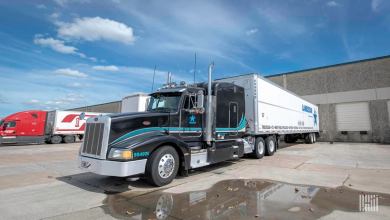
Wait times plummet as capacity tightens
Wait times have fallen as as shippers compete for capacity. What is the connection between capacity and detention?

Freight volumes could go higher in August
Volumes have recovered faster than many expected leading to many transportation companies posting earnings beats in Q2. There are no signs of slowing into August.
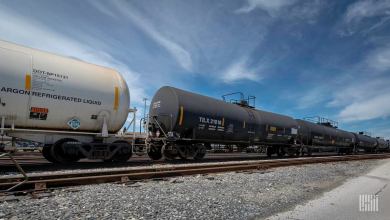
Watch out trucking, industrial sector has a pulse
Chart of the Week: Total Rail Carloads, Chemical Rail Carloads, Motor Vehicle Rail Carloads – USA SONAR: RTOTC.USA, RTOCH.USA, RTOMV.USA The latest rail carload data is showing that the industrial side of the economy, which is the backbone for a large amount of freight movement in the U.S., has finally started to recover after hovering on the […]

The takeaway from the nation’s largest carrier beating the street
Anthony and Zach discuss the Knight-Swift earnings and what they mean for the freight economy. Anthony gives an economic update and Zach talks about the continued unexpected strength of freight volumes in the U.S.
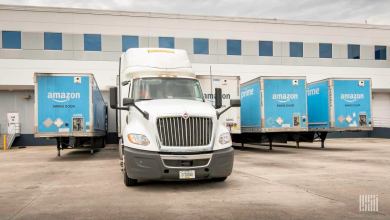
Supply chain shuffle keeps capacity tight
Companies are cramming warehouses full of freight as they change their supply chains to better suit the post COVID-19 world. Trucking capacity tightens as a result.

No Vacancy
Anthony and Zach talk about the impact of Roadcheck week on the freight market and bring on Zac Rogers to discuss the latest Logistics Manager’s Index results showing increasing transportation prices along with declining warehouse capacity, a pattern eerily similar to 2018.

Shipping volatility causes major disruption to carrier networks
The erratic nature of the economic recovery has dramatically changed shipping behavior, which has strained carrier networks.

How will resurging COVID-19 cases affect supply chains?
Anthony and Zach talk to Chris Wolfe, CEO of PowerFleet, about how COVID-19 has impacted supply chains and what the resurgence in cases may do to inhibit their recovery.

The freight-rollercoaster continues for trucking
Capacity is almost as tight as it was during the panic buying inspired March. Could it get tighter?

How sustainable are current trucking volumes?
Anthony and Zach discuss the booming freight market and reasons why it will or will not sustain into July as well as the implications for the new insurance bill and YRC bailout.

Southern California has become the hub for the domestic freight market
Southern California has become the hot spot for freight in the post COVID-19 freight market. Could it be the region to tell us what’s next?

Planes, trains, ships and trucks: What each mode is telling us about the economic recovery
Anthony and Zach talk to rail and intermodal expert Mike Baudendistel about some interesting signals from that sector as well as connecting the dots between modes.

Cass Truckload Linehaul Index implies 2020 may get tougher for many carriers
A decline in contract rates that were implemented prior to the COVID-19 outbreak may make this year tighter for carriers.

Who is driving freight rates in 2020?
Anthony and Zach discuss the dynamic between the spot and contract market as rates continue their wild ride in 2020. Do carriers, brokers or shippers control the spot market?

2018 was worse than 2020 for trucking
A lot of the recent struggles for carriers originated in what many consider to be the most profitable year.

What goes down, must come up… Wait, no.
Anthony and Zach discuss the hours of service exemption, consumer prices, and other recent macroeconomic releases. Dr. Zac Rogers makes an appearance to review the latest LMI findings and the direction of the logistics industry.

Good signs for trucking from produce?
Produce season has arrived, pushing rates higher than 2019 in many areas. Will this impact the rest of the country’s capacity?