









Los Angeles Port Police help bust $12.5M meth lab, $2M Nike theft ring
Authorities seized 1,378 pounds of methamphetamine, including crystal and highly condensed liquid, during a July 28 operation. Port Police also highlighted cocaine, cargo-theft and firearms cases involving its task force officers.

$4M worth of cocaine found in Texas commercial truck
The sheriff’s office linked the tractor-trailer to an ongoing criminal investigation and valued the drugs at about $4 million.

Louisiana bribery scheme gave 124 people CDLs without training or tests
Applicants paid about $5,000 each as a restaurant owner, training operator and test examiner helped bypass federal licensing requirements.

Florida Lottery: USPS worker accused of stealing winning ticket faces 6 charges
Florida Lottery Special Agents and USPS OIG investigators arrested Lekaysha Lockhart on July 23. Authorities say she redeemed the missing ticket at the Miami District Office.
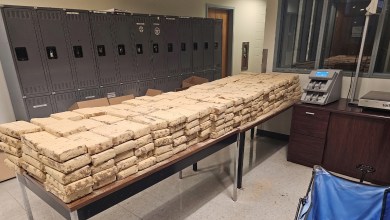
$20M in cocaine found beneath floorboards of commercial truck trailer at California border
Customs and Border Protection officers found 366 cocaine packages after an X-ray scan showed trailer-floor anomalies and a drug dog alerted investigators. The driver faces a federal importation charge carrying a possible life sentence.

Erie truck driver faces 22 charges after police say he fled 9-vehicle crash carrying Bud Light
An Erie commercial driver faces 22 charges after police claim his semi-truck struck nine vehicles at West 12th and Myrtle streets. Court records show bail was denied, and a preliminary hearing is scheduled for Aug. 7.
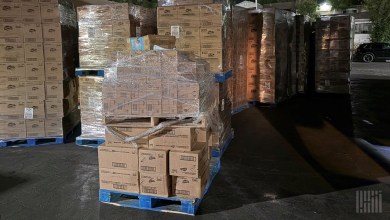
CHP finds $500K in stolen cargo tied to multiple Southern California thefts
A California Highway Patrol cargo-theft investigation led detectives to a Rialto retail business connected to multiple thefts. The July 28 warrant resulted in the recovery and return of more than $500,000 in stolen merchandise.

$1M recovery in Carolinas truck-theft case includes 13 semis, 3 trailers
Authorities recovered 18 vehicles worth more than $1 million while investigating nine reported thefts valued at $876,500.

Texas police recover $272K in precious metal cargo; 2 face possible life sentences
Officers recovered 32,000 pounds of precious metal after stopping two suspects as they left the property. Police credited license plate reader technology with helping the investigation.

New Senate bill targets ‘chameleon carriers’ that reopen to escape penalties and enforcement
Senators Todd Young and Andy Kim introduced legislation targeting operators that return under new names, ownership structures, or USDOT numbers.

7 smuggled migrants die in sealed rail container, 11 face life sentences
Prosecutors charged 11 people after seven migrants, including a 14-year-old, died inside a rail cargo container traveling through Texas. Each defendant faces up to life in prison if convicted.

$1.5M theft ring exploited shipment tracking, insider access
A New York man’s guilty plea sheds new light on an investigation that uncovered an organization prosecutors accuse of exploiting shipment visibility and insider information to steal electronic devices.
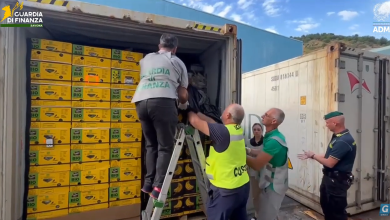
Banana shipment from Ecuador to Europe concealed $290 million in cocaine
Officials said traffickers hid nearly 1,700 pounds of cocaine among banana pallets inside a legitimate produce shipment moving through the international supply chain.

$139M drug bust exposes broker-style cross-border trucking operation
Project Bay uncovered 973 kilograms of suspected cocaine, 660 kilograms of suspected methamphetamine and 17 firearms. Authorities charged 21 people with 104 offenses.

Staged truck crashes could bring 20 years in federal prison under new bill
A Senate proposal would create federal penalties for people who stage commercial vehicle crashes or help organize them.

UPS labels allegedly diverted $2 million in Nike shoes, indictment says
Federal prosecutors say 12 people participated in a $2 million cargo theft conspiracy targeting Nike’s Memphis logistics center. The indictment describes how unauthorized UPS labels allegedly redirected thousands of shoe cartons across the country.

Truck tractors hauled 132 pounds of cocaine to Florida, sheriff says
One working tractor towed two disabled units while cocaine allegedly traveled inside a sleeper compartment. The investigation led to nine arrests and a $2.1 million seizure.
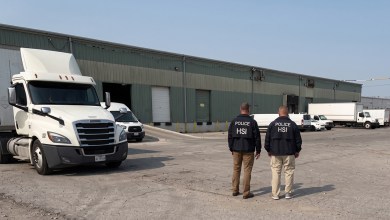
DHS, DOT partner to investigate 75 CDL training schools suspected of fraud
The Department of Homeland Security announced a partnership with the Department of Transportation after FMCSA identified approximately 75 CDL schools suspected of fraudulent activities.

FBI says billion-dollar criminal network included cargo theft
Federal prosecutors extradited Abdullah Anwar from Qatar to face conspiracy charges, but the FBI’s reference to cargo theft rings raised new questions. Public court records reviewed by FreightWaves describe an alleged network that moved stolen Apple and Samsung electronics, Yeti products and other consumer goods through an international export operation.

Indiana State Police recover 12 stolen truckloads worth more than $11 million
Indiana State Police says Commercial Vehicle Enforcement Division troopers recovered about 12 stolen trailer loads worth more than $11 million since April. The agency says several investigations remain active and continue to generate additional leads.
Update: This story has been updated with additional information provided by Indiana State Police following publication.
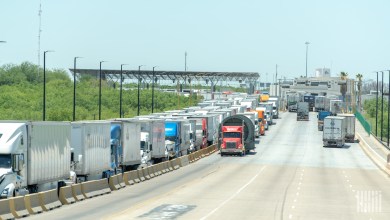
CBP officers seize over $3.7 million in suspected cocaine at Hidalgo Port of Entry
CBP officers seized 126.5 kilograms of suspected cocaine during a commercial vehicle inspection at the Hidalgo Port of Entry. Homeland Security Investigations has opened a criminal investigation following the June 24 seizure.
Eight charged in alleged $10 million international cargo theft conspiracy
Court documents outline an investigation involving stolen freight, alleged carrier impersonation and shipments ranging from consumer goods to high-value merchandise.

Former Austin Freight Systems controller pleads guilty in $3.2M embezzlement scheme
A former Austin Freight Systems controller pleaded guilty to federal charges after prosecutors accused him of embezzling more than $3.2 million from the freight brokerage. The FBI investigated the case, and company officials say they have strengthened financial processes while continuing normal operations.

Former Army contractor convicted in $1.1 million Fort Bliss MRE theft
A federal jury convicted a former Army civilian contractor of stealing more than 200 pallets of Meals-Ready-to-Eat from Fort Bliss. Prosecutors said the operation relied on false paperwork, rental trucks and an El Paso warehouse to move and sell approximately $1.12 million in government property.

CORCA heads to Senate amid cargo theft debate
The bipartisan CORCA bill passed the House with overwhelming support, but a growing debate over cargo theft data has followed it to the Senate. Critics question whether documented losses justify a larger federal response, while supporters argue the current reporting system misses much of the problem.
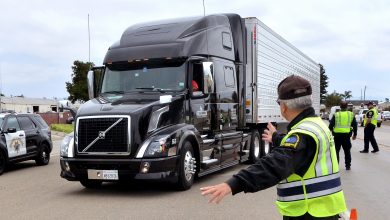
Truck driver accused of using fake documents to steal $2.9M cargo
Indiana police arrested a California truck driver after recovering nearly $2.9 million worth of tungsten oxide powder that authorities say was stolen in Pennsylvania. Police allege the driver used fraudulent documents to obtain the shipment, which was headed to Japan.

Montana man sentenced in $182K equipment theft
A Montana man received a 41-month federal prison sentence after admitting he transported more than $181,000 in stolen construction equipment from Montana to Idaho.

Can OEM axle weight data and satellite imagery help identify cargo theft?
Class 8 analyzed more than 3.2 million truck unload events across 68,340 commercial vehicles using a three-stage detection pipeline that combines vehicle weight telemetry, satellite imagery and behavioral analysis. The study classified nearly 42,600 unload events as High or Critical risk and, according to CEO Chris Atkinson, has been validated against a statistically significant number of confirmed cargo theft investigations

CHP recovers $2.2 million in stolen cargo from Anaheim warehouse
California Highway Patrol investigators recovered more than $2.2 million in allegedly stolen cargo after executing a search warrant at an Anaheim warehouse. Authorities say the investigation remains ongoing, and additional details have not yet been released.

$1.3M in stolen copper wire and data center equipment recovered near Chicago
Two stolen trailers carrying more than $1.3 million in cargo were recovered at a suburban Chicago truck yard, according to the Cook County Sheriff’s Office. The trailers, reported stolen in Alabama and Florida, contained approximately $300,000 in copper wire and $1 million in infrastructure equipment for data centers. Investigators are working to identify the driver who delivered the trailers and anyone else who may have been involved in the thefts.

Freight forwarding manager sentenced for violating U.S. export controls
A former regional manager for Delex Air Cargo LLC has been sentenced to 18 months in federal prison after pleading guilty to conspiracy to violate the Export Control Reform Act. According to the U.S. Attorney’s Office, the scheme involved shipping controlled industrial oil and gas equipment to Russia through intermediary countries while concealing the shipments with false export documents.
$500K bourbon shipment stolen in alleged carrier impersonation scheme
A shipment of approximately 10,800 bottles of Noble Oak Bourbon valued at $500,000 was allegedly stolen after suspects posed as authorized representatives to pick up the freight. The incident highlights a growing cargo theft tactic in which criminals use legitimate shipment information and impersonation to obtain freight without using force.

Transfix integrates Highway carrier vetting into TMS
Transfix has integrated Highway’s carrier vetting technology into its transportation management system, allowing freight brokers and third-party logistics providers to verify carrier identity, insurance and operating authority without leaving the platform. The integration reflects a broader industry shift toward embedding fraud prevention directly into transportation management software.

Trucker Path integrates Verisk CargoNet theft intelligence into navigation platform
As cargo theft continues to climb across the United States, Trucker Path has integrated Verisk CargoNet cargo theft intelligence into its navigation platform. The new feature provides drivers with county-level theft risk ratings, theft trends and commodity data while planning routes, as CargoNet reports more than 1,120 cargo theft incidents and $121 million in estimated losses during the first five months of 2026.

Federal case reveals how a cargo theft ring operated in plain sight
A Philadelphia man has been sentenced to nearly eight years in prison after federal investigators dismantled a cargo theft ring responsible for more than $1.5 million in stolen freight. Court filings reveal how the crew targeted sleeping drivers, coordinated thefts through group chats and moved stolen cargo across the region, offering the transportation industry a rare look inside how organized cargo theft operations work.

World Cup theft shows how even small security failures can become big problems
The theft of England’s World Cup equipment is being treated as a sports story. It should also be treated as a logistics story. While the losses were relatively small and the property was recovered, the incident serves as a reminder that even minor security failures can expose larger vulnerabilities within a supply chain.

Cargo thieves are following the AI boom
The AI boom is changing more than technology. It is reshaping supply chains, increasing demand for critical components and creating a new class of high-value cargo targets. The question is not whether criminals are paying attention. It is how quickly the transportation industry can adapt.
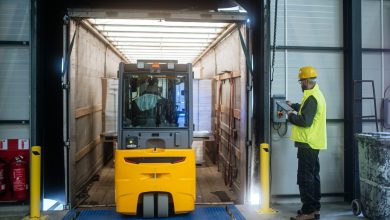
The price of trust: How a cargo theft changed one shipper
After criminals allegedly hijacked a Walmart-bound shipment, Global Protection discovered that legitimate carriers, drivers and paperwork are not always enough. The company explains how the incident changed its approach to verification and why slowing down became part of its security strategy.

How hackers allegedly stole $1.7 million worth of condoms
The cargo was unusual. The alleged theft method was not. According to public reporting, criminals compromised a legitimate carrier’s identity and used it to divert a Walmart-bound shipment worth $1.7 million, a tactic the FBI says is becoming increasingly common.

July 4 holiday period exposes supply chain vulnerabilities
The July 4 holiday doesn’t create supply chain vulnerabilities. It exposes them. As freight sits unattended and operations slow down, security experts warn that organized theft groups are watching closely.
Can freight balance speed and security?
For decades, transportation operated on trust, speed, and relationships. On this episode of Fraud Watch, Malcolm Harris explains why that model is changing as freight fraud becomes more organized, verification becomes more critical, and companies are forced to rethink how freight moves through their operations.

Arizona investigators say organized cargo theft crews continue targeting rail corridor after $500K train burglary arrest
Investigators say organized cargo theft crews continue targeting Arizona rail corridors, with train burglaries occurring up to a dozen times each month across Northern Arizona.
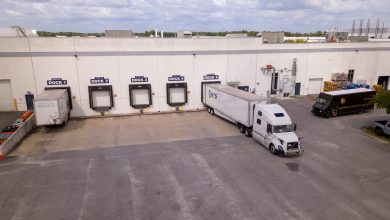
Eight indicted in alleged carrier impersonation scheme; prosecutors allege $4.49 million in cargo losses
Prosecutors say a group accused of impersonating legitimate trucking carriers diverted millions of dollars in freight before the cargo was allegedly moved, stored and resold. The indictment details six separate theft incidents spanning multiple states.

NMFTA launches anonymous threat reporting portal for freight fraud and cybercrime
As freight fraud, cargo theft and cyber-enabled crime continue to evolve, the National Motor Freight Traffic Association has launched a new Threat Report Portal designed to help transportation companies anonymously share incidents and identify emerging risks. NMFTA says the platform will provide a centralized location for reporting fraud, cyber threats and suspicious activity while helping the industry build a clearer picture of evolving criminal tactics.

Why cargo theft affects every American
From cartel-linked theft investigations to testimony before Congress, Lemm’s message was clear: cargo theft is no longer just a transportation problem.

Why the safest freight brokerages are usually the most boring
Cargo theft and freight fraud are forcing brokerages to rethink how freight moves through trusted systems. As organized theft groups evolve, repeatable verification processes and operational discipline are becoming more important than speed alone.
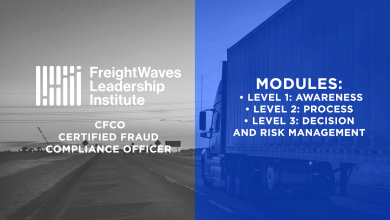
Why the freight industry needs Certified Fraud Compliance Officers
Banks learned years ago that fraud prevention requires more than instinct or technology alone. They built compliance roles, documented procedures, and repeatable verification processes designed to reduce risk and stand up in court. FreightWaves believes the transportation industry is now entering that same shift.

Florida theft ring accused of moving $7 million in stolen goods across multiple states
Authorities in Florida arrested 14 suspects tied to what investigators describe as a highly organized theft network responsible for millions in stolen merchandise. Detectives say the group operated across multiple states while using logistics, resale operations, and coordinated theft methods that resembled a structured criminal enterprise more than isolated retail theft.

Cargo theft is changing, and the risk is now inside the truck
Cargo theft is not slowing down. It is adapting. What used to happen outside the operation is now happening inside it.

The DOJ may finally understand what modern cargo theft really looks like
DOJ targets organized cargo theft and freight fraud, elevating federal focus within the logistics industry.

Inside the $10m freight fraud that rocked Chicago
Freight fraud exposed: $10M scam highlights logistics vulnerabilities and cargo theft risks.

$4 million cargo theft recovery shows what enforcement can do
Nearly $4 million in stolen cargo was recovered in a Los Angeles County case tied to multiple companies, with one arrest made following a search warrant in Vernon.

Valid carrier authorities are being used in cargo theft schemes
Cargo theft incidents are being linked to motor carrier authorities that appear legitimate but may be controlled by unknown operators.

The FBI is late to cargo theft, the industry isn’t
FBI warns of rising cyber cargo theft, as cybercriminals increasingly target freight industry operations

Why the freight industry is going to Washington
More than 300,000 carriers operate in a system that cannot fully verify who is behind each authority. With limited enforcement and disconnected data, fraud continues to enter through the front door. This May, industry leaders are heading to Washington, DC to address the problem at its source.

Florida Man Charged in $600,000 Produce Fraud Case
A Florida man has been charged in a federal case involving more than $600,000 in stolen onions and potatoes. Prosecutors say the scheme relied on posing as a legitimate business to secure and redirect shipments.
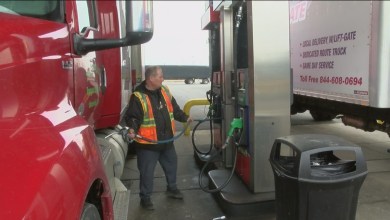
Trojan Driver scam infiltrates legitimate trucking companies
The driver isn’t always taking the load. They’re creating the moment where it can be taken.

Where control is lost in modern cargo theft
Most cargo theft does not start with a truck. It starts with access that looks legitimate until it is too late.

Is cargo theft costing $60 billion annually? What that number actually represents
The industry points to billions in losses, but that number only captures what can be seen. When you factor in hidden activity and indirect costs, cargo theft becomes a much larger and more persistent risk.

The VIN was the lie: how 23 trailers became a $287K fraud scheme
Discover how a $287K VIN fraud scheme exploited the trucking industry using false identities.

Stolen freight is still moving through clean systems
This was not stopped by a process. It was caught by chance.

Stolen freight recovered: $1m Lego heist stopped in tracks
Stolen freight worth $1M recovered by deputies, preventing major cargo theft loss.

The load was booked right. It still went wrong
One gap was all it took. By the time it was noticed, the load was already too far gone to recover.
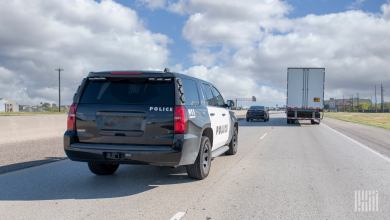
Texas cargo theft: how $470k in vehicles almost escaped
Two trucks carrying $470K in stolen vehicles were intercepted, but the real risk is how they moved through legitimate freight channels undetected.

Fraud is growing in the gray area
Fraud is no longer obvious. It hides inside companies that look legitimate but have not been verified.
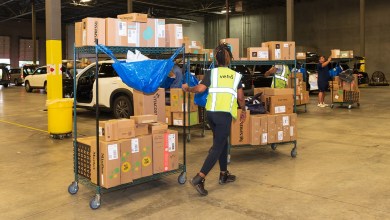
How thieves move $1m in freight before anyone realizes it
By the time the product was found, it was already positioned to move through resale channels. That’s not a recovery story. It’s a reminder that most losses start long before a load is ever picked up.

This isn’t a stickup. It’s a system
From the US to the UK to Europe, the pattern is the same. Control shifts early, and by the time it’s noticed, the freight is already gone.

Stolen freight does not disappear anymore
More than 400,000 KitKats were stolen in transit, but the product itself is still traceable. Nestlé’s response shows how even a chocolate bar can carry the signal after the load is gone.

Why passing every check no longer means safe
Cargo theft persists even with all checks passed, revealing gaps in freight verification.

Catch Me If You Can: the underground market for MC numbers regulators are trying to stop
Discover the MC number market and learn about the FMCSA’s efforts to curb illegal trades in this underground industry.
Military logistics: new challenges in identity verification
Discover emerging identity verification gaps in military logistics and their national security implications.

Inside a call with a freight scammer: the moment a stolen load was confirmed
Explore freight fraud tactics as stolen loads and identity scams plague logistics, evolving with new threats.

From sharpies to vinyl: the professionalization of truck identity in cargo theft
Next-generation cargo theft often looks legitimate right up until the freight is gone.