








John Kingston
Wednesday, May 27, 2020
Updated: A tale of two cities and how they’re welcoming trucking facilities
Love’s faces opposition in Arizona; ODFL likely to get tax breaks in Ohio.
Love’s faces opposition in Arizona; ODFL likely to get tax breaks in Ohio.

Opponents of longer and heavier trucks say they cause more damage and are less safe, and while exemption have been issued for essential goods, they fear efforts to make those exemptions permanent.

Like many of you, I have been inconvenienced by COVID-19 throughout the last several weeks. But, as you know if you have been reading any of my mostly weekly posts, I have focused on being productive during this different time.

Over the past two weeks I have seen the plans and the strategies that the “best in class” carriers are putting in place for their business during recovery. The key takeaways for me were plenty, but it starts with the phenomenal job these fleets have already done. Their main mission of keeping their workforce healthy, and the supply chain secure, should be a roadmap for all businesses when re-opening. It starts with strong leadership, open communication, and a “do it now” philosophy when deploying critical resources.

Fleet Advantage is offering to cash out a fleet’s excess trucks at book value in exchange for a lease that could lead to a new truck sale later.
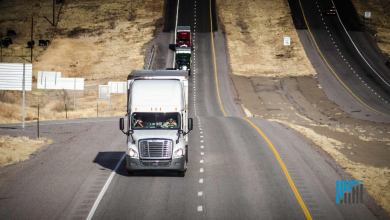
Outbound tender volumes are benefiting greatly from the reopening of the economy and a release of pent-up consumer demand, and the result is the highest level of pricing power for carriers in nearly two months.

Applications are now being accepted for TCA Scholarship Fund, which hands out financial awards to merit-based college students with ties to the trucking industry.

Funds from the Paycheck Protection Program has allowed some fleets to remain in business despite low rates, but as the program ends, some companies may not survive and capacity will tighten as a result and rates will rise.

Recently, a longtime employee of a local car dealership was terminated, allegedly due to a dispute with a co-worker and a subsequent failure to appear at work, showing once again that employers should be careful in handling employment termination decisions which effect those in a protected class.
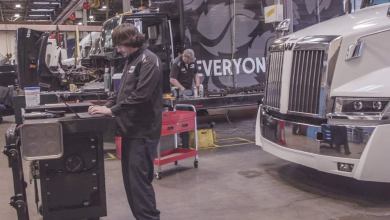
In trucking, where uptime can be the difference between making or losing money, major truck manufacturers are rolling out digital tools to speed parts ordering and improve the repair process.

The COVID-19 pandemic has led to a closure of many truck driver training schools, and that worries some in the industry as the influx of new talent dries up.

Tender volumes are racing to the upside and are tracking positive year-over-year in May, albeit off a depressed 2019 comparison, and that is some positive news for carriers.

TCA and the larger trucking industry have been anxiously waiting to see what the final hours-of-service rule would include, and the initial reaction to it is positive.

Long-awaited changes to the federal hours-of-service (HOS) rules expected to provide additional flexibility to truck drivers and fleets were announced today, receiving some industry praise and plenty of criticism from safety advocates.

Payment management solutions provider Cass Information Systems’ freight index fell mightily in April as expected, but it may have represented the bottom of the market.

Pause of 14-hour driving window not included among changes.

Changes to the Small Business Reorganization Act could make it easier for troubled trucking companies to seek bankruptcy protection and emerge better positioned for the future.

State, Teamsters have appealed to higher court over exempting trucking from independent contractor restrictions
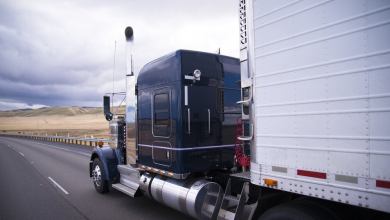
The current focus on the rate war distracts from the real issue at hand: how to build a profitable trucking business and control your own future.

Recommendations include electronic invoicing, advance appointments, emergency sick leave.

I woke the other day to a bright ray of sunshine beaming down through my bedroom window. It’s definitely Spring — rain tonight/tomorrow — then sunshine for a couple of days. Nature has already shown recovery from the Winter months of dormancy. Some of you are just now experiencing that Spring effect as well. Even with the stay at home orders of recent, my little town in SW Indiana does not appear to have heard that message.

FreightWaves’ Zach Strickland and JP Hampstead discuss the current elements impacting the spot market, key markets to watch, and whether we’re seeing a V-shape or U-shape pattern in terms of economic recovery.

Freight haulers across transport modes join effort to raise awareness.

FMCSA has expanded the types of crashes eligible for review under its Crash Preventability Determination Program, giving fleets and drivers more options to have non-preventable crashes removed from their record.

The need for social distancing will push companies to look at increased automation of their warehouses.

Driver said pay should include tank wash revenues in the base, but he didn’t say it fast enough

As societal shutdowns because of the COVID-19 pandemic dragged on into the middle of April, the food supply chain has started to center itself.

The Truckload Carriers Association (TCA) has opened up applications for its Scholarship Fund. The fund awards up to $6,250 per year, per full-time college student.

We are bearing witness to today’s trucker as the backbone of our nation’s supply chain, staying the course during this turbulent time and supplying our essential needs through product deliveries every day. While the public has a newfound appreciation of truck drivers and those that support them inside the business, there are pockets of concern in the trucking industry. While many are thanking drivers at #KnightsoftheRoad and #ThankaTrucker for their dedication to their job, and their willingness to perform their duties as an essential worker, there are other mounting problems.

A group of 117 organizations, led by the American Truck Dealers, has written to leaders of Congress asking for a suspension of the 12% federal excise tax on new heavy-duty trucks and trailers.

The capacity picture is still lagging and continues to be at historically loose levels, but even though spot rates bounced in a few markets, overall rates are still horrible. The result is continued pricing power for shippers in the weekly DHL Supply Chain Pricing Power Index.

As the government pumps more money into the economy, many are questioning where the money is coming from? It’s coming from America’s “Magic Money” tree.

Even as businesses have shut down, traffic data from Inrix showed that, as of April 17, 87% of all truck vehicle miles were still being driven.
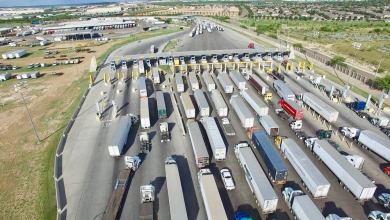
Resilience360 recently released reports analyzing the impact of COVID-19 on trade between the United States, Canada and Mexico.

FMCSA has proposed a rule that would force states to stop issuing new, renewing or upgrading CDLs and CLPs, and in some cases even downgrading, for drivers until they complete the return-to-duty process following a positive drug or alcohol test result.

As states begin to reopen their economies, leading retail trade groups urge the opening of all distribution centers and implementation of a three-phase reopening strategy.

78% of truck drivers posted positive comments regarding their morale, with many thanking carriers for supporting them, in the latest sign that carriers are effectively supporting their drivers.

The frustration of 300 million people is bound to show with regards to this virus shutdown. This week, the media began showing a small subset of people protesting the shutdown and showing disregard towards the Country’s safe distancing protocols. If these businesspeople and workers show disregard during a protest, what will their protocols be when they reopen their businesses? In every business situation we need to measure Risk vs Reward, but usually, the risks are confined to your business, not the total U.S. business.

“Things haven’t been great, but I feel like it’s not about me right now. Some of us out here are determined to feed America or die trying,” trucker Mike Baker said about hauling for meat processing plants, some of which are now shutting down.

Even as states reopen, there is too much uncertainty ahead to predict boom times returning, but there is finally some optimism appearing.

The shippers are in the strongest pricing power position in the DHL Supply Chain Pricing Power Index history, but for all the wrong reasons. Volumes are stable, but well below normal levels, and tender rejections are at the lowest level in the index’s 3-year history.

Even though crude oil prices are collapsing, truckers will see lower prices at the pump, but maybe not historically low prices.

A new rule from the National Labor Relations Board clarifies joint-employer status under the National Labor Relations Act. With a stricter standard, employers will have more clarity around which company has legal responsibility for employees.

Daimler Trucks and Volvo Group, two truck makers lukewarm on hydrogen fuel cells, hedge their bets to leverage Daimler’s Mercedes-Benz fuel cell efforts for heavy-duty trucks.

From quarantine, Canadian truck driver Nicole Folz detailed her saga of falling ill hundreds of miles from home.

With what seems like nothing but time these days, my wife brought me an old boot box that my mother put together some 20+ years ago and said “Look what I found!!” We’ve been going through all sorts of things in the house, probably just like yourself. Not that I really wanted to do that, but I must say, I’ve learned a l

Risk is often assessed in terms of probabilities. The probabilities themselves are often calculated under the assumption of a bell-shaped (i.e., normal) distribution. This distribution assumes that extreme events are not likely. What if there are?

The 12-year-old St. Christopher’s Development and Relief Fund has seen a rise on donations. It helps injured and sick semi-truck drivers cover household expenses.

Year-over-year declines in the Cass Freight Index accelerated in March, with the shipments index declining 9.2% and the expenditures index dropping 8.2% for the month.

Do you know someone who is going above and beyond to advance safety in the trucking community? If so, now is the time to nominate them for the 2020 TCA Safety Professional of the Year – Clare C. Casey Award.

Loans under the government’s Payroll Protection Program are being approved and money is starting to flow into the hands of trucking companies.

On this holiday weekend, I want to send my best wishes to the trucking community! From the heroic drivers doing their jobs in the face of adversity, to the carrier support folks – some in offices and some working at home – thank you for your support of our drivers and customers. To the valiant technicians that arrive for work every day unknowing what and where they might come face to face with a health challenge in the course of their daily duties. To the truckstops, dealers and other support businesses that support the drivers while on the road, and sometimes when in the most need, thank you all and bless you all for a hopeful family holiday.

During a leadership webinar I presented on last week one of the things I mentioned was that there’s nothing like a crisis to bring things into perspective. While it seems that we can’t see anything at all during a time like this, I just personally experienced some clarity.

States must submit plan detailing use of technology that supports social distancing.

Government agencies and cybersecurity firms are raising alarm bells as companies shift to remote workforces without proper cyber protections in place.

Freight volumes have been dropping as businesses shut down, and that has shifted the advantage to shippers, who now hold more rate negotiation power.

Recent Truckload Carrier Association webinars on helping trucking fleets navigate through the COVID-19 pandemic are now available to watch.

Truckers are being hailed as heroes right now for delivering consumer goods and medical supplies during the coronavirus pandemic, and some believe the industry’s image may get a permanent boost.

TrueNorth’s Cook sees low returns, premium income dropping and more “selectivity” from underwriters.
We are in the middle of something we have never seen before. Trucking business owners should be seeking out conversations and relationships that can lead to business transformation, wealth preservation, and peace of mind as they consider what do to next.

While the rearview mirror is crystal clear for all to debate, I always point out that we often get the “test before the lesson” in business, politics and life. This is no different. If the silent majority remains diligent and follows the guidance of the scientific community, we will prevail. Leaders, we do not need to place blame, we need solidarity to help this great country overcome this crisis. “Through difficulty comes opportunity”, and while that seems a long way away, the trucking business has a bunch of tough people, and I’m proud to call you my friends. Keep truckin’ safely.

Without a doubt, our world is changing quickly. Not by the year, month, or week, but by the day and in many cases by the hour. Really, it seems its that quick. Whether its coming from the national news, local news, industry rags, customers, employees or simply your own mind, it seems as though everything is changing very rapidly.

The weekly DHL Supply Chain Pricing Power Index continues to favor carriers, but the index has fallen from last week’s high as freight volumes start dropping off.

Zach Strickland looks at the market volatility map in the Carrier Update presented by PowerFleet, and Andrew Cox brings us the DHL Supply Chain Pricing Power Index. This week is leaning toward carrier favorability at 60 on the scale.

States allowing 100,000-lb. trucks making a difference for resupplies during COVID-19.

What might a post COVID-19 world look like for financially viable carriers that have managed through the uncertainty? Nobody knows for sure, but here are some possibilities.

The Department of Labor has issued new guidance on the Families First Coronavirus Response Act that may not require companies to offer paid leave in certain situations.

TCA has seen our positive experiences with the federal government grow exponentially in the last few weeks. In the days that have followed the emergency declaration in response to the coronavirus outbreak, our partners in the federal government have leaped into action

FMCSA has issued a three-month waiver that lifts restrictions that require a CDL holder to be in the front seat of a vehicle under certain conditions when it is being driven by someone with a learner’s permit.

Fleets take many approaches to reining in maintenance costs, but not knowing which costs are out of line with industry norms complicates the process.

While many trucking companies already have a transponder-based approach to toll management, operators that use cash need to reevaluate their approach to tolls, experts said.

As this virus spreads, the driver community becomes more at risk. This presents an unthinkable challenge to our food chain. As I follow the industry on social media, the support from TCA in their efforts to be the front line to support their members, and the national news, I believe the trucking community needs to stay vigilant in their current plans and strategies as well as coming up with Plan B strategies to adapt to the changing situation with COVID-19: strategies which may even allow for increased opportunity when we turn the corner on this pandemic.

There was a time in the early 1980’s that a boy ran around his house with a toy semi-truck singing Alabama’s song “Roll On”. His daddy was a trucker and he asked his momma when he was coming home. Fast forward a few decades and everyone is quick to jump on the bandwagon of calling each of you heroes. For some of us, truckers have been heroes all our lives.

The Families First Coronavirus Response Act goes into effect on April 1, and businesses have many questions on how it affects them.

Roadside repairs on vehicles will be allowed to continue, despite rumors that truck drivers would be stranded if their vehicle broke down.

Traffic data tracked by Inrix is indicating much quicker commute times for those on the roads during rush hour as more workers stay home. Plus, J.B. Hunt to pay bonuses, GE cutting its workforce, and St. Christopher’s Truckers Relief Fund facing a critical time.

States are closing non-essential businesses and manufacturers are shutting down, creating uncertain freight flows now and in the immediate future.

How drivers are dealing with coronavirus, TQL layoffs and legal implications, staffing in a crisis and more on today’s podcast

As I sit in my home barred from travel, I watch the news and coronavirus updates. In light of the multiple closings of cities, the panic at the sight of empty grocery store shelves; something leaps out to me, “Thank God for the Truckers!” As we float in these turbulent, uncharted waters, and we see unprecedented economic moves to protect us from the impact of the virus, one thing is truly taken for granted — the Individual Trucker — working with their dedicated Operations people servicing the supply chain.

However, there is one constant that has always remained; trucking is one of the most honorable professions in the world. A truck driver does nothing for themselves. They are always doing something for somebody else be it a shipper, a receiver, a dispatcher, or for others on the road.

The rapid expansion of telemedicine options provides another treatment avenue for truck drivers to help stop the spread of COVID-19.

For carriers with loads to haul, they now have an advantage in negotiating rates, as the weekly DHL Supply Chain Pricing Power Index has risen to 55.

President Trump has signed the Families First Coronavirus Response Act into law, which requires many employers to provide paid leave and expands FMLA for many employees

As COVID-19 spreads, truckload carriers are facing an unknown world. TCA is trying to help them navigate that uncertainty.

BMO, one of the largest lenders to the trucking industry, will be offering undefined measures to assist its clients as a result of the coronavirus pandemic.

Pennsylvania has closed its 65 rest stops, drawing the ire of the industry, as officials say they may reconsider.

Travel plazas are balancing social distancing to prevent the possible spread of coronavirus with providing food and services to truckers, whose dining options in some cases are limited to drive thru and carryout.

Some segments of the freight markets are seeing bumps right now, but the long-term outlook is murkier than ever.

The FMCSA hours-of-service waiver has sparked confusion over what is considered emergency relief.

The Truckload Carriers Association continues to push for a broad-based infrastructure funding mechanism rather than a truck-only scheme that would increase taxes on the industry.

Lawmakers have proposed a bill that would dedicate $755 million over five years to build new truck parking spaces across the country.

In my previous life as a Truck Dealer, I habitually tracked our Gross Margin on both the Sales as well as the Parts/Service side (it was our lifeblood). Further, through my participation in benchmarking within the Dealer market, it reinforced the value of:
Identifying and measuring your fixed and variable expenses relative to each other
Always striving to increase Gross Margin (Revenue minus Variable Expenses)

Despite already wrestling with a challenging trucking industry, the situation is growing increasingly tougher as the Coronavirus (COVID-19) continues to spread. As capacity goes through a state of flux, and the shipping community gets challenged with matching capacity with oscillating inventory and manufacturing challenges, the country’s trucking community will continue to find solutions.

Virus-related demand headwinds bring fresh declines in February Cass data. Visibility into a potential trucking recovery is further clouded.

The current talk on the Coronavirus has basically created a huge pause in the market. The fear of the unknown of this virus is only adding to the further unknowns the industry is tackling. The capacity of trucks seems to be dwindling with financial failures; carriers just quitting business; the low number of new units purchased in 2019 and on order now; plus the plummeting used truck values.

I have enjoyed my tenure as TCA Profitability Program (TPP) Retention Coach for many reasons but mostly as it has given me the opportunity to visit several trucking companies on both sides of the border. I genuinely love taking a brief look “under the hood” of these great companies and relish the opportunities in helping to reduce the driver turnover numbers. Helping to make a company successful gives me great deal of pride when drivers don’t have to go home and tell their families they no longer have a job.

TCA supports this legislation as it complements the work already being done from within the trucking community to promote our well-paying jobs to quality candidates.

Profitability is the key to any business staying in business. In trucking it is harder than in many other businesses. Chris Henry explores the “trucking profitability paradox.”
Program members will have several opportunities to network in Orlando next week.

Diesel fell far more than the price of crude oil; trucking stocks mostly fell less than S&P 500.