How to Save on Commercial Truck Insurance in 2025 Without Cutting Corners
Commercial insurance rates have ballooned over the last few years. Small carriers can use some techniques to reduce their costs.
With CVSA’s International Roadcheck around the corner, thousands of inspectors will be out in force, and if you’re not ready, your truck could be the one parked roadside with an out-of-service sticker. This guide breaks down what a Level 1 inspection really involves.
AB5 has redrawn the line between independent contractor and employee in California, sending shockwaves through lease-on models and forcing many drivers to get their own authority, but what happens when those new authorities consider brokering freight? This breakdown simplifies what AB5 means for fleets, when broker bonds are required, and why double brokering, ghost MCs, and improper authority setups can cost more than just your load, they can cost your entire business.
Independent Contractor Fight Reignites — DOL Backs Off Biden-Era Rule for Now The U.S. Department of Labor just announced a major shift: It’s officially putting the brakes on enforcing the 2024 Biden-era independent contractor rule — at least for now. In a memo sent May 1 by acting Wage and Hour Administrator Donald Harrison III, […]
Non-domiciled CDL holders are just a small sliver of a bigger issue with how CDLs are issued and regulated.
For small carriers, you have to have a solid strategy to win freight directly from shippers. Here are the steps to make it happen.
Managers walk a fine line between tracking performance and stepping on toes.
Fuel strategy is essential to running a profitable business. Here are some pro tips to help you maximize your fuel strategy.
New Federal Push on CDL Enforcement Targets a Growing Concern Last week, the White House issued a formal directive aimed at cracking down on what it calls “commonsense violations” in commercial driver licensing. The Executive Order, signed on April 24, sets the stage for stricter federal oversight of state licensing practices — particularly focusing on […]
Small carriers pay attention: the dip in rates is consequential for you.
The jump from leased-on driver to running under your own authority feels easy when you’re frustrated with your current situation. You start thinking, “Man, if I’m doing all the work, why am I giving up 20%, 30%, even 40% of the money?” And you’re not wrong to feel that way. But emotion doesn’t pay for […]
If Part 1 of this series was about the mindset shift—getting off the hamster wheel of the spot market—then Part 2 is all about the muscle: the actual steps to build, pitch, and maintain shipper relationships that bring consistency to your business. This is where the rubber meets the road. In the Playbook Masterclass, we […]
How do you get from running your truck to running your business? Find out in this Roadmap Snapshot.
Brittany Traylor was a light in the trucking industry; she is remembered by friends and honored by those who she knew.
Let’s be honest. If you’re still relying solely on the spot market to run your business in 2025, you’re not building a business—you’re gambling with your livelihood. I’ve said it before and I’ll say it again: The spot market load board is not a business model. It’s a temporary solution. In a recent Playbook Masterclass, […]
If you’re reading this, you’ve probably got one truck that’s doing okay—or maybe just surviving—and you’re thinking: “Is it time to grow?” “Should I get another truck?” “Can I afford to scale, or am I just chasing the dream too fast?” Let me say this up front. The worst time to add a second truck […]
Your carrier packet is the first handshake for potential clients. Here are some tips to make sure yours wins you business.
Two new executive orders refocus attention on English language requirements for truck drivers, reviving enforcement protocols that have existed since 1937. Industry voices say training, licensing and real-world risk management are essential priorities beyond language rules.
The freight recession is dragging on and getting deeper as tariffs throw a wrench into any possible recovery. What does this mean for small carriers?
Meet Bubba, the AI-powered voice assistant designed specifically for drivers. Bubba finds loads, negotiates rates, vets brokers and manages documents while protecting drivers’ profits and time. After decades of everyone but drivers using AI, Bubba finally brings real-world driver-first solutions that let you stay focused on the road while maximizing your margins. Learn why Bubba might just be the smartest, toughest, “Say no to Cheap Freight” dispatcher you’ll ever have.
At Motive’s Vision 25 Summit, fleet leaders saw firsthand how AI-powered tools can transform safety, efficiency and driver culture. With new AI features like Motive AI Coach, real-time fatigue detection, fraud prevention and natural language analytics, Motive emphasized that technology should serve, not replace the people behind the wheel. Real-world success stories and a major courtroom win against Omnitracs reinforced that Motive’s future isn’t just built on innovation, but on trust, transparency and tangible results for fleets ready to lead the next era of trucking.
Apollo Global Management has a grim warning for the trucking industry: a recession is coming and mass layoffs will come with it.
A Washington high school failed to convince federal regulators of the benefits of altering the training rules for teenage truck drivers.
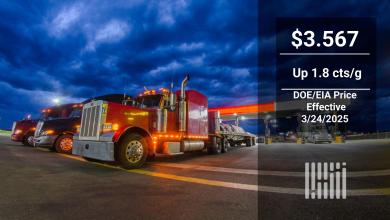
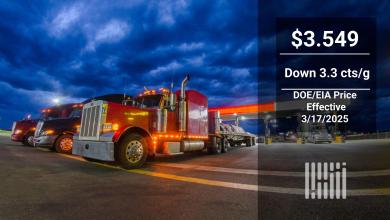
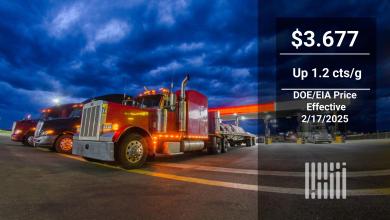
The benchmark diesel price used for most fuel surcharges declined for a second consecutive week.
OOIDA made its case before a three-judge panel of the 9th U.S. Circuit Court of Appeals as it fights alone against California’s AB5 applying to trucking.
A majority of trucking companies in Canada say they have lost or had to delay loads to the U.S. since new tariffs were imposed.
Mack Trucks will eliminate up to 450 jobs at facilities in Pennsylvania and Maryland due to tariffs and economic uncertainty.
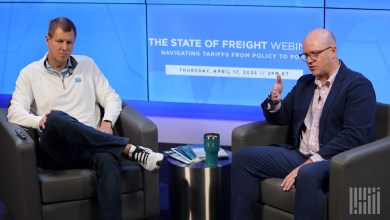
The State of Freight webinar focused on a market that is coming to terms with a raging trade war.
Q1 earnings season is upon us, with early results pointing to continued degradation in truckload carriers’ financial health. Wisconsin-based Marten Transport released its Q1 earnings on Wednesday, but with publicly traded companies timing is everything.
A proposed California law, Assembly Bill 1331, could upend how trucking fleets monitor drivers by prohibiting dashcam and GPS surveillance during off-duty periods, even inside the vehicle. If passed, the bill would redefine off-duty time as private, creating costly compliance challenges and raising concerns about safety, theft prevention, and liability. With $500 penalties per violation and the potential for lawsuits, fleets operating in California, and nationwide, may need to rethink how they balance privacy with operational oversight.
Arkansas Just Passed a Law That Will Hit Drivers for Not Speaking English — Here’s What You Need to Know If you have drivers running through Arkansas, pay attention: A new bill passed last week that’s going to fine truckers who can’t speak or read English “sufficiently.” HB1745 cleared the state House and Senate unanimously, […]
Freight fraud was the consistent theme at the opening session of the annual meeting of freight brokerage’s biggest group, the Transportation Intermediaries Association.
A proposed California law, Assembly Bill 1331, could upend how trucking fleets monitor drivers by prohibiting dashcam and GPS surveillance during off-duty periods, even inside the vehicle. If passed, the bill would redefine off-duty time as private, creating costly compliance challenges and raising concerns about safety, theft prevention, and liability. With $500 penalties per violation and the potential for lawsuits, fleets operating in California, and nationwide, may need to rethink how they balance privacy with operational oversight.
The release of the diesel price used as the basis for most fuel surcharges is shifting to Tuesday mornings instead of Monday afternoons.
Market chaos reigns supreme: tariffs, trucking authorities, and tender rejections spell uncertainty for the start of April.
Truck transportation jobs in March rose by the largest amount since the start of 2022.
Truckers are getting a new opportunity to tell the Trump administration what regulations are hurting their business.
The operators of a tanker that the U.S. military contracted to haul jet fuel are suing a subsidiary of the owners of a shipping company whose container ship struck the tanker in March.
Why More Trucks Won’t Fix the Problem – And Could Actually Wreck the Spot Market A new bill just dropped in Washington – the Strengthening Supply Chains Through Truck Driver Incentives Act – and it’s being pitched as a solution to fix the “driver shortage,” unclog the supply chain and lower costs for American families. […]
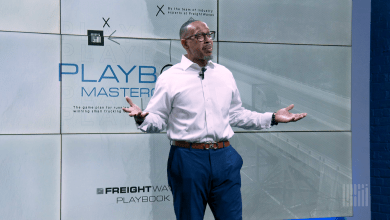
Adam Wingfield debuts The Playbook at the 2025 Mid America Trucking Show in Louisville, KY.
Derek Barrs, a member of the American Trucking Associations’ Law Enforcement Advisory Board, has been nominated to lead the Federal Motor Carrier Safety Administration.
The Arkansas House of Representatives and Senate are debating two bills to enact harsher punishments against truck drivers who are in the U.S. illegally and obtain or use CDLs.
The benchmark diesel price used for most fuel surcharges rose for the first time in three weeks.
B99 biodiesel is now or will soon be available at select Pilot travel centers.
Fleet maintenance has evolved beyond the old-school break-fix mentality. While preventive maintenance is a step up from waiting for breakdowns, predictive maintenance, powered by telematics and AI diagnostics, is the new gold standard. By using real-time data to forecast failures before they happen, fleets can drastically cut repair costs, improve safety, and reduce costly downtime.
Technology-driven platforms like Motive and Fleetio enable fleets to automate diagnostics, optimize maintenance schedules, and track performance metrics in real time. In an industry where compliance, efficiency, and cost control are everything, predictive maintenance is a necessity.
Fuel is one of the largest expenses for trucking fleets, making conservation strategies essential for long-term profitability. By leveraging technology such as fleet fuel cards, AI-powered route optimization, and real-time driver monitoring, fleets can reduce waste, improve efficiency, and prevent fuel fraud. Implementing preventative maintenance, minimizing idling, and optimizing routes are key to ensuring every gallon is used effectively. With fluctuating diesel prices and tightening margins, adopting a data-driven fuel management approach is necessary for survival in today’s trucking industry.
The FMCSA is eliminating MC numbers by October 1, 2025, requiring all motor carriers, brokers, and freight forwarders to operate under a single USDOT number. This change aims to streamline registration, reduce fraud, and improve compliance tracking. While the transition simplifies carrier identification, it raises new challenges for brokers, shippers, and industry professionals accustomed to MC-based vetting. With potential impacts on contracts, insurance, and fraud prevention, fleets must prepare now to ensure a smooth transition. Here’s what the trucking industry needs to know before the deadline arrives.
The Biden administration’s expansion of the H-2B visa program nearly doubled the number of available permits for foreign truck drivers in 2025, aiming to ease labor shortages in the industry. However, with Donald Trump returning to the White House, the future of this visa expansion is unclear. Trump’s past immigration policies prioritized American workers and restricted foreign labor programs, signaling potential rollbacks. Trucking companies that rely on these visas must prepare for possible changes, including tighter restrictions or a complete reversal of the expansion. Here’s what fleets need to know as immigration policy shifts under the new administration.
CVSA enforcement blitzes like International Roadcheck, Operation Safe Driver Week, and Brake Safety Week can make or break a fleet’s compliance record. Failing an inspection means out-of-service violations, increased ISS scores, and higher insurance costs. The key to staying ahead? Proactive fleet technology. AI-powered dashcams, electronic DVIRs, predictive maintenance systems, and compliance automation help fleets avoid costly violations. With FMCSA safety ratings on the line, adopting these tools ensures that fleets remain inspection-ready year-round because trucking compliance isn’t seasonal.
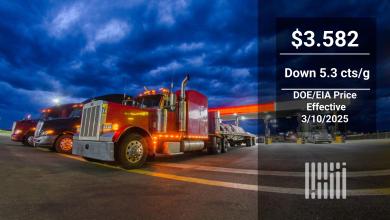
The diesel price used for most fuel surcharges declined for the third week in a row.
Steel, lumber, auto parts – key commodities from Canada are caught in the crossfire. As tariffs hit, expect higher costs, fewer loads and unpredictable freight rates.
Environmental Protection Agency Administrator Lee Zeldin said the agency will reconsider the Model Year 2027 and Later Light-Duty and Medium-Duty Vehicles regulation and Greenhouse Gas Emissions Standards for Heavy-Duty Vehicles.
The benchmark diesel price used for most fuel surcharges is near its lowest level for 2025.
Is Your Truck Blending In or Standing Out? Plus, A Hard Look at the Market and Roadcheck Countdown I was working with a client recently, helping them close a deal with a shipper. The shipper hit them with a simple question: “Do you offer driver assist?” Without hesitation, my client — who runs six reefers […]
MATS is less than a month away, visit The Playbook at booth 38248.
The freight market has been all over the place for small carriers, and right now, there’s a feeling that something’s about to give. The big question is whether this shift is going to work in your favor or just keep the squeeze on spot market rates a little longer. Truckload demand (the need for your […]
Market Update: Spot Rates Still Dropping — Where Can You Find the Money? If you’ve been feeling like rates just aren’t moving in the right direction, you’re not alone. This map breaks down spot rate changes over the past four days, and the message is clear: Most outbound lanes across the country are still seeing […]
Updates to the CVSA Out-of-Service criteria have been released, set to take effect April 1.
The Beneficial Ownership Information (BOI) reporting requirement has become another regulatory headache for trucking fleets, adding complexity to an already compliance-heavy industry. While designed to combat financial crimes, the Corporate Transparency Act’s BOI mandate has been met with legal challenges, leaving businesses uncertain about their obligations. Despite ongoing court battles, FinCEN continues to push forward with enforcement, meaning most trucking companies structured as LLCs, S-Corps, or partnerships must file ownership details or face significant penalties. With deadlines approaching and regulatory uncertainty persisting, trucking fleets must stay informed, prepare their filings, and avoid compliance missteps.
Nikola’s bankruptcy is a reality check for the push toward zero-emission freight. Once hailed as the Tesla of trucking, Nikola’s failure highlights the immense challenges of replacing diesel with electric and hydrogen-powered alternatives. While policymakers and environmental advocates push for green energy solutions, the trucking industry remains bound by the need for reliability, infrastructure, and economic viability. With limited charging and hydrogen refueling networks, high costs, and performance struggles, Nikola’s downfall reinforces a hard truth, diesel isn’t going anywhere anytime soon.
The freight market is tightening as we come to the end of February. What does tha mean fo owner0ops?
A CDL is just a license. What separates top fleets from struggling ones is how they qualify, select, and retain drivers who fit their operations. A one-size-fits-all hiring approach leads to turnover, compliance risks, and operational inefficiencies. Successful fleets go beyond FMCSA minimums, assessing experience, cultural fit, and skill set alignment to ensure long-term success.
Leveraging technology for applicant tracking, telematics-based risk assessment, and continuous compliance monitoring, fleets can reduce costly hiring mistakes and build a stable, safety-first workforce. Hiring the right drivers is about protecting your business and driving long-term profitability.
Truck dispatching is about maximizing efficiency, reducing downtime, and ensuring compliance. The best dispatchers are logistics strategists, connecting drivers with freight, optimizing routes, and handling regulatory and admin tasks so carriers can focus on the road.
With freight markets fluctuating and compliance requirements tightening, owner-operators and small fleets are increasingly turning to dispatching services to stay competitive. The right dispatcher can boost earnings, minimize deadhead miles, and streamline back-office operations. But with so many services available, how do you know which one adds value and which one just takes a cut?
This guide breaks down the role of dispatching services, the benefits of outsourcing logistics, and how to find a dispatcher who actually improves your bottom line.
Interlining freight and freight brokering are two often misunderstood functions in transportation. While both involve coordinating freight movement, the distinctions in responsibility, regulatory requirements, and legal compliance are significant.
This article talks about how interlining carriers work together to complete shipments across multiple legs, sharing liability and direct transport duties. It also breaks down how freight brokers facilitate shipments without ever taking possession of cargo and why they must hold FMCSA broker authority and a $75,000 surety bond.
With FMCSA cracking down on unauthorized brokering, understanding the legal and operational differences is crucial for carriers, brokers, and shippers.
An EPA action initiating the process of revoking three California emissions waivers faces legal hurdles.
Oil markets have been quiet, but the impact of potential tariffs on Canada and Mexico is on the horizon.
Welcome to the first edition of The Playbook. Welcome to the very first edition of The Playbook, a weekly newsletter dedicated to small carriers and fleets. My name is Adam Wingfield, founder of Innovative Logistics Group – consider me your new mentor. If there’s one thing I’ve learned in my 24-plus years in the trucking […]
FreightWaves and Innovative Logistics Group have teamed up to create The Playbook, a one-stop shop of resources for the small carrier and owner-operator who want to level up their business.
I’m Rob Carpenter, adviser, professional driver and your trusted voice for all things trucking. Welcome to The Playbook, a place for you to find your success in trucking.
It’s time to change the way small fleets and owner-operators think about business. I’m Adam Wingfield, and change is coming with The Playbook.
FMCSA’s Medical Examiner’s Certification Integration rule aims to streamline medical certification by digitizing the process, but delays have pushed full implementation to June 23, 2025. Until then, CDL and CLP holders must continue submitting paper copies of their Medical Examiner’s Certificate (MEC) to state licensing agencies, and motor carriers must verify compliance manually.
Failure to maintain a valid MEC can result in a CDL downgrade, putting drivers’ jobs at risk and exposing fleets to compliance violations. Staying informed and following FMCSA updates is crucial to ensuring a smooth transition when the new system goes live.
A CDL is a commodity. Many drivers feel stuck in low-paying, high-turnover jobs, but those who grow, specialize, gain endorsements, and strategically pivot can turn their experience into a high-value career. Whether it’s moving into specialized freight, fleet management, brokerage, or even autonomous vehicle testing, a CDL opens doors beyond the driver’s seat.
The key is to treat trucking like a business. Understanding market demand, positioning yourself for better opportunities, and leveraging your expertise. The industry is changing, and drivers who adapt will thrive. The question is, Will you be one of them?
Spot freight is the wild card of trucking that offers flexibility, fast solutions, and sometimes, unexpected windfalls. But is it a viable long-term strategy, or just a short-term fix for supply chain disruptions?
This article breaks down how spot freight works, what determines its pricing, and why shippers turn to it instead of contract freight. While it provides an immediate solution for last-minute loads and market shifts, it also comes with financial unpredictability. Learn how businesses can strategically use spot freight to complement their shipping strategy while maximizing opportunities and minimizing risks.
What should be a simple recovery or tow process has become an industry crisis. With predatory towing companies exploiting trucking fleets through excessive fees, cargo ransoms, and impound scams. Carriers often have no say in which towing company is called, leading to inflated invoices, trucks held hostage, and financial strain.
From $202,000 tow bills to $10,000 “ransom” demands for cargo release, these practices are draining the industry. Fleets must take proactive steps to build relationships with reputable tow providers, training drivers to document incidents, and challenging inflated invoices to protect themselves. Until stronger regulations are in place, carriers that don’t fight back are setting themselves up to lose.
The trucking industry is under attack from rising insurance costs, cargo theft, and nuclear verdicts. Now, fraudulent staged accidents have emerged as another costly threat, orchestrated by criminal networks to exploit insurance claims and extract massive settlements. Cases like “Operation Sideswipe” in New Orleans and similar schemes in New York have cost the industry hundreds of millions of dollars.
Adding to the crisis is third-party litigation financing (TPLF), where private investors bankroll lawsuits, driving up the frequency of multi-million-dollar verdicts against carriers. However, fleets are fighting back with AI-powered dashcams from companies like Motive, providing real-time visibility, GPS tracking, and data-backed defenses against fraudulent claims.
This article talks about how dashcams are shifting the landscape, preventing staged accidents, disproving false liability claims, and helping carriers build defensible compliance programs. Read on to learn how visibility, data, and technology can protect your fleet from fraud and exposure.

The truck parking debate is always on fire but it’s heating up. While drivers struggle to find safe, available spaces after long shifts, services like Truck Parking Club, and Freight Ninja offer paid alternatives, but at what cost? Should drivers have to pay for parking, or should free options remain the standard?
This article examines the realities of truck parking from both sides, how technology is improving access and awareness but also introducing new costs for truckers already being fleeced. With margins already tight, drivers shouldn’t be nickel-and-dimed, but businesses providing secure, well-maintained lots deserve fair compensation. The key isn’t eliminating paid parking but ensuring it remains a choice, not an unavoidable expense.
From dynamic pricing models to carrier-sponsored parking, the industry has room for solutions that benefit everyone. Read on to explore the possible compromises and why a balanced approach is crucial for the future of truck parking.

Driver stress is a fleet-wide risk that impacts safety, fuel costs, maintenance, and retention. Studies show that stressed drivers are more likely to engage in risky behaviors, suffer from fatigue, and leave the industry entirely, costing fleets thousands in turnover and accident claims.
AI-powered dashcams, predictive maintenance, and real-time telematics offer fleets a proactive approach to reducing driver stress and improving well-being. By integrating safety coaching, fatigue monitoring, and wellness programs, fleets can lower accident rates, cut operational costs, and build a culture that values drivers as assets, not liabilities.
Compliance might be about avoiding fines but it’s more about protecting your fleet, securing business, and staying in business. A poor FMCSA safety rating can lead to lost revenue, higher insurance premiums, and even an Unsatisfactory Rating and shutdown. With new Safety Measurement System (SMS) changes ahead, fleets must actively manage their compliance records to avoid increased scrutiny.
Staying ahead of FMCSA regulations is the only way to ensure long-term profitability and operational stability.
Cash flow is the difference between survival and failure in the trucking industry. Even a profitable business on paper can collapse if it doesn’t have the cash to cover fuel, maintenance, and payroll. With customers often taking 30, 60, or even 90 days to pay invoices, owner-operators and fleets have to manage cash flow strategically to avoid financial strain.
Tracking cash inflows and outflows, using factoring services, leveraging net 30 fuel cards, and refinancing loans can help maintain liquidity and keep operations running smooth. Smart cash flow management ensures businesses stay profitable, avoid costly short-term borrowing, and remain resilient in an unpredictable market.
Managing cash flow is about keeping enough of it to stay in business. Many new owner-operators and small fleet owners struggle not because they can’t find freight, but because they fail to control expenses and prepare for financial challenges.
With high startup costs, slow broker payments, and unpredictable expenses like fuel and maintenance, poor cash flow management can quickly derail even the most hardworking truckers. Successful operators track every dollar, minimize unnecessary spending, use financial tools strategically, and plan for market fluctuations to keep their business rolling for the long haul.
Net 30 fleet fuel cards offer owner-operators and fleet managers a cash flow solution providing up to 30 days to pay for fuel expenses. This short-term financing helps bridge the gap between operating costs and customer payments, reducing financial strain and improving flexibility.
Consolidating fuel expenses into a single invoice and allowing time for revenue collection, these cards simplify bookkeeping and can even help build business credit. However, managing payment deadlines is crucial, late fees and missed payments can quickly turn a financial advantage into a burden. When used strategically, net 30 fuel cards keep trucks moving without unnecessary cash flow disruptions.
Fleet safety and compliance is about protecting lives, reducing liability, and ensuring long-term success. As legal risks grow and operational demands increase, fleets are turning to technology for smarter, more proactive solutions.
From AI-powered dashcams and predictive maintenance to advanced telematics and cargo monitoring, modern trucking tools provide real-time insights that prevent accidents, optimize efficiency, and improve compliance. Fleets that invest in these technologies reduce costs, minimize downtime, and stay ahead of evolving regulations. The question isn’t whether to adopt these tools—it’s how soon they can be implemented to future-proof operations.
Fleet dashcams have become essential for modern trucking operations, but selecting the right system is about capability. Don’t get caught up with the price. The right cam pays for itself. While basic dashcams provide simple video recording, AI-powered systems with cloud storage, real-time coaching, and fleet integration offer proactive safety solutions that reduce accidents and liability.
From stand-alone SD card models to advanced fleet management suites like Motive, Samsara, and Netradyne, the right choice depends on a fleet’s long-term goals. Investing in scalable, AI-driven technology can improve driver behavior, streamline compliance, and enhance overall operational efficiency, making safety an asset, not just an expense.
Spot freight rates fluctuate daily, making it tough for carriers to maintain profitability. While load boards provide access to freight, they often lead to rate wars, inconsistent loads, and lower margins. The key to long-term success? Establishing direct relationships with shippers.
Unlike spot market freight, direct shipper contracts offer stable rates, predictable revenue, and reduced competition. Carriers who move beyond transactional load board freight by networking, cold-calling shippers, and delivering exceptional service can secure steady, high-paying freight lanes. The most profitable fleets don’t chase loads, they build partnerships that drive long-term financial stability.
The research arm of the American Trucking Associations has pinpointed potential areas for highway investment in its annual survey of top freight bottlenecks.
If you’re a small carrier, you’re likely wondering what happened to the shift in the market — the key word here is gradual. While many of the signals point to a tightening freight market, the reality is that the road back to a balanced supply-and-demand cycle is moving at a slow crawl rather than a […]
Managing freight costs is one of the most critical aspects of running a trucking business. Ensuring that invoices are accurate with rising fuel prices, fluctuating rates, and complex carrier agreements is essential for financial stability. Unfortunately, billing errors, duplicate charges, misclassified freight, and unexpected fees are all too common in logistics. That’s where freight invoice […]
Court filings show three less-than-truckload carriers are seeking approval to acquire $15 million of bankrupt Yellow Corp.’s real estate.
New CEO Reid Spitz said 90% of HDVI’s customers saw improvements in key safety metrics like speeding or harsh braking in their first year working with the company.
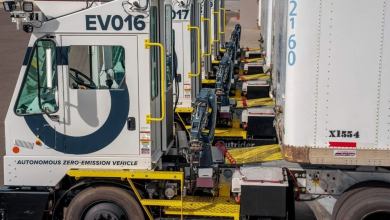
Autonomous yard operations leader Outrider recently announced an industry-first deployment of advanced reinforcement learning (RL) techniques across its customer sites.
On Monday, advanced transportation management software provider Alvys announced the launch of its integrated marketplace, which consolidates multiple load boards directly within its TMS platform.
A ceremony marked the opening of CPKC’s new Patrick J. Ottensmeyer International Railway Bridge crossing the Rio Grande, at the busiest rail gateway connecting the United States and Mexico.
Spot rates rise, but inflection yet to take hold.