









Are production numbers lagging or leading the freight market’s recovery?
Anthony and Zach discuss what to make of the subtle increase for the May PMI and orders, while domestic freight volumes surge. Also, produce season pushes agricultural rates over 2019.

Longhaul domestic freight driving May recovery, signaling a strong June
Freight moving long distances in May might lead to a strong summer peak.

The housing and home improvement sector’s over-achievement driving optimism for recovery
Anthony and Zach discuss the surprisingly rapid recovery in the housing/home improvement sector of the economy and whether it has sustainability.

Nondurables showing more resilience as imports continue decline
Imports of nondurable goods are outperforming durable goods imports this month, which may indicate warehouses are full of their durable counterparts due to lack of demand.

Are freight volumes here to stay? The great debate continues
Chart of the Week: Outbound Tender Volume Index– USA SONAR: OTVI.USA After experiencing one of the most volatile periods in history over the past two months, freight market volumes have recovered to February levels in the past week. February is not a great month for freight traditionally speaking but considering a month ago volumes were running 15-20% […]

Perspectives Throughout the Industry
Zach and Anthony go over the latest economic trends within the freight industry and bring on special guest, Zac Rogers to breakdown the Logistics Managers Index and his analysis of how the COVID-19 pandemic is effecting the industry.

Reefer capacity begins to tighten; could van follow?
Reefer capacity has started to show early signs of tightening after experiencing the loosest conditions in years in April. Will van capacity follow suit?
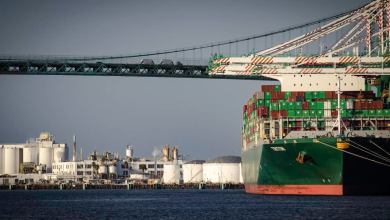
Could surging Chinese imports signal a full freight recovery?
Chinese imports have fully recovered. Does this mean the domestic trucking market will see a similar outcome?

The worst has yet to come for carrier financials and GDP
Zach and Anthony review some of the latest company earnings and a major economic releases which have yet to reveal the full story of the COVID-19 impact on the freight economy.

The first quarter could have been worse for many carriers without the pandemic
Many expected a worse outcome for carriers in March as a result of the COVID-19 outbreak. Ironically, the pandemic may have padded some 1Q results.

Not so fast, my friend
Anthony and Zach break down the Knight-Swift and Heartland earnings; slowing decline of freight rates and volumes and what the rise in imports mean for the recovery.

Increasing lead times could be the new “Amazon effect” and potentially a problematic sign for LTL
Carriers are getting more notice to pick up loads. Is this a result of Amazon relaxing their service expectations?

What to glean from J.B. Hunt’s surprisingly OK 1Q results, Cass, and disappointing retail sales
Anthony and Zach discuss what to make of the first major U.S. carrier to report earnings during the COVID-19 outbreak along with the recent Cass, industrial production and retail releases.

Could maritime rate increase from China signal recovery for domestic trucking?
The maritime shipping companies have been able to increase their rates amidst the COVID-19 induced shut down. Is this a sign of things to come for domestic carriers?

How the COVID-19 outbreak is hitting supply chains
Anthony and Zach have special guests Former Flex CEO and current strategic adviser to Clear A.I. Mike McNamara and FreightWaves Chief Strategy Officer JT Engstrom on to discuss coronavirus’ impact on various pieces of global supply chains and give an update on how the economy and freight market are reacting domestically.

Driver efficiency falls throughout March, even as volumes spike
Even as freight volumes surged to record levels in March, drivers spent less time driving.

Every day is a new day
Anthony and Zach discuss the swelling unemployment numbers as well as the plummeting freight volumes and what the endgame might look like for the COVID-19 outbreak.

Air cargo rates spike amid COVID-19 pandemic
Air cargo rates spike in the wake of the coronavirus outbreak. Medical supplies are in high demand while much of the air capacity is grounded.

Will the cure be worse than the disease?
With unemployment levels skyrocketing and a stimulus package on the table, Anthony and Zach are joined by Andrew Cox as they debate how the U.S. should handle the COVID-19 outbreak as a country economically, as a business, and as an individual.

Load rejections signal tightest market since 2018, but for how long?
Trucking capacity is the tightest it has been in 17 months thanks to the surging volumes, but all signs point to this being a short-lived event.
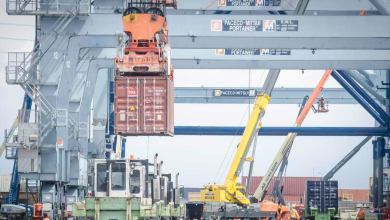
Chinese import and rail volumes and show first signs of recovery
Import volumes are showing the first signs of recovery since the initial decline in early February.

How the financial markets move transportation
Anthony and Zach bring in former fund manager Seth Holm to discuss how the volatile equities markets can hit the world of transportation and trucking.

Trucking volumes spike despite— because of—coronavirus concerns (with video)
Chart of the Week: Outbound Tender Volume Index – USA SONAR: OTVI.USA People have been clearing store shelves in parts of the country as if they were preparing for a zombie apocalypse this past week. This mass purchasing—or threat thereof—has spiked trucking volumes in the U.S. as the national Outbound Tender Volume Index (OTVI) increased […]

Coronavirus update and the main functions of a freight forwarder
Zach and Anthony talk about the latest coronavirus developments on transportation, the main functions of a freight forwarder and recent economic developments.

What drives trucking rates
Anthony and Zach explain the primary cost drivers of operating a trucking company and the market influences that drive the pricing volatility on both contracted and transactional freight movements. Also, an update on the coronavirus situation and what we are seeing in the economy today that may affect your life tomorrow.

Growth in long haul freight will drive tighter trucking market in 2020
Not only were volumes lower in 2019, but they traveled less miles, which compounded the impact of oversupply. Volumes have not recovered, but something else has changed that may help carriers this year.

How the spot market moves the freight economy
Spot freight may only account for 10-20% of total freight moved in the U.S., but its activity paints the picture of the entire freight market. Tom Mallon joins to discuss the direction of rates in 2020. Also; Coronavirus update along with the current state of the market as well as recent economic releases.

Diesel prices provide an unexpected boost for carriers this off-season
Diesel costs were supposed to make 2020 more difficult for struggling carriers, but wholesale fuel prices have fallen rapidly, which should help carriers in the slow season.

The Trailer Talk
Anthony and Zach, along with special guest Donny Gilbert, take a deeper dive into the freight market trailer pool and discuss the types of freight they haul, their characteristics, and their place in the broader market. Additional topics include another California regulation, coronavirus, and the surprising jump in the PMI.

Coronavirus may give trucking another headache
The coronavirus is having a far-reaching impact across the globe. The timing may make things worse for domestic trucking.

What is LTL?
Anthony and Zach break down the less-than-truckload sector and talk about its connection with truckload along with giving a quick update on the latest economic and freight market trends.

Reefer demand is thriving this winter
Reefer volumes have broken out this winter as dry van demand fades. Does this mean the sector is in for a strong recovery in 2020?

Is this the new normal?
Anthony, Zach, and special guest Kyle Lintner from K-Ratio discuss how the freight market is disconnected from the general economy; are we truly out of a freight recession; and how Freight Futures work.

New and smaller fleet growth stalls after rough 2019
New fleet growth is slowing while used truck prices collapse. Is this the first sign of contracting trucking capacity?

Straight Outta California
Zach and Anthony discuss the characteristics of the California freight market, the unintended consequences from regulations and the economic impacts from them.

California volumes collapse, capacity tightens in front of AB5; is it a coincidence?
California’s AB5 has caused significant disruption prior to the planned enforcement period. Has there been a measurable impact to the supply of carriers in the state?

January is the Monday of the year
Zach and Anthony discuss why January is so difficult to manage and why this one may be different for trucking; FMCSA and AB5 hangups; and give a economic and market update as well as projections.

How shippers should manage their bids
Market Expert Zach Strickland provides timely advice for shippers that need to choose either a carrier or a 3PL.

Drivers are safer but insurance costs continue to rise
Insurance premiums are a growing concern in the trucking industry, even as statistics show reduced incidents. What is driving the soaring insurance costs?

Shippers gave carriers less notice in 2019
Lead times fell throughout 2019 as shippers became accustomed to excessive capacity.

2019 closing on a strong note for trucking, but will it last?
The truckload sector has had a breakout December thanks to a booming holiday peak. Is this a signal of a long-term shift to the over-supplied freight market?

Die Hard is not a Christmas movie and other supply side corrections
Anthony and Zach discuss what will trim the fat in the oversupplied trucking market as well as talk about why Intermodal has not materialized as the savior of the rail volumes with Mike Baudendistel.

Celadon shutdown was a product of two freight recessions
Chart of the Week: 3-Year-Old Used Truck Prices – USA, Cass Freight Shipments Index – USA SONAR: UT3.USA, CFIS.USA At this point the news and story of Celadon, the largest truckload failure in history has been covered extensively in the media. The 3,000+ trucking company was by far the largest to shut down in what has been […]

What’s 10th century Korean pottery got to do with it? – Freightonomics [podcast]
Anthony and Zach discuss the recent Celadon shutdown and how it lines up with current freight market conditions; a disappointing manufacturing sector; consumers appear to be on another spending spree funded by debt.

E-commerce kills efficiency as carrier miles decline
The rise of e-commerce has increased the amount of low mileage freight, but that comes at an unexpected cost to shippers.

Empty container movements signal freight shift to the East Coast
West Coast freight volumes have been robust in 2019, but empty rail containers signal that the balance is shifting east heading into 2020.

Housing starts to build hope for downtrodden freight market
The housing and construction sectors are showing signs of life, giving truckers a rare hint of optimism for the coming months.

Reefer demand spikes as temperatures drop
Reefer demand jumps in contrast to the general freight market, despite much colder temps across the U.S.
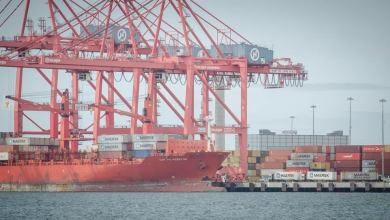
West coast volumes crash in all modes
Freight volumes fell off a cliff at the end of October. Is this yet another reason for concern that the market may slow even further?

Intermodal rail outperforms trucking in October
The rails managed to increase rates while trucking rates continued to compress in October.

Reefer volumes trick while dry van treats
Reefer volumes have declined in 2019 as shippers have taken advantage of cheap van rates, but declining production and trade wars have hurt the cause as well.

Peak retail season looks awfully ‘flat’
Retail is expected to be the great savior of the 4th quarter economy. Hopefully retaill shipment volumes are not an indication of things to come.

Freight volumes fall to new heights
Freight volumes took a nosedive to this past week, which led to the biggest difference in annual freight volumes this year.

Manufacturing index signals slower freight market this winter
A popular manufacturing index is signalling a rough ride for trucking after the holiday season.
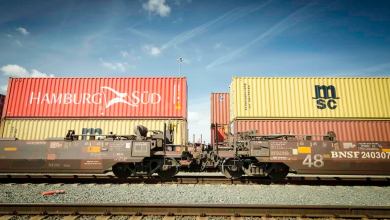
Rail volumes decline as trucking recovers
Trucking volumes are up YoY, while rail intermodal volumes have fallen. Now may be the time for long time competitors to explore new partnerships.

Diesel and Detroit disruptions hit trucking hard and fast
Two big events hit trucking like a hammer this week. What are the long run implications?

Small carriers expanding fleets as large carriers reduce tractor counts
Smaller carriers are snatching up the big carrier’s excess truck supply, even in a softer year. The reason is not obvious.

Trucking utilization improves while prices remain suppressed
Carriers are having less trouble keeping their drivers busy over the past month, but that has not quite translated to increased prices.

Why 2019 has been the worst year for trucking operators
2019 has been more challenging for trucking companies than any other non-recession year. Here is why.

FreightWaves releases tractor counts and new air capacity index in SONAR
FreightWaves releases several new datasets and improves on existing ones in this week’s SONAR release.

Has the Freight Recession ended?
After a disappointing first half of 2019, the freight market finally appears to be heading another direction.

Freight volumes shift to the east coast as companies attempt to navigate the trade war
The trade war with China has altered international shipping patterns, which has started to shift freight volumes to the East Coast.

Average price of diesel has become a solid barometer for freight activity, here is why
The price of diesel fuel has an obvious impact on transportation providers costs, but it also can give insight into demand for their services.

FreightWaves adds carbon emissions data to SONAR
Carbon emissions are now available in SONAR on a state level.
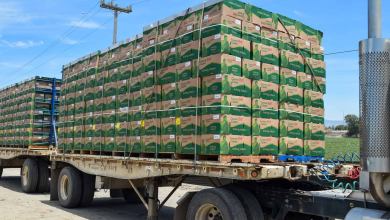
California’s spring produce season winds down, a shadow of previous two years
California’s produce shipments can wreak havoc on trucking capacity in the spring. This year’s season was s shell of the previous two.

Trucking spot market underperforms expectations by 10% in June
The volatile 2018 freight market is still being felt throughout the nations trucking industry. The freight futures settlement

July diesel tax increase squeezes small carriers in the Midwest
Diesel prices jumped in the Midwest this month due to a significant tax increase. Small carriers will have to adjust to keep costs down and maintain business.
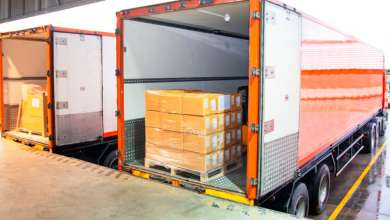
Dry van and durable goods orders stall, signaling a slower second half of 2019
Durable goods and dry van orders are declining. Could this mean a rough second half of 2019?

Trucking rates have fallen back to 2017 levels, but costs have not
Spot rates have fallen back to where they were two years ago. The problem for carriers; their costs have not.

Weekly Market Update: Seasonal peak arrives on schedule, but still disappoints
Freight volumes may have peaked for the season, but it certainly doesn’t feel that way. There is still a lot of uncertainty for Q3 as we close a disappointing Q2.

Freight Market Moneyball
Michael Lewis wrote “Moneyball” about the tactics Billy Beane used to improve the Oakland A’s. Read Zach Strickland’s take on using moneyball tactics in the freight market.

Reefer carriers weathering softening market more efficiently than van
Reefer carriers are weathering the cooling freight market more efficiently than two of the main trailer types. An interesting data point supports this claim.

Weekly Market Update: Reefer volatility keeps the freight market interesting
The demand for temperature controlled equipment is keeping the freight market active for reefer carriers and produce haulers, but general volumes continue to slide off 2018 highs.

FreightWaves SONAR platform now has Drewry’s world container indices
International shipping has become one of the largest drivers of domestic shipping volumes in the United States over the past several years. Knowing when and where container volumes are moving can be a leading indicator of when domestic shipping volumes are going to create disruptions in the U.S. freight market. FreightWaves continues to add more […]

Border town wait times explode prior to tariff announcement
FreightWaves’ SONAR chart of the week (June 9, 2019 – June 15, 2019) Chart of the Week: Wait Time (El Paso, Laredo) (SONAR: WAIT.ELP, WAIT.LRD) International trade has been a going concern for any involved in supply chain management over the past year as the current administration continues to impose tariffs on many goods entering […]

Weekly Market Update: Roadcheck tightens capacity
The last month has been like Mr. Toad’s Wild Ride for the freight market. Starting with the Trump tweet about increasing tariffs on Chinese goods another 15% in early May that caused a chasm to form in freight volumes, and now Roadcheck week keeping carriers off the roads as volumes surge coming out of the […]

International Roadcheck Week – Haul freight or take a vacation?
Last year, carriers avoided hotspots for vehicle inspections during CVSA’s Roadcheck week. Now the market has turned, so has their attitude about these areas.

Capacity loosens as Memorial Day weekend hits
Capacity normally tightens into the holiday weekend, but this Memorial Day is nothing like the previous years.

Weekly Market Update: The sky may have fallen
Volumes took a nosedive after the tariffs increased and are starting to recover slightly, but the damage may already be done.

Tariffs force shippers to take a pause
The trade war between China and the U.S. is having a noticeable impact on freight markets. Shippers and carriers are struggling to adapt.

Weekly Market Update: Freight volumes take a surprising mid-month drop
Freight volumes should be increasing heading towards Memorial Day weekend, but they are headed the other direction as shippers take a pause over tariff concerns.

Weekly Market Update: Freight volumes rise for second week in a row as flower season comes to an end in Florida
Freight volumes continue to increase steadily with no real implications to rates yet. Mother’s Day flower season hits Miami.

LTL is insulated but not immune to freight market volatility
The relationship between truckload and less-than-truckload (LTL) is like two cities positioned around the epicenter of an earthquake.
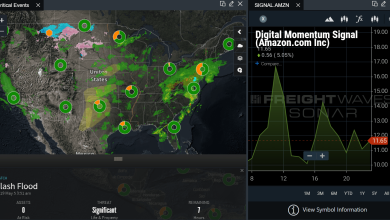
FreightWaves gets ready for hurricane season in SONAR 4.0 with critical event center and digital signal data
FreightWaves continues to push more features and data into its data analytics platform with 8 new features and 3 data sets.

Weekly Market Update: Volumes recover from Easter slump, but not all loads are created equal
Freight volumes recover from Easter lull as volumes are flat from a year-over-year perspective. Comparing load volumes is not the whole story, however.

Weekly Market Update: Volumes take a pause for Easter
National freight volumes took a nosedive this week as Easter had a decent impact on the freight market, but how much of the drop is related to the holiday?

Weekly Market Update: Volumes stable, capacity has a hiccup
Volumes are flat year-over-year, and after a brief period of disruption the freight market has stabilized. Container volumes that have fueled the port cities freight, may be due to soften in the coming months.
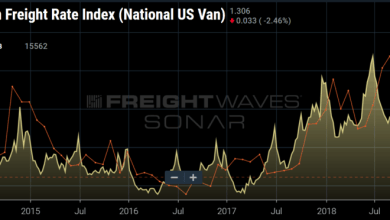
Spot market rates and truck orders have surprisingly tight correlation
National spot market price movement has a surprisingly tight relationship with new truck orders.
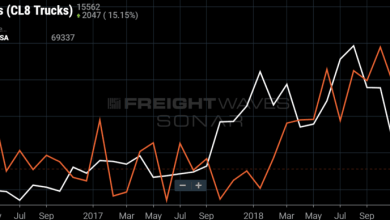
Capacity is still being added to the market long after it has cooled
Capacity is still being added to the market. Truck orders numbers for both new and used models support this.

Weekly Market Update: When will the West Coast bubble pop?
Market volumes remain strong from a year-over-year perspective, driven by the continued strength of the West. What does this imbalance mean for the freight market as the busy season approaches?
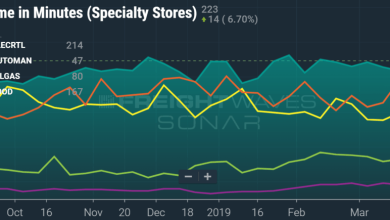
Specialty stores and electronic retail tops the list for longest dock times
Specialty retail and electronics retail stores are the least efficient loading and unloading docks for carriers according to FreightWaves latest index.

Weekly Market Update: West Coast still pulling freight market weight
L.A. volumes are propping up national freight volume but starting to fade. Are there any signs of another region emerging to take over for the West Coast?
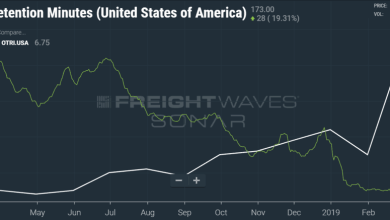
Shippers return to their old ways of detention as carrier compliance increases
After a period of attempting to improve detention times with carriers, they appear to be falling into the old habits of making load/unload times are lower priority according to FreightWaves’ Detention Minutes Index.

Weekly Market Update: Freight volumes move the opposite direction of the clocks
National freight volumes pulled back a bit this week after a strong start to March. Not all areas of the country are having the same experience.
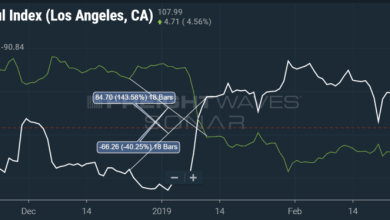
Los Angeles freight volumes are the highest in the U.S., but carriers beware
Los Angeles has had the heaviest freight volumes in the U.S. for the past several months, but carriers should be paying attention to where that freight is headed.

Weekly Market Update: March volumes arrive on schedule, capacity remains loose
Volumes have jumped to seasonal levels, but capacity has not been significantly impacted yet. Will March volumes change freight market conditions?
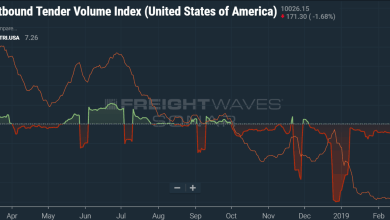
National freight volumes almost even year-over-year, capacity remains loose
National freight volumes are flat year-over-year, but capacity is as loose as ever. What is driving the discrepancy?

Weekly Market Update: Volumes surge to highest levels in two months on active West Coast
Market volumes have increased significantly over the past several days, bringing national levels to those similar to early March of 2018 when the market was thought to be more active. The data tells us one aggregate value cannot tell the whole story.
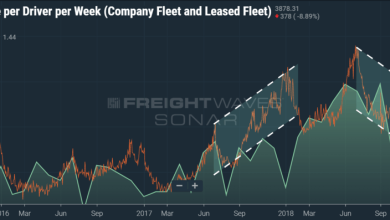
Spot market drives carrier revenues higher in 2018
Increasing spot rates lead carrier revenues in 2018, will revenues start to fall now that rates have started to come down again?

Weekly Market Update: Volumes slide under previous year values as spring approaches
The overall market remains relatively stable as volume dip below 2018 levels in two major markets. Spring is around the corner. Will freight volumes return with it?