

Truck capacity tightens as shippers pay more for less

Aerial view of a crowded truck terminal packed with semi-trucks and trailers as truck capacity tightens and shipper freight costs rise

The freight recession spent three years handing shippers cheap trucks. That invoice for its ending arrived in the second quarter.

Shippers moved less freight between April and June and paid sharply more to do it, according to the U.S. Bank Freight Payment Index released Tuesday. The National Shipment Index fell 1.1% from the first quarter to 75.1, the second consecutive sequential decline. Spending ran the other way, rising 6.4% to 230.4.

The annual comparison is wider still. Volumes dropped 2.8% from a year earlier, reversing the first quarter’s 0.6% gain, which had been the first annual increase in four years. Spending climbed 28.1%.

For shippers, that combination is negative operating leverage in its purest freight form: a shrinking book of loads costing more per load, with no volume growth to absorb the difference.

“While higher fuel prices added to transportation costs in the second quarter, fuel was not the primary force behind the increase in shipper spending,” said Bob Costello, senior vice president and chief economist at the American Trucking Associations.

Truck Capacity Tightening Outweighed the Fuel Spike

Fuel was not cheap. DAT Freight & Analytics reported second-quarter fuel costs of 75 cents per mile, 47.1% above the first quarter and 78.6% above a year earlier. The one favorable development for shippers came late in the quarter, when the national average diesel price fell from an April peak above $5.64 per gallon to $4.67, nearly a dollar lower.

Capacity did the heavier lifting. Three-plus years of recession pushed small, midsize and large fleets out of the market amid weak rates, rising costs and softer volumes. That exit never fully matched low demand, but it narrowed the gap.

Industry participants have pointed to a second force. English language proficiency (ELP) enforcement, non-domiciled commercial driver’s license revocations and increased oversight of driver training schools all gained momentum over the past year. Those actions may have helped bring supply closer to demand and, in some markets, pushed available capacity lower.

The result is a market that tightened while it shrank. Carriers seeing more freight may be benefiting from fewer fleets chasing the same loads, not from broad-based demand recovery.

Spot Rates Have Nearly Caught Contract Rates

The rate data shows how fast the rate floor moved. DAT reported average spot rates of $3.02 per mile in the second quarter, an 18.9% jump that followed an 11.9% gain in the first quarter. That is 75 cents, or 33%, above the fourth quarter of 2025 and 88 cents, or 41.1%, above year-earlier levels.

Contract rates rose too, though less violently, averaging $3.06 per mile. That is up 13% sequentially and 20.9%, or 53 cents, from the second quarter of 2025. Neither figure includes fuel, which DAT reports separately.

The gap between the two is now 4 cents. A year earlier it was 39 cents. Spot pricing has effectively converged with contract pricing.

That convergence is the forward indicator worth watching. Spot moves first and contract follows on the next bid cycle, which means the harder market for shippers is still in front of them, not behind.

The Southwest Shows What Tight Capacity Costs

No region illustrates the split more sharply than the Southwest. Shipments there fell 0.6% sequentially and 20.2% year-over-year. Spending rose 11.2% and 39.9% over the same periods. Across the first half of 2026, regional shipments dropped just over 10% from the fourth quarter of 2025 while shipper spending increased nearly 24%.

Tighter capacity appears to be the primary driver. The Department of Homeland Security and the Department of Transportation increased coordination around possible cabotage violations by Mexican B-1 drivers during the quarter, resulting in significant B-1 visa cancellations. Given the Southwest’s role in cross-border freight, those developments may be more visible there.

Demand was soft on its own, too. Housing starts across the broader South fell 14.4% from the first quarter and 9.6% from a year earlier, and Dallas Fed contacts reported weaker retail sales tied to gasoline prices and pressure on low-income consumers.

“The Southwest continued to stand out this quarter,” said Bobby Holland, director of freight business analytics at U.S. Bank. “The gap between declining shipments and rising spending was more pronounced there than anywhere else in the country. It’s a signal that capacity conditions can have a significant impact on freight costs even when underlying demand isn’t growing.”

Spending Rose in Every Region but One

Regional volumes were mixed. The Southeast posted the largest sequential gain at 0.9%, its first increase in three quarters and its largest in two years, helped by data center construction in Northern Virginia and Atlanta. The West rose 0.5%, the Northeast was flat, and the Midwest recorded the steepest decline at 3.7%. On an annual basis the picture is less uniform than the national number suggests: the West led all regions at 5.5%, the Midwest gained 2.8% and the Northeast 2.0%, while the Southeast fell 6.5%.

Spending was far more consistent. It increased sequentially everywhere except the Midwest, where it slipped 0.8%, led by the West at 12%, the Southwest at 11.2% and the Southeast at 10%. The Northeast’s 5% rise marked its seventh straight quarterly increase. Year-over-year, every region posted gains above 20%, from 22.9% in the Midwest to 39.9% in the Southwest.

One more second-quarter development sits underneath those numbers. The May 14, 2026, Supreme Court ruling in Montgomery v. Caribe Transport II, LLC, clarified that brokers could face scrutiny over carrier selection. Some brokers appear to be reassessing carrier qualifications, though the quarter’s measurable impact was modest.

The spending index remains 17% below its second-quarter 2022 peak, so this is not a return to pandemic-era pricing. Some freight may also be moving to rail as truck rates climb, though American Trucking Associations analysis suggests the effect is limited.

Costello put the quarter in plainer terms.

“The more important trend is that trucking capacity continues to tighten after several years of excess supply,” he said. “As available capacity becomes scarcer, rates are moving higher, leaving shippers with higher costs despite a freight market that remains relatively soft.”

July’s 55.6% PMI highest in 4 years; LTL carriers getting bullish

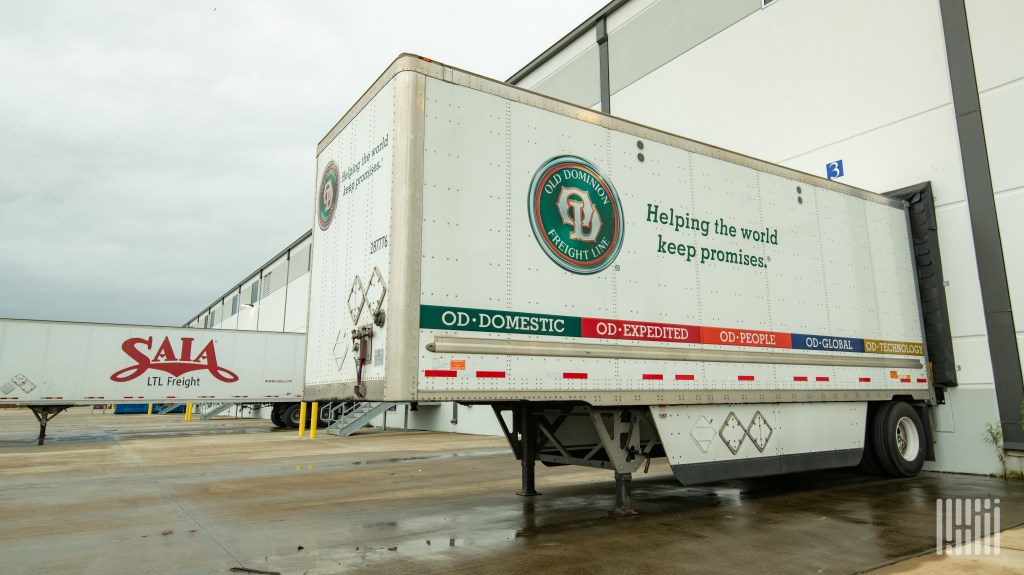
An OD and Saia trailers at a warehouse

July’s manufacturing data showed a stronger-than-expected push into expansion territory. A survey of manufacturing supply executives returned a 55.6 reading for the month, 2.3 percentage points above June and the highest reading since May 2022. New orders increased, inventories remained “too low” and manufacturing employment turned positive for the first time in 33 months.

A reading above 50 for the Institute for Supply Management’s Manufacturing PMI signals expansion, while one below 50 indicates contraction. A sustained level above 47.5 signals the overall economy is growing.

July marked the seventh straight month of expansion for the dataset. The update was 1.6 points ahead of analysts’ expectations and consistent with real GDP growth of 2.8%, the Monday report said.

The new orders subindex—an indicator of future activity—was also higher for a seventh consecutive month at 56.7. That was 70 basis points higher than June. Demand sentiment around orders improved to a ratio of 3.5-to-1 positive-to-negative comments. The ratio was 2.7-to-1 in June.

Manufacturing recovery showing in LTL volumes

The manufacturing complex has an outsized impact on less-than-truckload demand, with roughly two-thirds of LTL volumes tied to industrial output. Inflections in ISM data usually lead LTL tonnage by a few months.

Four publicly traded LTL carriers reported second-quarter results last week. On average, tonnage was up 2.6% year over year in the quarter, with preliminary results for July showing tonnage growth of 5.1% y/y. The group first saw tonnage turn positive in March.

Weight per shipment was 3% higher y/y on average in the second quarter, as more truckload shipments moved back to LTL networks and as the freight mix is skewing more industrial.

Management teams were a little more upbeat about the July trends as well.

ArcBest (NASDAQ: ARCB) normally sees a 4.6% tonnage decline from June to July, but tonnage was off just 1% this year (360 bps of outperformance). XPO (NYSE: XPO) reported 400 bps of outperformance while Old Dominion Freight Line’s (NASDAQ: ODFL) sequential volume trends were 250 bps better than typical seasonality during the month.

Saia’s (NASDAQ: SAIA) July sequential tonnage trend was slightly subseasonal, but it implemented a 7.1% general rate increase on July 6, creating some short-term volatility.

XPO noted “a lot of positivity from customers,” with twice as many now expecting their businesses to accelerate in the back half of the year.

Tightness across the transportation space could be seen in the ISM’s supplier deliveries subindex, which measures “delivery performance of suppliers to manufacturing organizations.” A 58.9 reading (1.5 points higher than June) signaled slower deliveries and potential supply chain constraints for an eighth straight month. Of the 13 manufacturing industries tracked, “no industries reported that supplier deliveries were faster in July compared to June.”

Customers’ inventories remained too low at 40.7, down 1.6 points sequentially.

Employment (52.8) was up 3.1 points, as production (58.5) increased 6.3 points and the backlog (55) was up 4.5 points. Sixty percent of respondents said their companies are hiring, while the remainder are “managing head counts.”

Why it matters? The recent manufacturing surge directly impacts freight capacity, delivery timelines and logistics costs.

More FreightWaves articles by Todd Maiden:

Atlas Air finalizes Air Atlanta investment

An Air Atlanta 747 jumbo cargo jet flies above the clouds.

Atlas Air Worldwide Holdings has completed its transaction to take a 49% stake in Iceland-based Air Atlanta, the all-cargo carrier and lessor announced on Monday.

As part of the deal, Atlas Air Worldwide subsidiary Titan Aviation acquired the 14 widebody freighter aircraft owned by Air Atlanta group of companies and leased them back to Air Atlanta, which will continue to operate the aircraft. 

Air Atlanta’s CEO and vice presidents acquired a 51% controlling interest in the operating companies (Air Atlanta Icelandic and Air Atlanta Europe). Air Atlanta will continue to operate under its existing leadership team and operating structure, while both companies collaborate commercially to pursue incremental global growth opportunities.  Air Atlanta Executive Chairman Hannes Hilmarsson will step down after 20 years in leadership roles with the company. 

Why It Matters: Subsidiary Atlas Air is a major all-cargo carrier. The strategic investment, initially announced on May 28, expands Atlas’ ability to perform cargo operations and offer widebody capacity across key international markets.

Between its Iceland and Malta certified airlines, Air Atlanta operates 18 widebody aircraft and owns 14 of them: 12 Boeing 747-400 cargo jets, two Boeing 777-300 passenger-to-freighter conversions, and four 777 passenger jets. It also owns four Boeing 747-400 cargo jets that are leased to Saudia Cargo, according to aviation databases. 

Click here for more FreightWaves/American Shipper stories by Eric Kulisch.

Write to Eric Kulisch at ekulisch@freightwaves.com.

New Australia airport has no curfew for cargo campus

STG drayage drivers to get cash in NJ misclassification case

Drayage drivers who hauled for STG Logistics in New Jersey may be eligible for a piece of a more than $2.2 million payout by the company following the resolution of a legal case over driver misclassification.

That payout is a fraction of the total value of the settlement, much of which will disappear into STG’s chapter 11 recently-concluded bankruptcy action. And the fact that such a large settlement is coming right before New Jersey on October 1 codifies the ABC test that was used by New Jersey in its action against STG is creating another level of concern among the state’s carriers.

The total cash payout in the settlement is $2.775 million. It will be paid out as $2.2 million to drivers, with the $555,000 balance to be paid to New Jersey in both penalties and contributions to the Unemployment Compensation and State Disability Benefits Funds.

Much bigger figure to be swallowed by bankruptcy

But the settlement document filed in the Superior Court of Essex County puts the total value of the settlement at slightly more than $80.9 million. STG is coming out of a chapter 11 bankruptcy proceeding that cut its debt load by 90%. And most of that big $80 million settlement agreement looks to be going away in the bankruptcy case.

“This agreement…shall be incorporated into the (bankruptcy) plan,” according to the settlement document. 

In the prepared statement announcing the deal released by the Attorney General and the state’s Department of Labor and Workforce Development, the two agencies noted that the bankruptcy “resulted in many debts being canceled.”

But that part of the settlement going to drivers “is considered ‘priority’ under both the bankruptcy code and the settlement agreement, ensuring workers are compensated ahead of other creditors,” the agencies’ statement said. 

The breakdown on the payout of the $80-million plus is that $2.775-million of it will be paid out as $2.2 million to drivers and the $555,000 balance to be paid to New Jersey in both penalties and contributions to the Unemployment Compensation and State Disability Benefits Funds.

Drivers eligible for a payout can receive an amount that will be based on their earnings from January 1, 2017 to the present. The payment will be a lump sum.

There is an additional $7.5 million payment to be made by STG Logistics but only if it fails to meet certain obligations drawn up as part of the settlement. 

The balance of more than $70 million is what the settlement agreement refers to as the “general unsecured claims” that would only be paid out “to the same extent that general unsecured claims are ordered to be paid…according to the plan.” That plan is wiping away about 90% of the company’s debts.

History of the case

The state agencies said the suit against STG, which dates back to 2023, was the first filed under a 2021 law that allowed litigation against employers that New Jersey believes had misclassified workers who were effectively full-time employees as independent contractors.

The settlement ends litigation that traces back to an investigation that began in 2019, when the drayage operations were part of XPO Logistics (NYSE: XPO). They were sold to STG in 2022 as part of XPO’s ultimately successful plan to reposition itself as a pure play LTL carrier.

While the settlement document does not mention New Jersey’s  ABC standards that governs the definition of when a worker can be considered a truly independent contractor , the announcement of the deal by the state agencies does so.

“Under New Jersey’s ABC test, workers are presumed to be employees unless a company can prove the individual is largely free from the company’s control, performs work outside the company’s usual business or outside its places of business, and has their own independent business,” the two state agencies said in their announcement. “STG failed to meet any of these requirements.”

What STG was charged with

Over numerous bullet points, the state said STG (and XPO prior to that) did not legally meet several requirements a company must meet for its full-time employees.

Among the issues the state charged STG with were not paying wages due to employees, in violation of the state’s Worker Protection Law, failing to maintain records of hours worked and wages paid, and not carrying “sufficient” workers’ compensation insurance.

An email sent to STG through its portal had not been responded to by publication time.

Who’s in control?

The issue of control is always key in an independent contractor law. While various states’ ABC tests are not all verbatim, the A prong in the New Jersey test is typical: “The individual has been and will continue to be free from control or direction over the performance of work performed, both under contract of service and in fact.

The state, in its prepared statement, said the drayage drivers hired by STG had little to no control over their jobs. According to the statement, the theoretically independent drivers needed to display STG’s name on their trucks, could lease only to STG “for its exclusive possession, control and use,” assigned all routes and were subject to electronic monitoring. 

Waiting for October 1

Lisa Yakomin, president of the Association of Bi-State Motor Carriers, declined comment on the specifics of the case as it relates to STG. 

But there were parts of the state agencies’ prepared statement that concerned her as her group, which represents the types of drayage carriers akin to STG, prepares for the state’s ABC law to be codified October 1. (It previously had been enshrined in various precedents but without a specific law on the books).

In particular, the state’s statement said STG was in violation of state regulations defining independent contractor status because it required the STG name be displayed on the truck driven by ostensible independent owner operators, which it said was a sign of control.

Yakomin said federal law requires such a display.

Even if this is ultimately a small issue, Yakomin said it raises concerns. 

“So if the Department of Labor in New Jersey is saying that following the laws put forth by the federal government is indicative of control, we have a real problem,” Yakomin said.

Yakomin said the example of the truck signage amounts to “saying the quiet part out loud.”

“They put it into writing, that OK, we’re using the ABC test, and this is how we’re interpreting it,” Yakomin said.

More articles by John Kingston

Werner CEO Leathers: just the 3rd inning in driver attrition

C.H. Robinson earnings call shifts to nuclear verdict as key topic

Louisiana: Motta request rejected, murder trial nears

$4M worth of cocaine found in Texas commercial truck

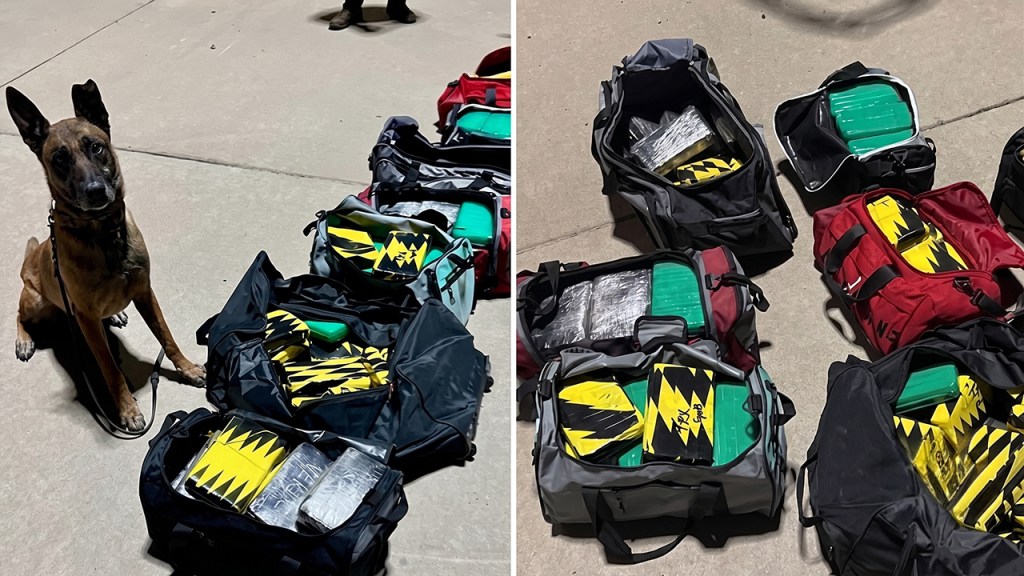
El Paso County investigators seized nearly 120 kilograms of cocaine from a commercial tractor-trailer during a targeted interdiction operation. Detectives also recovered $7,000 in cash and confiscated the truck. Authorities estimate the cocaine carried a street value of about $4 million. Officials continue investigating the suspected trafficking operation.

The El Paso County Sheriff’s Office announced the seizure Friday. Detectives conducted the operation July 29 through the agency’s Gang and Narcotics Unit. Officials connected the commercial vehicle to an ongoing criminal investigation. Authorities withheld additional information while detectives continue their work.

Commercial truck seized during operation

Investigators recovered approximately 119.8 kilograms of cocaine during the interdiction. Deputies also confiscated $7,000 in United States currency. Authorities took possession of the tractor-trailer because investigators linked the vehicle to the trafficking operation. The sheriff’s office did not identify the driver, carrier, trailer, cargo or destination.

Sheriff Oscar Ugarte highlighted the significance of the investigation.

“This significant seizure disrupted the movement of a large quantity of illegal narcotics and underscores the El Paso County Sheriff’s Office’s commitment to aggressively targeting drug trafficking organizations operating in and through our region. Our investigators remain focused on identifying, investigating, and dismantling criminal networks that threaten the safety of our community.” Sheriff Oscar Ugarte

Investigation continues

The sheriff’s office confirmed the investigation remains active. Officials have not announced arrests or criminal charges. Detectives also have not disclosed whether additional suspects remain under investigation. Authorities stated they will not release further information while the case continues.

The sheriff’s office noted that deputies continue working alongside local, state and federal law enforcement partners. Officials did not identify participating agencies or describe their roles. Additional details could become available through future court filings or criminal charges. FreightWaves will update this story as new information becomes public.

Why it matters

Commercial trucks remain attractive targets for criminal organizations because they move large volumes of freight across long distances every day. Transportation professionals should monitor investigations like this because future court records often reveal methods that can strengthen security practices across the supply chain.

Training alone cannot stop organized crime, but consistent verification can reduce opportunities for criminals to exploit transportation networks. Programs such as the Certified Fraud Compliance Officer (CFCO) focus on building repeatable decision-making processes that help professionals identify risks before they become costly incidents.

Click here for more articles on cargo theft and freight fraud by Phil Brink.

Indiana State Police recover 12 stolen truckloads worth more than $11 million – FreightWaves

Louisiana bribery scheme gave 124 people CDLs without training or tests – FreightWaves

$20M in cocaine found beneath floorboards of commercial truck trailer at California border – FreightWaves

Australia military base gets mobile post office during war games

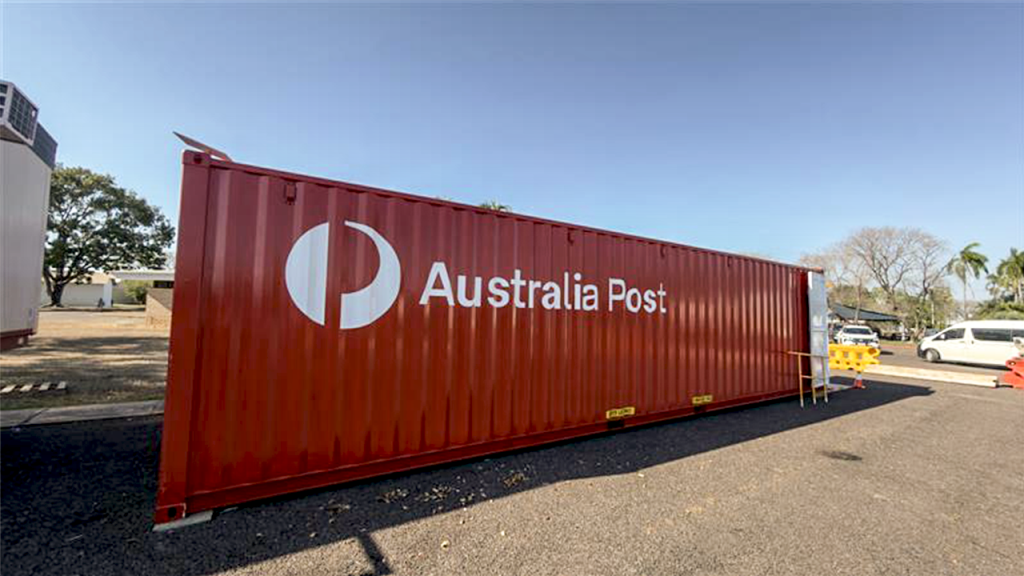
A red shipping container with Australia Post logo doubles as a mobile post office in a remote location.

Australia Post said Monday it opened its first mobile post office and parcel lockers on the Royal Australian Air Force base in Darwin, giving military personnel access to essential mail and parcel services during a three-week multinational air combat exercise involving troops from Australia and 21 allied and partner nations, including the United States.

The dedicated Parcel Hub gives Australian and international troops access to services typically unavailable during large-scale defense exercises. The hub serves as a mini-post office with postal employees providing service. Free 24/7 parcel lockers have also been installed on the base during Exercise Pitch Black, giving personnel greater flexibility and convenience when sending and receiving parcels.

“Australia Post has a longstanding partnership with Defence, and this first-of-its-kind portable Parcel Hub shows how we are innovating to meet the changing needs of our customers,” said Mitch Buxton, Australia Post General Manager for Network Optimization, in a news release. “The hub is designed to operate in complex environments, and this exercise in Darwin will give us valuable insight into how we can strengthen our emergency response during natural disasters, severe weather events and other major disruptions.”

Click here for more FreightWaves/American Shipper stories by Eric Kulisch.

Write to Eric Kulisch at ekulisch@freightwaves.com.

RELATED STORIES:

Australia Post named delivery partner for Vinted’s Australia launch

New Australia airport has no curfew for cargo campus

Australia Post inaugurates large air parcel hub at Brisbane Airport

Truck enforcement sweeps hit 32 drivers, 45 vehicles across US

Recent commercial vehicle enforcement operations across eight states placed at least 32 truck drivers and 45 commercial vehicles out of service, underscoring continued nationwide scrutiny of licensing, maintenance and cargo safety.

Operations in Arizona, Colorado, Massachusetts, Missouri, Rhode Island, Texas and Wyoming resulted in citations, arrests and more than $16,000 in fines.

Joint Massachusetts, Rhode Island operation finds 212 violations

Massachusetts and Rhode Island state police conducted one of the largest recent operations on Thursday along Route 146 near the state line.

More than 27 federally certified inspectors worked a 12-hour operation using portable axle scales, a performance-based brake tester and hazardous materials inspections.

Authorities completed 126 inspections and identified 212 federal and state violations. Thirty commercial vehicles and 20 drivers were placed out of service.

Inspectors screened or weighed 949 commercial vehicles and issued $16,079 in fines for three weight violations.

Authorities said vehicles were removed from service for serious brake and mechanical defects, while drivers were sidelined for medical certification, CDL and electronic logging device violations. Inspectors also identified hazardous materials issues and assisted in a criminal investigation involving a suspicious vehicle.

Arizona details uncover overweight trucks and unlicensed driver

Arizona law agencies checked commercial vehicles July 27 along U.S. Route 60 in Pinal County, resulting in 35 inspections and 64 violations. 

Nine vehicles and three drivers were placed out of service, while six citations were issued.

Twenty-six of the 113 vehicles checked were overweight.

In a separate July 25 case in Graham County, a steer tire blowout caused a semi to leave U.S. Route 70. No injuries were reported, but a post-crash inspection found the driver had no valid CDL or medical certificate. The truck also lacked valid registration, and the company did not have authority to operate.

The driver received multiple citations and was placed out of service.

In Phoenix, an Arizona trooper also stopped a commercial vehicle carrying four occupants after observing that three were not wearing seat belts. The driver was placed out of service for lacking a medical evaluation and for a missing trailer cotter pin. Inspectors also found that the trailer’s emergency breakaway cable was attached incorrectly.

The most recent roundups signal that carriers and drivers face growing exposure to roadside delays, fines and out-of-service orders if licensing, maintenance and cargo securement requirements are ignored. (Photo: Douglas County Sheriff’s Office- Colorado)

Colorado checkpoint sidelines drivers and trucks

The Douglas County Sheriff’s Office and Colorado State Patrol conducted a commercial vehicle checkpoint Thursday on Chambers Road near Mainstreet.

Officers stopped 63 trucks, performed 32 full inspections and documented 50 violations. 

Seven drivers and five vehicles were placed out of service, while eight tickets were issued. 

The violations included six CDL offenses, four seat belt violations, two drug or alcohol violations and one suspended license. Authorities also served one proof-of-service document during the checkpoint.

Missouri trailer suspension held together with rope

A Platte County, Missouri, deputy stopped a Peterbilt tractor pulling an intermodal chassis on June 17 and found that the trailer’s suspension was not connected properly.

Authorities said the suspension system was being held together with a piece of rope and bungee cords.

The driver was cited, and the trailer was placed out of service until it could be repaired at the scene or towed. The sheriff’s office cited the case as an example of why drivers must perform thorough pretrip inspections before operating commercial equipment.

Texas car hauler partially loses load

Police in Gunter, Texas, removed a car hauler from service June 23 after it partially lost its load of automobiles, creating what authorities described as a significant danger to the public.

The Gunter Police Department located the vehicle and requested assistance from the Collin County Sheriff’s Office Commercial Motor Vehicle Enforcement Unit.

Following an inspection, authorities declared the car hauler unsafe and placed it out of service. A towing company was called to remove the vehicle after officers addressed the immediate roadway hazard.

Wyoming operation results in 120 traffic stops

The Laramie County Sheriff’s Office conducted another round of its “Truck Around and Find Out” initiative in late July, resulting in about 120 traffic stops and 40 tickets, according to Cowboy State Daily.

Sheriff Brian Kozak and Chief Deputy Chance Walkama said 10 people suspected of being unlawfully present in the U.S. were arrested and transferred to Immigration and Customs Enforcement. The operation also included enforcement against passenger vehicles traveling near commercial trucks.

County officials said the latest operation brought the number of immigration-related arrests associated with the enforcement initiative to 128 since its launch in November 2025.

Officials emphasized that the campaign’s primary objective was traffic and commercial vehicle safety rather than immigration enforcement.

StateDrivers placed out of service
Massachusetts/Rhode Island joint operation20
Arizona (Pinal County enforcement detail)3
Arizona (Graham County post-crash inspection – no CDL/medical card)1
Arizona (Phoenix overloaded truck stop)1
Colorado (Douglas County checkpoint)7
Missouri0 reported (trailer placed out of service, not the driver)
Texas0 reported (vehicle placed out of service, not the driver)
CaliforniaNo driver out-of-service total reported in the source.
WyomingNo commercial driver out-of-service count reported; the operation focused on traffic stops, arrests and immigration enforcement rather than FMCSA out-of-service inspections.

Why it matters: The multi-state enforcement actions demonstrate how missing credentials, neglected maintenance and improperly secured or overweight cargo can quickly lead to fines and out-of-service orders — and potentially create severe safety risks for truck drivers and everyone sharing the road.

Is Lufthansa giving up on its Airbus A321 cargo fleet?

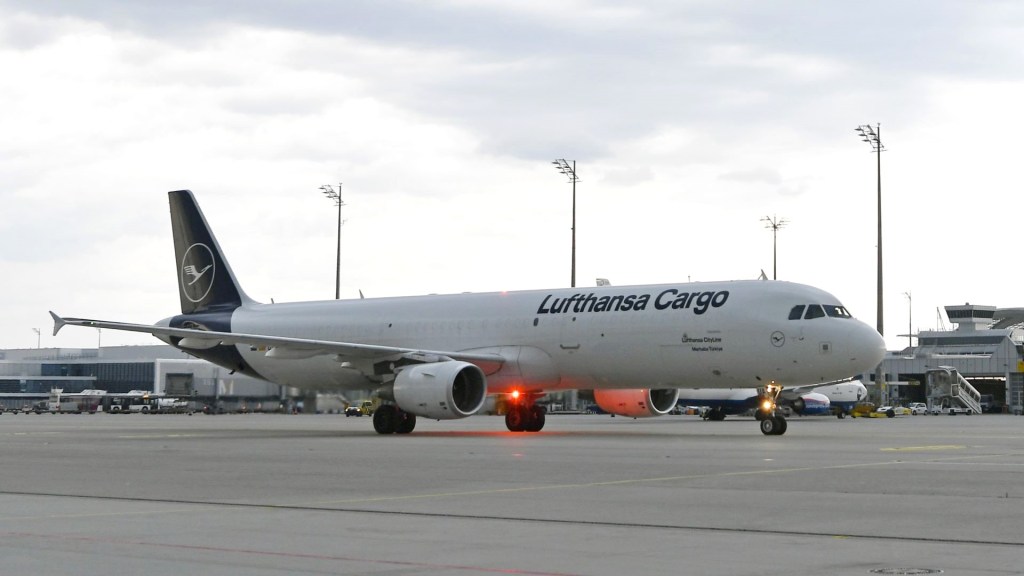
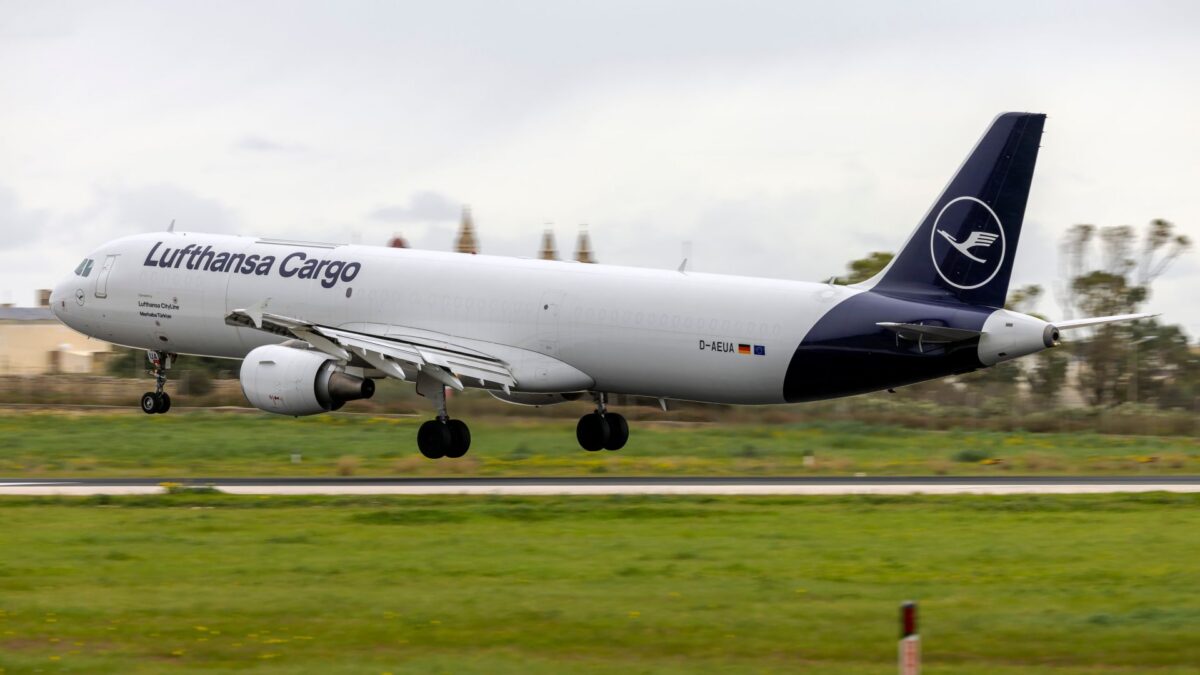
A blue-tailed Lufthansa Cargo jet moves on an airport taxiway.

Lufthansa Cargo insists it will soon resume commercial service with its four Airbus A321 converted freighters that were grounded nearly four months ago, but all signs suggest the carrier has given up on the narrowbody jets and is looking to unload them.

The cargo subsidiary of Lufthansa Group (XETRA: LHA) is ready to abandon the narrowbody A321 jets after less than four years, because they have fallen short of performance expectations and Lufthansa Cargo doesn’t need the capacity, as most regional freight customers can be served by Lufthansa’s passenger air and trucking networks without any noticeable impact, according to aviation and logistics industry sources.

The A321s were operated for Lufthansa Cargo by CityLine, which provided crews and flight support until Lufthansa Group accelerated the planned closure of the loss-making, regional passenger affiliate. It abruptly shut down CityLine operations in mid-April because of rising fuel costs linked to the Iran war and pressure from labor disputes. The A321s remain parked at Frankfurt International Airport, Lufthansa’s main hub.

“Our strategic European network is a key component in maintaining global supply chains. Lufthansa Cargo and the Lufthansa Group are aware of this responsibility. We will now be working with the Lufthansa Group to find a way to offer this cargo capacity to our customers again as soon as possible,” the cargo division said in a statement at the time.

Lufthansa Cargo, the No. 14 cargo carrier in the world by scheduled traffic, has a fleet of 12 large Boeing 777 intercontinental freighters and manages shipments on Group passenger airlines.

Lufthansa took delivery of the A321 freighter aircraft in 2022 and 2023 from San Francisco-based BBAM Aircraft Leasing & Management, after they were reconfigured by a speciality repair shop to carry shipping containers on the main deck. The all-cargo airline marketed their capacity on short-and-medium haul routes geared towards e-commerce customers in Europe, and parts of the Middle East and North Africa. 

In March, Lufthansa Cargo executives remained publicly bullish about the A321s, describing how they helped support customers in the automotive sector, a key focus area for the company. In one case, a chartered A321 flew on less than 24-hour notice from Frankfurt, Germany, to Vienna, Austria, to pick up a load of components and deliver them to Belgrade, Serbia, to keep a production line from closing down. Two additional charter flights followed in subsequent days. And in February, Lufthansa Cargo operated 11 A321 freighter flights from Casablanca, Morocco, for Mercedes-Benz over an 11-day span. 

Responding to an inquiry about the delayed return of the A321 cargo fleet, spokeswoman Katharina Stegmann, said Lufthansa Cargo was looking to replace CityLine with a third-party contract carrier that would operate the aircraft.  

“We are currently working intensely to evaluate the available options for operating our A321-fleet. Currently, it appears that this will be handled by an operator outside Lufthansa Group. It has not yet been definitively determined whether the suspension will remain in effect for the entire summer flight schedule,” she said in a June 29 email message. 

“Our goal is not only to provide a short-term solution, but also to establish a structurally improved solution that will ensure even greater stability and flexibility in the future. Until we can implement a new operating structure, the aircraft will remain grounded. There is no exact timeline foreseeable at the moment, but we are working on restarting the operations as soon as possible.” 

Ghost freighters

Restarting the A321 operations now seems unlikely after a spokesman confirmed to FreightWaves that Lufthansa Cargo has removed its brand name and color scheme from the A321 freighters. 

“As part of the ongoing evaluation of different operating scenarios, the aircraft have been transitioned to a neutral exterior appearance. Since the aircraft are currently grounded, the branding was removed during this period,” Jan Paulin said in a statement on July 16. “For operational reasons, the aircraft are moved on a regular basis, for example to undergo scheduled inspections and maintenance checks.”

Stripping the corporate colors from the A321s raises questions about whether Lufthansa Cargo is still interested in operating them. The latest statement describes the goal of finding a home for the A321s, but notably ignores any specific mention of resuming operations for Lufthansa Cargo itself.

Lufthansa CityLine operated four Airbus A321 converted freighters on behalf of Lufthansa Cargo. (Photo: Lufthansa Cargo)

“We are currently working intensively to evaluate the available options for operating our A321 freighter fleet. As part of this process, we are in discussions with several potential operators to identify a sustainable solution for the future operation of the aircraft. The duration of the current suspension of flight operations has not yet been finally determined,” Paulin said.

The change to a neutral color scheme indicates that Lufthansa Cargo is trying to return the A321s and break the multi-year lease with BBAM or sublease them to another all-cargo carrier, said an industry executive familiar with the situation. 

BBAM doesn’t want the planes back and Lufthansa would prefer not subleasing them. “It’s a bit of a standoff at the moment,” the source said. “I don’t think they’ll operate back for Lufthansa.”

The lessor’s position is influenced by a glut of narrowbody freighters, caused by a boom in passenger conversions in response to massively elevated air shipping activity during the pandemic, and the realization that remarketing the A321s at equal lease rates to a carrier of equal credit worthiness will be difficult — especially with most operators still favoring the Boeing 737-800 in that category. 

Some owners are making more money by removing engines from idle A321 freighters and leasing them to passenger airlines desperate to avoid capacity reductions in the face of a global engine repair and production slowdown. But the Lufthansa aircraft are in BBAM’s freighter fund and BBAM wants to keep them working as freighters, the source said.

BBAM representatives did not respond to repeated phone messages requesting comment on the matter.

From Lufthansa’s point of view, subleasing the aircraft isn’t ideal because it would be an intermediary with its credit still on the hook to BBAM.

“If they do cut a deal with BBAM to return the airplanes it would mean millions of dollars of termination fees,” the source told FreightWaves. 

Lufthansa Cargo is coming to terms with the fact that the A321 “is an expensive aircraft to operate in cargo configuration and every operator is having a hard time making money,” said a prominent air logistics expert with experience running airline operations and as an airline customer.

Miami-based Global Crossing Airlines, for example, this year idled two of its four A321 freighters because of soft demand and its inability to exit the lease. Latvia-based SmartLynx Airlines, which operated a fleet of A321 converted freighters shut down cargo operation in March 2025 after losing a major contract. Also, Air Transport Services Group, the world’s largest lessor of freighter aircraft and a contract cargo airline for customers such as Amazon and DHL Express, in January dissolved its joint venture converting Airbus A321 passenger aircraft to all-cargo configuration because demand for A321 freighters has collapsed. 

Turkish Airlines’ cargo division has wet-leased some A321 freighters from another airline to temporarily fill capacity needs, but doesn’t like them because they lose money, the logistics source said.

FreightWaves spoke with several air cargo analysts and operators who say the A321 is uneconomical without high capacity utilization, the right commodity and the right route system. They all requested anonymity so they could speak freely without jeopardizing current or future business relationships.

The primary issue is that the Boeing 737-800 is more efficient than the A321. The A321 is heavier, which means it requires more fuel, and requires more maintenance than predicted, resulting in higher trip costs than with a 737-800, said an expert who previously worked at one of the aircraft manufacturers. 

In many cases, A321 leases are more expensive because the planes tend to be newer than 737-800 converted freighters and the conversion costs are rolled into the lease. 

Of the 82 A321 converted freighters in the market, 38% are inactive compared to an inactive rate of 14.8% for the 283 available Boeing 737-800s, according to data provided by Aerodynamic Advisory.

Over time, operators have realized the plane’s volumetric capacity works well high-frequency small-package shuttle routes, but is less desirable for general freight.

“The A321 passenger-to-freighter experiment is a failure. The only way to make money is if you pack them full of e-commerce day-in and day-out and then they might only break even. But with high fuel costs, and so on, these are doomed in my opinion,” said the logistics professional. 

One of the few carriers having apparent success with the A321 is Qantas, which operates six A321 converted freighters on behalf of Australia Post and is scheduled to take delivery of three additional A321s in the coming months

Lufthansa Cargo can achieve greater operating flexibility by contracting, as needed, with narrowbody freighter operators when extra capacity is needed for short periods rather than being permanently stuck with dedicated planes it can’t efficiently utilize, the aviation executive said. 

The airline acknowledged that it has been able to support customers without interruption since the A321s were grounded.

“Thanks to our extensive global network, supported by our own Boeing 777 freighters and the belly cargo capacity provided by Lufthansa Group passenger airlines, we are able to continue offering our customers flexible and reliable transportation solutions,” Paulin, the spokesman, said.

Jonathan Mellink, head of sales and marketing at cargo consultancy Rotate, said the A321s exit from Lufthansa Cargo’s fleet has had a relatively small impact on customers within the intra-Europe network. The freighters offered about 210 metric tons of daily regional capacity and likely better service levels than passenger aircraft or trucks, he explained. 

Lufthansa’s A321 changes have not had much impact on Germany-based logistics provider Dachser, spokesman Hedrik Durst said. The company has been able to leverage its strong European road network to absorb traffic previously carried by the freighters

The head of an air freight shipping cooperative said he hasn’t seen any shipper delays because there are plenty of regional air cargo and ground alternatives. 

Click here for more FreightWaves/American Shipper stories by Eric Kulisch.

Write to Eric Kulisch at ekulisch@freightwaves.com.

GlobalX shelves 2 Airbus cargo aircraft amid thin demand

New Australia airport has no curfew for cargo campus

Lufthansa Cargo targets high-value tech, auto and pharma sectors

Louisiana bribery scheme gave 124 people CDLs without training or tests

Federal prosecutors say a Louisiana bribery scheme helped at least 124 people fraudulently obtain commercial driver’s licenses they did not earn. Three defendants pleaded guilty July 29 for participating in the operation. The conduct stretched from August 2020 through February 2024. Each defendant pleaded guilty to bribery concerning programs receiving federal funds.

Mahmoud Alhattab, a local restaurant owner, admitted he led the scheme. CDL applicants paid him an average of about $5,000 for unearned credentials. The operation bypassed knowledge testing, entry-level driver training and skills testing. Those three steps form the federally mandated CDL qualification process.

Correct answers entered at OMV office

Alhattab admitted he bribed two employees at a Donaldsonville, Louisiana, Office of Motor Vehicles location. He sent workers photographs of applicants’ driver’s licenses through cellphone messages. His messages also identified requested endorsements, including school-bus credentials. OMV employees then entered correct knowledge-test answers for the applicants, according to court documents.

The office later issued commercial learner’s permits based on falsified scores. Alhattab paid the two workers with cash and meals. Staff members allowed him to bring applicants through a nonpublic side entrance. They also let him enter restricted sections of the building.

Alhattab sometimes operated the OMV camera for learner-permit photographs. The written knowledge examination covers vehicle safety systems and emergency situations. It also addresses driving maneuvers and extreme road conditions. A learner’s permit must come before training and a skills examination.

Fake training records followed false permits

Most CDL candidates must complete entry-level driver training after obtaining a learner’s permit. That instruction includes demonstrating proficiency while driving a commercial vehicle on public roads. Alhattab admitted bribing two truck-driver training business operators to avoid that requirement. One of those operators was defendant Jonathan Parsons.

Alhattab sent Parsons photographs of commercial learner’s permits through cellphone messages. Parsons used that information to create false training records, prosecutors said. He admitted reporting successful completion in a federal database despite no actual instruction. Those entries moved candidates toward the final licensing stage.

Louisiana requires commercial drivers to pass a skills examination. That assessment includes pre-trip inspections, basic vehicle control and safety-related on-road driving. Parsons and another business operator held state certification to administer those evaluations. Alhattab admitted bribing both men to defeat the final requirement.

Examiner entered passing tests without drivers

Parsons admitted reporting passing skills-test results to the state for people who never took examinations. Early in the operation, Alhattab sometimes drove the test vehicle while posing as an applicant. He did so to make it appear that Parsons conducted a legitimate evaluation. Parsons later entered results without Alhattab or the applicant appearing at the test site.

Defendant Marline Roberts worked as another skills-test examiner. She admitted creating seven phony score sheets during early 2023. Those records supported Parsons’ false reports, according to the Justice Department. Parsons paid Roberts to assist with the operation on some occasions.

Alhattab admitted causing at least 124 people to fraudulently receive CDLs. Parsons admitted causing at least 118 people to receive credentials through false training entries, test reports or both. The three defendants face sentencing on Oct. 28. Their offense carries up to 10 years in prison, three years of supervised release, a $250,000 fine and a $100 assessment.

The FBI and U.S. Department of Transportation Office of Inspector General investigated the case. Louisiana’s Office of Inspector General and Public Safety Services also assisted the inquiry. Other defendants charged in the indictment await trial. Those charges remain accusations until prosecutors prove guilt beyond a reasonable doubt.


Why It Matters: Commercial driver licensing depends on verified training, testing and records. Those safeguards protect freight networks, public roads and the families traveling on them. When someone bypasses required training and skills tests, a CDL may not reflect the ability to safely operate a commercial vehicle. Imagine putting your child on a school bus without knowing whether its driver completed the training and testing required for that credential.

In my opinion, CFCO training could help transportation professionals recognize when a credential, record or verification process does not match the work behind it. Consistent verification creates friction before false documents become a larger safety problem.

Click here for more articles on cargo theft and freight fraud by Phil Brink.

CHP finds $500K in stolen cargo tied to multiple Southern California thefts – FreightWaves

New Senate bill targets ‘chameleon carriers’ that reopen to escape penalties and enforcement – FreightWaves

7 smuggled migrants die in sealed rail container, 11 face life sentences – FreightWaves

Florida Lottery: USPS worker accused of stealing winning ticket faces 6 charges

A Florida Lottery player mailed a winning Pick 4 ticket to its intended destination. The $2,600 prize never arrived. Instead, investigators traced the entry to the Florida Lottery’s Miami District Office. Authorities accuse a USPS letter carrier of redeeming it herself.

Florida Lottery Special Agents arrested Lekaysha Lockhart on July 23. The agency worked with investigators from the USPS Office of Inspector General. Officials identified Lockhart as the person who redeemed the winning ticket. The transaction occurred June 19 at the Miami office.

Missing prize triggers joint investigation

The inquiry started after the player reported that her winning Pick 4 ticket disappeared in transit. A Florida Lottery Inspector traced the claim to Lockhart. Special Agents and USPS OIG investigators then conducted a joint operation. That effort resulted in her arrest, according to the Florida Lottery.

Officials reported that Lockhart admitted to stealing the ticket after entering custody. They also reported that she admitted to redeeming the prize. The release did not identify the player.

“Our players deserve confidence that every Lottery prize is protected through strong security measures and diligent oversight,” Florida Lottery Secretary Reginald D. Dixon said. Dixon credited the agency’s Division of Security for its work. He also thanked USPS OIG investigators and the Broward County Sheriff’s Office. The agencies worked together during the investigation and arrest.

Charges span multiple judicial circuits

Lockhart faces grand theft and dealing in stolen property charges. She also faces a count of filing a false claim for payment. Prosecutors charged her with two counts involving a two-way communications device. The case also includes a mail theft charge.

The Florida Lottery reported that the alleged conduct occurred across multiple judicial circuits. Prosecutors will handle the cases separately. The agency’s Division of Security investigates complaints involving lottery tickets and prize claims. Its Special Agents work with law enforcement partners on criminal cases involving game integrity.

The Florida Lottery reported more than $51 billion in transfers supporting Florida education since 1988. It also reported paying more than $110 billion in prizes during that period. The agency operates with more than 13,600 retailers across the state. Officials described the arrest as part of ongoing efforts to protect players.

Why it matters: Valuable documents can move through routine channels without clear custody controls. This case shows how quickly a missing item can become a fraudulent claim when verification breaks down.

In my opinion, CFCO training could help organizations spot similar weaknesses when valuable documents or shipment records change hands. It stresses verification and documented controls over assumptions, though no process can prevent every theft.

Click here for more articles on cargo theft and freight fraud by Phil Brink.

FBI says billion-dollar criminal network included cargo theft – FreightWaves

7 smuggled migrants die in sealed rail container, 11 face life sentences – FreightWaves

$20M in cocaine found beneath floorboards of commercial truck trailer at California border – FreightWaves