



The vision of renewable diesel and the mundane aspects of getting feedstock for it have maybe never been more on display than in the past two weeks.
In earnings call after earnings call, oil refiners talked about their plans to make more renewable diesel. It isn’t just big companies. Late last week, a company named Gron Fuels said it was studying the construction of a more than $9 billion renewable fuels plant near Baton Rouge, Louisiana.
Renewable diesel is not the same as biodiesel. It is what is known as a “drop-in” fuel, is produced through a refining process and can be substituted one-for-one for petroleum-based diesel. Biodiesel, by contrast, can be blended into diesel or heating oil, thereby reducing the number of petroleum molecules in the final product. But a diesel engine cannot run solely on biodiesel.
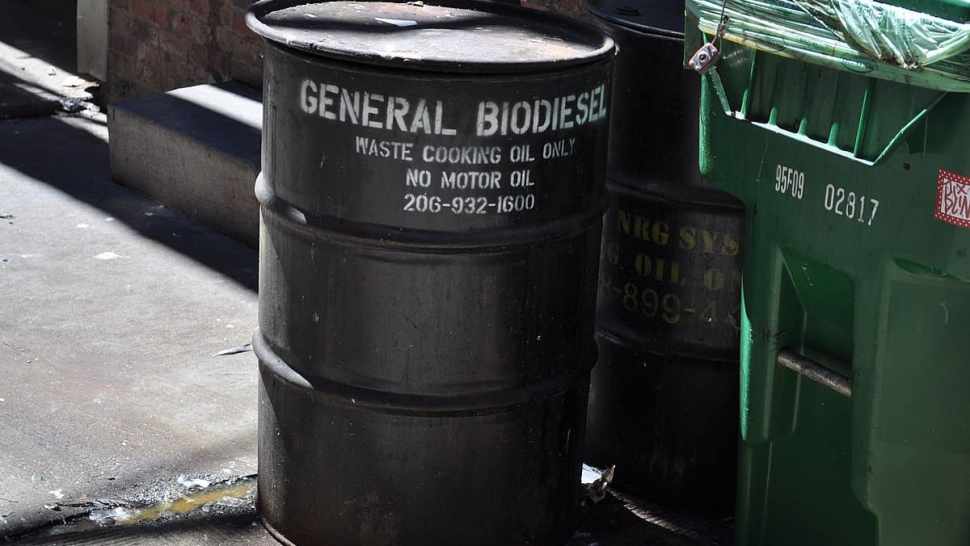
Both biodiesel and renewable diesel come from the same range of raw material sources. One of them is restaurant grease. And to drive home the point that the supply of energy from renewable sources can be intermittent — think of a wind farm when the wind isn’t blowing or a solar farm at night — there’s a shortage of that grease.
An article last week written by the Associated Press reported that gatherers of restaurant grease are finding themselves with less feedstock to acquire. As Americans stay home because of the pandemic, restaurants are closing or are finding their business significantly reduced. Less frying, less grease.
The article interviews Mike Del Rosario, the owner of a nine-truck company that gathers grease. He told the AP that his intake of grease had dropped 40% since before the pandemic.
But because of the demands for feedstock to make more renewable diesel, Del Rosario is leaving a lot of business on the table. “If we can bring 10 more loads, they would be more than happy to take it,” he was quoted as saying.
Those 10 loads of demand Del Rosario referred to could be a lot more in the future. Sandy Fielden, the chief energy analyst for Morningstar, recently ran the numbers and said that it expects U.S. capacity to make renewable diesel to increase by sixfold in the next five years, to 150,000 barrels per day. To keep that in perspective, U.S. consumption of ultra low sulfur diesel in August, the last full month for when data is available, was about 3.6 million b/d.
But markets operate on the margin. With incentives to make renewable diesel built into the system, a loss of supply because of something as unexpected as a sudden drought of restaurant grease can have far more impact than the numbers up front would indicate at first glance.
A key difference between renewable diesel and biodiesel is that the latter is needed to allow companies to reach the requirements of the country’s Renewable Fuel Standard. But California takes it a step further with its Low Carbon Fuel Standard, in which credits are generated for the production and sale of low carbon fuels. The lower the carbon footprint, the more the credits and the more money can be realized in sales of those credits trying to reduce their own carbon footprint. What that means is that the renewable diesel game tends to be heavily focused on the Golden State.
What that means is that if renewable diesel is consumed in California, the supplier of that fuel can generate credits. In 2015, the credits might have been worth less than $5 per credit. Today, that level is up around $200.
That’s one of the reasons why Morningstar’s Fielden, in his report, said his analysis “shows renewable diesel margins in California averaging as much as four times the value of petroleum diesel cracks.”
Restaurant grease is just one source of feedstock to make biodiesel or renewable diesel. Soybeans have become a significant source as well, but as with any agricultural product, like corn to make ethanol, there is the “food vs. fuel” tension and debate over what is the best use for that sort of product.
Restaurant grease does have use as an animal feed. That isn’t new. However, it was only when it started serving as a bigger feedstock to make renewable diesel and biodiesel that restaurants found they needed to put in safety systems to stop thieves from breaking into the trap systems and walking away with the stuff.
And now, according to the AP story, there’s less “stuff” than there was before because of the pandemic.
More articles by John Kingston
Diesel buyers have a problem: capacity to make that fuel is getting cut
U.S. losing oil refining capacity, renewable diesel to help close gap
Phillips66 and partner drop plans for renewable diesel plant in Washington
Brokerage Compliance Symposium
The day before F3. Every compliance issue you face - fraud exposure, carrier liability, FMCSA rules, cargo theft, insurance gaps - navigated by attorneys and operators defining best practices in a changing industry.
F3 Awards Dinner
The night before F3. FreightTech100 companies honored. FreightTech 25 and Shipper of Choice winners revealed live. Cocktail reception into dinner and live music - 300 industry leaders in one purpose-built room.
F3: Future of Freight Festival
Industry-defining keynotes, rapid-fire technology demos, and industry leaders networking in experiences across Chattanooga - plus the inaugural F3 Awards Dinner featuring the FreightTech and Shipper of Choice reveals.
The day before F3. Every compliance issue you face - fraud exposure, carrier liability, FMCSA rules, cargo theft, insurance gaps - navigated by attorneys and operators defining best practices in a changing industry.
The Signal at Chattanooga Choo Choo • Chattanooga, TN Register NowThe night before F3. FreightTech100 companies honored. FreightTech 25 and Shipper of Choice winners revealed live. Cocktail reception into dinner and live music - 300 industry leaders in one purpose-built room.
The Signal at Chattanooga Choo Choo • Chattanooga, TN Register NowIndustry-defining keynotes, rapid-fire technology demos, and industry leaders networking in experiences across Chattanooga - plus the inaugural F3 Awards Dinner featuring the FreightTech and Shipper of Choice reveals.
The Signal at Chattanooga Choo Choo • Chattanooga, TN Register Now