


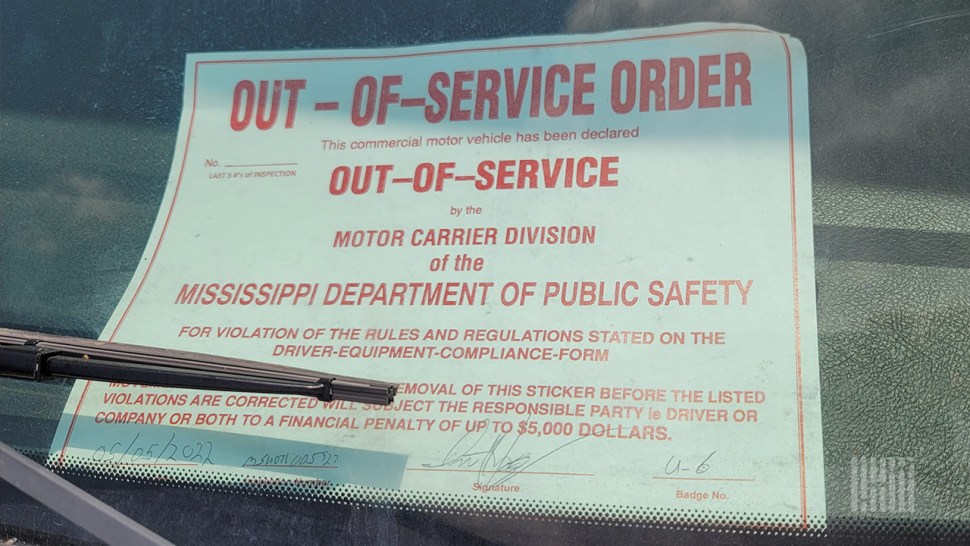
If you’re running a fleet or managing drivers in 2025, you’d better speak up, literally. On Tuesday, the Federal Motor Carrier Safety Administration issued new guidance that officially reawakens enforcement of the English Language Proficiency (ELP) rule found in 49 CFR § 391.11(b)(2). This time, there’s real bite behind the bark: Starting June 25, drivers who can’t pass a new two-part ELP roadside test could be placed out of service on the spot.
This move follows Executive Order 14286 signed by President Donald Trump, titled “Enforcing Commonsense Rules of the Road for America’s Truck Drivers.” The order signals a broader push toward tightening up highway safety enforcement, and language comprehension is now squarely in the spotlight.
The 2-Part Test
According to the FMCSA, every roadside inspection must now begin in English. If a driver shows signs of struggling to understand instructions, the officer initiates a two-step ELP assessment:
- A verbal interview: No interpreters, no phone apps, no cue cards – just the driver and the officer speaking English. Drivers who cannot respond to official questions adequately fail.
- A highway sign recognition test: Drivers who pass the interview move on to identifying U.S. traffic signs, including dynamic message boards and MUTCD-standard signage.
Drivers who fail either test may be cited and placed out of service immediately. The Commercial Vehicle Safety Alliance has already added ELP violations to the North American Standard OOS Criteria, effective June 25.
Here’s the Rub
The public-facing policy memo is heavily redacted. The FMCSA hasn’t disclosed which interview questions or signs inspectors will use, leaving carriers scrambling to prepare. Without knowing the standards, enforcing the rule could quickly become inconsistent or biased, or even be challenged in court.
It’s also triggered a broader debate within the industry about fairness, discrimination and due process, especially as enforcement ramps up.
What About Deaf and Mute Drivers?
Here’s where the conversation gets real.
In a recent LinkedIn post, I shared my frustrations as someone who speaks fast and Southern and sometimes isn’t understood by Siri or Alexa. I’ve also trained deaf and mute drivers. Yes, they exist and can legally hold a CDL under 49 CFR § 391.41(b)(11) with an exemption.
“I know drivers who can’t write,” I recently posted on LinkedIn. “I know deaf and mute drivers. I’ve trained them. So, how do we reconcile a blanket English-speaking rule with a legal framework that already accommodates non-English-speaking CDL holders?”
That’s the dilemma. Under FMCSA’s guidance on CDL testing for hearing-impaired applicants, drivers who are deaf or hard of hearing may use alternative communication methods like sign language or written responses during licensing, but not at the roadside under this new enforcement memo.
So what happens when a deaf driver, legally licensed with a waiver, gets pulled over? How does that officer handle a driver who cannot speak but has already been certified under the law?
There’s a real concern that blanket policies could conflict with disability protections under the ADA or FMCSA’s waivers, putting fleets, officers and even the courts in tough legal territory.
What Fleets Must Do Now
Regardless of your stance, the enforcement is live, and fleets need a plan. Here’s where smart carriers start:
- Update onboarding and qualification: Evaluate English comprehension as part of your road test, in-person interviews or orientation training. Document it.
- Reassess current drivers: If you suspect someone may struggle with ELP under the new standard, now’s the time to coach or reevaluate roles.
- Plan for accommodations: If you employ drivers with hearing impairments or waivers, work with legal counsel and document that these drivers meet FMCSA exemption standards. Educate your team on how to handle these edge cases at scale.
- Invest in training tools: Use systems like Babbel, Duolingo, Jumpspeak, Rosetta Stone, Luma Brighter Learning, Smith System, National Safety Council or in-house driver coaching to reinforce English proficiency, road terminology and situational safety.
- Stay up to date: The redacted memo leaves room for evolving policies. Bookmark the FMCSA ELD & Safety page and monitor updates to ELP enforcement criteria.
FMCSA’s revived ELP enforcement is aimed at safety, not punishment, but it risks casting too wide a net. There’s little doubt that drivers must understand signs and follow instructions on U.S. highways. But when policy lacks clarity, fairness becomes a moving target.
For fleets, the mandate is clear: Validate English ability at the point of hire, support it through training, and protect compliant drivers, especially those operating under federally approved waivers. If “speak English or park it” becomes the standard, we’d better know exactly what that means and who gets caught in the middle, because you can’t learn English overnight at the roadside.
Brokerage Compliance Symposium
The day before F3. Every compliance issue you face - fraud exposure, carrier liability, FMCSA rules, cargo theft, insurance gaps - navigated by attorneys and operators defining best practices in a changing industry.
F3 Awards Dinner
The night before F3. FreightTech100 companies honored. FreightTech 25 and Shipper of Choice winners revealed live. Cocktail reception into dinner and live music - 300 industry leaders in one purpose-built room.
F3: Future of Freight Festival
Industry-defining keynotes, rapid-fire technology demos, and industry leaders networking in experiences across Chattanooga - plus the inaugural F3 Awards Dinner featuring the FreightTech and Shipper of Choice reveals.
The day before F3. Every compliance issue you face - fraud exposure, carrier liability, FMCSA rules, cargo theft, insurance gaps - navigated by attorneys and operators defining best practices in a changing industry.
The Signal at Chattanooga Choo Choo • Chattanooga, TN Register NowThe night before F3. FreightTech100 companies honored. FreightTech 25 and Shipper of Choice winners revealed live. Cocktail reception into dinner and live music - 300 industry leaders in one purpose-built room.
The Signal at Chattanooga Choo Choo • Chattanooga, TN Register NowIndustry-defining keynotes, rapid-fire technology demos, and industry leaders networking in experiences across Chattanooga - plus the inaugural F3 Awards Dinner featuring the FreightTech and Shipper of Choice reveals.
The Signal at Chattanooga Choo Choo • Chattanooga, TN Register Now