








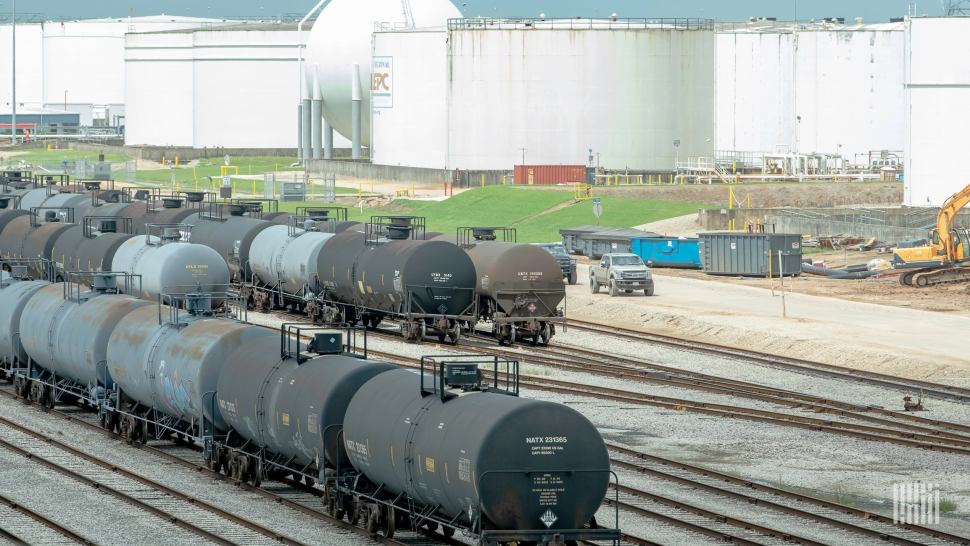
Rail equipment manufacturers, suppliers and industry observers will talk about the number of railcars in storage being up or down. But why is that figure important?
Knowing how many railcars are in storage is significant because that figure helps observers understand network capacity in relation to the broader economy. Industry participants also look at the number of railcars in storage by railcar type to gauge expectations for where railcar lease rates are heading and the volume of orders that manufacturers will receive for newly built railcars.
A number of organizations, such as the advocacy group Railway Supply Institute and the data firm Commtrex, keep track of how many railcars are in storage, including what type of railcar as different railcars can haul different commodities. The kinds of railcars that may be stored can range from pool fleets and auto racks to coal cars and tank cars.
One reason why there are so many railcars in storage is that railcars are very specific to the type of freight being moved. There are often shortages of some railcar types and surpluses of other railcar types at the same time.
For instance, if more grain needs to be shipped domestically and for export, then more hopper cars will be needed to move that grain. If there is less grain to be shipped, then railcar owners may store some of those hopper cars temporarily.
Sometimes a commodity will see volumes facing a systemic decline and that will be reflected in the type of railcars in storage. Sand used in the natural gas fracking process was transported in small cube covered hoppers. But when companies began using local sand instead of shipping sand via rail, that lessened the number of small cube covered hoppers on the rail network — and increased the number of those railcars in storage.
Also, when natural gas began to displace coal as the primary feedstock to generate electricity, coal volumes fell, sending coal cars into storage.
“As demand goes down, some of those cars go into storage and that drives the number of cars in storage,” said Lee Verhey, director of regulatory and industry affairs for the Railway Supply Institute.
The broader economy can influence how many railcars are in storage. When the COVID-19 pandemic first hit in the spring of 2020, manufacturing rates and in-store consumer activity took a nosedive amid social distancing measures. As a result, U.S. rail volumes sank in April and May 2020. Because there was less rail traffic, more railcars went into storage.
“The market really drives the availability of cars,” Verhey said. “As demand [to haul certain commodities] goes down, some of those cars go into storage and that drives the number of cars in storage.”
The number of railcars in storage was as high as more than 525,000 cars in July and August 2020, a manager with railcar manufacturer Greenbrier (NYSE: GBX) said recently. That number has been steadily declining over the last 14 months to below 400,000, which is more in line with normal levels.
“As the economy starts to gain momentum and we start to see manufacturing starting to increase and supply starting to be more available, then you have greater demand for cars,” Verhey said.
A portion of the railcars in storage are older and less efficient than newer railcars because they have lower payload-to-weight ratios. Therefore, some of the railcars in storage may never come back into service.
Railcar leasing companies own roughly 70% of the U.S. fleet, while freight railroads own about 30%. A customer, such as a chemical company, will need railcars to move product, and that customer will get quotes from the railcar lessors for rates. The leases may be short term or long term.
Meanwhile, the railroads tend to own boxcars or railcars to haul grain or agricultural products. The company TTX is a joint venture owned by the railroads that serves as a railcar pool. But the railroads don’t own tank cars, which have their own special regulations for handling.
Lastly, a handful of companies will own their railcars, such as Exxon Mobil, Shell and ConocoPhillips. The decision to own railcars depends on the company’s financial strategy, according to Verhey. Some may lease cars because they don’t want to invest in the cars, but some might find it financially advantageous to own their railcars if they serve a niche market.
FreightWaves market expert Mike Baudendistel contributed to this report.
Subscribe to FreightWaves’ e-newsletters and get the latest insights on freight right in your inbox.
Click here for more FreightWaves articles by Joanna Marsh.
Related links:
Brokerage Compliance Symposium
The day before F3. Every compliance issue you face - fraud exposure, carrier liability, FMCSA rules, cargo theft, insurance gaps - navigated by attorneys and operators defining best practices in a changing industry.
F3 Awards Dinner
The night before F3. FreightTech100 companies honored. FreightTech 25 and Shipper of Choice winners revealed live. Cocktail reception into dinner and live music - 300 industry leaders in one purpose-built room.
F3: Future of Freight Festival
Industry-defining keynotes, rapid-fire technology demos, and industry leaders networking in experiences across Chattanooga - plus the inaugural F3 Awards Dinner featuring the FreightTech and Shipper of Choice reveals.
The day before F3. Every compliance issue you face - fraud exposure, carrier liability, FMCSA rules, cargo theft, insurance gaps - navigated by attorneys and operators defining best practices in a changing industry.
The Signal at Chattanooga Choo Choo • Chattanooga, TN Register NowThe night before F3. FreightTech100 companies honored. FreightTech 25 and Shipper of Choice winners revealed live. Cocktail reception into dinner and live music - 300 industry leaders in one purpose-built room.
The Signal at Chattanooga Choo Choo • Chattanooga, TN Register NowIndustry-defining keynotes, rapid-fire technology demos, and industry leaders networking in experiences across Chattanooga - plus the inaugural F3 Awards Dinner featuring the FreightTech and Shipper of Choice reveals.
The Signal at Chattanooga Choo Choo • Chattanooga, TN Register Now