



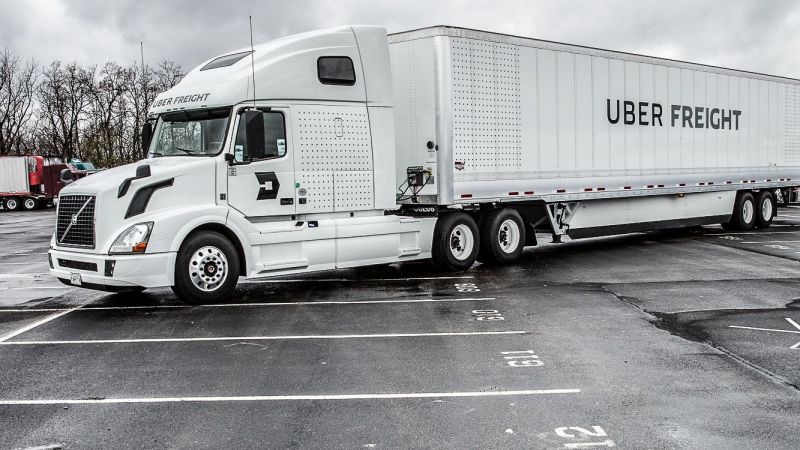
In the third installment of FreightWaves and CarrierLists load sourcing survey we are seeing validation of the results of the previous 2 surveys. More data is coming in supporting the fact that the digital broker apps are not gaining ground. In fairness, in the survey we are calling out examples of companies that describe themselves as digital brokers, freight matchers, or “Uberization” companies- specific names include Convoy, Transfix, Uber Freight, Loadsmart, GoByTruck, and Cargomatic.
Companies like J.B. Hunt, C.H. Robinson, and XPO have all built digital apps to compliment their traditional freight brokerage operations, giving more control to the fleets to source freight- but backed by massive infrastructure that was created in analog environment. J.B. Hunt noted their tremendous progress this past week announcing that their upstart 360 app handled over $90 million dollars in freight in the past quarter, likely placing the 360 application as the top “digital” broker application in the market. It remains to be seen if investors in J.B. Hunt put a Silicon Valley valuation on the app and give it the rich multiple that they have rewarded other digital brokers with.
Whereas the lack of pure-play digital app soucing is not news this week, a key detail is the fact carriers are saying load boards have only accounted for 12% of the volume of total loads sourced. Roughly 88% of the loads are coming through contact with shippers and brokers. The fragmented nature of the transportation industry is the root cause and the digital apps may be focused on the wrong audience.
Load boards have been around for over 40 years. They are portals that shippers or brokers can post available loads at specified rates. The boards are used mainly to cover surging volumes and where capacity is constrained, otherwise known as the spot market. Brokers are the main users of load boards as it is an easy portal to reach many carriers in a short period of time. The efficiency of a load board in terms of communication is undeniable. The effectiveness as far as a shipper is concerned may not be ideal.
Shippers generally do not post loads to the boards. The main reason is decent size shippers have a carrier base or logistics provider like a 3PL that will be able to cover most of their needs and would prefer to stay out of the spot market.
The spot market can be a cheaper option when managed appropriately. Shippers generally do not have the same visibility as a broker has in this arena, as the shippers are focused on their specific needs. The brokers are in constant communication with the overall market therefore can take advantage of capacity fluctuations among many other details the average shipper may not be aware exists.
The load boards seem like such an easy solution for shippers to utilize to gain an advantage in the freight market, but shippers are not interested in playing. Shippers have all sorts of underwriting requirements when it comes to carrier management, tracking, insurance, safety, and service that providers must meet. The process of on-boarding a transactional carrier within hours is more difficult than most shippers want/can contend with. There are exceptions, of-course, namely Koch Industries (KBX Logistics) and Amazon, but most shippers stay out of the transactional spot market. Enter the fragmentation.
The fragmentation in the trucking industry means that there is a lot of competition for quality shippers. It is apparent with the CarrierLists surveys the mid to small size carrier is aware of the shippers’ propensity to work directly with carriers and brokers. Shippers have carriers knocking on their door all day, so they make it easy for shippers to manage their carrier base by playing them off each other. Consistency and trust is most important in transportation. The spread in the rate a shipper pays a broker and the price by-which a broker buys the capacity in the spot market is the cost of trust and efficiency shippers gain by using brokers.
Load boards in their base form are blind to relationships and trust (although most load-boards do an exceptional job of providing participants with tools to manage those transactional relationships). The shipper has been accustomed to a personal touch for years due to the competitive and fragmented nature of the industry. Plus, most shippers I know of are not willing to risk the integrity of their supply-chain or their personal careers on using a trucking company that may not be vetted through their procurement or purchasing departments.
Load boards are really a tool for the middle-man. They exist to make freight broker’s jobs efficient and easy. They provide instant access to capacity for those that live in the spot-market. Most of the digital freight brokers in the market will tell you that they are on a mission to topple the duopoly in the load-board space, by making them obsolete. Good news for investors in Roper Industries (DAT) or Truckstop, those days appear to be a long-ways off.
Stay up-to-date with the latest commentary and insights on FreightTech and the impact to the markets by subscribing.
Brokerage Compliance Symposium
The day before F3. Every compliance issue you face - fraud exposure, carrier liability, FMCSA rules, cargo theft, insurance gaps - navigated by attorneys and operators defining best practices in a changing industry.
F3 Awards Dinner
The night before F3. FreightTech100 companies honored. FreightTech 25 and Shipper of Choice winners revealed live. Cocktail reception into dinner and live music - 300 industry leaders in one purpose-built room.
F3: Future of Freight Festival
Industry-defining keynotes, rapid-fire technology demos, and industry leaders networking in experiences across Chattanooga - plus the inaugural F3 Awards Dinner featuring the FreightTech and Shipper of Choice reveals.
The day before F3. Every compliance issue you face - fraud exposure, carrier liability, FMCSA rules, cargo theft, insurance gaps - navigated by attorneys and operators defining best practices in a changing industry.
The Signal at Chattanooga Choo Choo • Chattanooga, TN Register NowThe night before F3. FreightTech100 companies honored. FreightTech 25 and Shipper of Choice winners revealed live. Cocktail reception into dinner and live music - 300 industry leaders in one purpose-built room.
The Signal at Chattanooga Choo Choo • Chattanooga, TN Register NowIndustry-defining keynotes, rapid-fire technology demos, and industry leaders networking in experiences across Chattanooga - plus the inaugural F3 Awards Dinner featuring the FreightTech and Shipper of Choice reveals.
The Signal at Chattanooga Choo Choo • Chattanooga, TN Register Now