



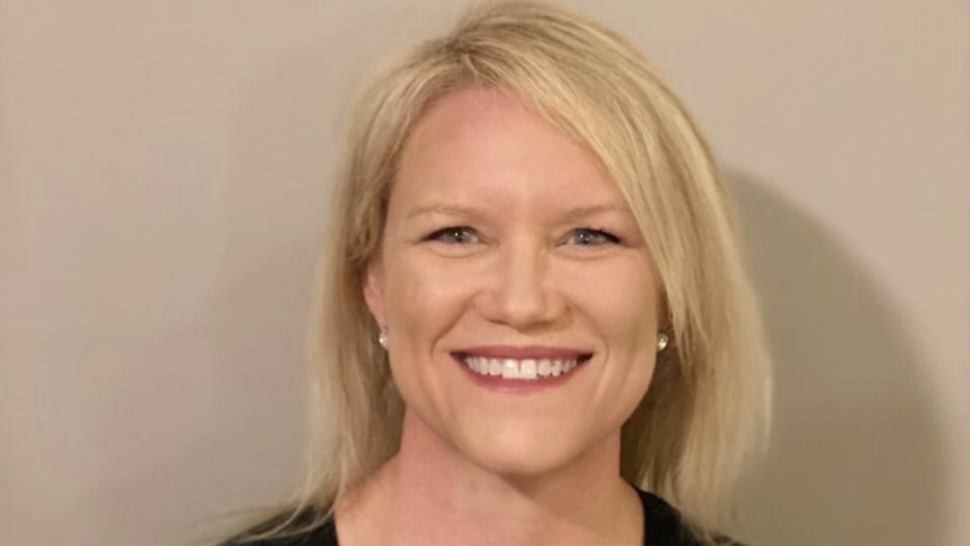
LAKE BUENA VISTA, Fla. — A common theme at the Gartner Supply Chain Symposium here is that the people running a company’s supply chain are going to be rising in importance and moving from “the back of the house.”
That was the term used by Joanne Joliet, a vice president and analyst at Gartner, in her Signature Series address at the conference.
It is not surprising that attendees at a conference of almost 2,700 people involved in the supply chain are going to tell themselves that they’re going to become more important. But given the supply chain struggles of the post-pandemic economy, it isn’t hard to believe. (The attendance reportedly is a record for a meeting that had not been held in three years.)
Joliet said that as chief supply chain officers (CSCOs) and others move from that proverbial “back of the house, they need the ability to truly understand what the customer wants by leveraging data to execute.”
Joliet discussed the need to take the mountains of data that companies with advanced supply chain technology possess and turn it into “executable” decisions.
Another need for a company that wants to be able to act decisively is for that supply chain to be “sentient.” That is, Joliet said, a supply chain that can do a lot of thinking for itself.
“It needs to be working autonomously but it needs to be sensing signals internally and externally,” she said. External signals can come from the various devices that are working through robots or Internet-of-Things nodes within customer operations, which she said “at all times need to be synthesizing data and responding in real time.”
Prioritizing such practices is going to be necessary as supply chains continue to be elevated, Joliet said. Traditionally, she added, within a company the supply chain “felt like a utility. You didn’t notice it until there was a problem and it went down.”
But supply chains are now expected to play a different role, according to Joliet, and CEOs are going to expect them “to create greater success for the company than ever before.”
The first step is having all those data points, and the second is to be able to act on them in real time, Joliet said.
A sentient supply chain might be able to change a reality that CSCOs face routinely: “Nearly 70% of supply chain leaders say they are constantly responding to highly disruptive events.”
And by the time the next disruption comes around, Joliet said, they haven’t finished with the most recent one. She also cited data that shows recovery from supply chain disruptions is taking far more time than it did 15 to 20 years ago.
Joliet said the job of a CSCO now is marked by VUCA: volatility, uncertainty, complexity and ambiguity.
“If you think it’s difficult now, imagine what it is going to be like in 10 years if you don’t change your supply chains today,” she said.
The goal is to get to another set of four letters: APMI. A is for an agile supply chain, P is for predictability, M is for modularity, and I is for a supply chain with insights.
(In a separate publication, Gartner defined modularity as a characteristic that “helps create composability by breaking supply chain resources and processes into ‘LEGO blocks’ of capabilities that can be quickly reused and reconfigured.”)
As supply chains rise in importance in companies, Joliet said CSCOs and other executives are “taking a deep reflection on the role.”
“CSCOs are pausing and looking at this instead of thinking about the inconvenience and the disruption; they are looking at the opportunity,” she said.
Another challenge for CSCOs will be their workforce Supply chain executives face the same questions that managers of people all over the economy will need to deal with in the wake of the pandemic.
Joliet talked about several changes in the workforce that CSCOs and other supply chain managers will need to deal with. One is that the employer, given the growth in remote work, is moving from a “location-centric to a human-centric work design.”
“This means looking at the future of work differently,” Joliet said. “We know from the last two years that none of what has been accomplished would have been possible without your team’s support.”
Focus will need to be on a “human-centric future,” Joliet said. “It will focus on the individual, not the places or locations,” she said. “CSCOs need to embrace this.”
And it isn’t just a question of letting staff work from home, according to Joliet. “You need to provide a flexible work experience, not just of location and time but making it more purposeful and having an equal opportunity to explore needs or interests,” Joliet said.
More articles by John Kingston
IBM executive: Every day in the supply chain has a black swan
No weakness in trucking evident in BMO quarterly data
Older truck engines in California drayage face end of the road
Brokerage Compliance Symposium
The day before F3. Every compliance issue you face - fraud exposure, carrier liability, FMCSA rules, cargo theft, insurance gaps - navigated by attorneys and operators defining best practices in a changing industry.
F3 Awards Dinner
The night before F3. FreightTech100 companies honored. FreightTech 25 and Shipper of Choice winners revealed live. Cocktail reception into dinner and live music - 300 industry leaders in one purpose-built room.
F3: Future of Freight Festival
Industry-defining keynotes, rapid-fire technology demos, and industry leaders networking in experiences across Chattanooga - plus the inaugural F3 Awards Dinner featuring the FreightTech and Shipper of Choice reveals.
The day before F3. Every compliance issue you face - fraud exposure, carrier liability, FMCSA rules, cargo theft, insurance gaps - navigated by attorneys and operators defining best practices in a changing industry.
The Signal at Chattanooga Choo Choo • Chattanooga, TN Register NowThe night before F3. FreightTech100 companies honored. FreightTech 25 and Shipper of Choice winners revealed live. Cocktail reception into dinner and live music - 300 industry leaders in one purpose-built room.
The Signal at Chattanooga Choo Choo • Chattanooga, TN Register NowIndustry-defining keynotes, rapid-fire technology demos, and industry leaders networking in experiences across Chattanooga - plus the inaugural F3 Awards Dinner featuring the FreightTech and Shipper of Choice reveals.
The Signal at Chattanooga Choo Choo • Chattanooga, TN Register Now