




Deemed one of the “Seven Civil Engineering Wonders of the United States” by the American Society of Civil Engineers, San Francisco’s Golden Gate Bridge is a symbol of architectural greatness and an integral part of transportation.
Construction on the bridge started in 1933, kicking off almost four and a half years of arduous and hazardous labor.
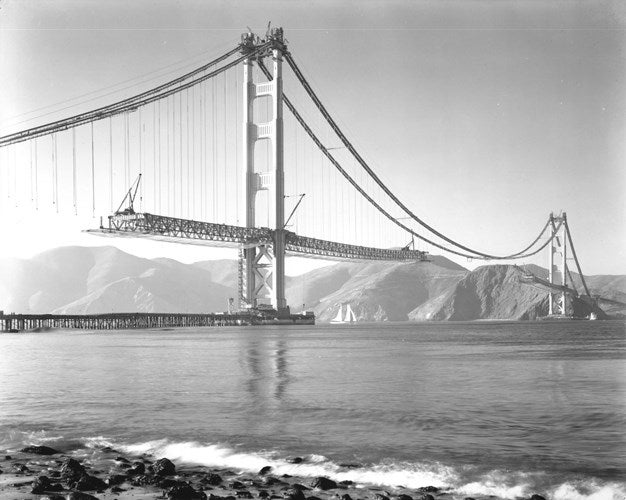
If FreightWaves focused on architecture or construction, this article could spend pages discussing the ins and outs of that aspect of the bridge. But in addition to its impressive architectural history, it is essential to trucking and even ocean freight, as it is part of an important route in California and provides passage to the vital Port of Oakland.
Historic construction
On Jan. 5, 1933, construction officially began. But, as if building the bridge itself wasn’t challenging enough, the build encountered numerous setbacks.
The first incident included a ship, the Sidney M. Hauptman, losing its way in the fog and crashing into an almost complete trestle, according to the Golden Gate Bridge Highway & Transportation District. This pushed back construction by a month. Then, nearly four months later, in October 1933, a storm caused swells to batter the trestle until three of five completed fender sections, the end of the access trestle, and construction equipment disappeared into the sea. Another storm in December of that year caused 800 feet of damage to the bridge.
On Oct. 21, 1936, a traveling derrick used to lift large material around fell. A worker on the bridge project, Kermit Moore, was killed instantly. He was the first but not the last victim of the massive construction project. Four months later, 10 tons of lumber fell into the project’s safety net, knocking 12 men into the water. Only two survived.
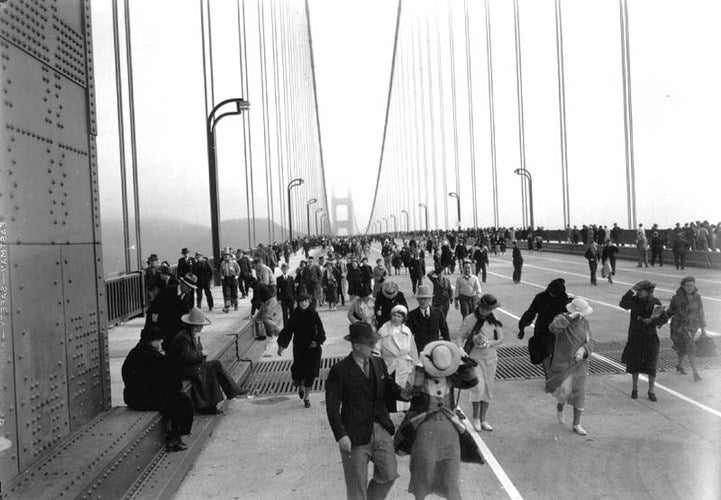
Thankfully, this was the last disaster, and construction continued without any other significant disruptions. An earthquake threatened the bridge days before its completion, but no damage was sustained.
Pedestrians first took to the bridge on May 27, 1937, with vehicular traffic following the next day.
An integral passageway
Today, the Golden Gate Bridge, which connects San Francisco County and Marin County, sees almost 40 million crossings a year, says the district. According to the U.S. Department of Transportation Federal Highway Administration (FHWA), 555,000 of those are estimated to be freight trucks.
Numerous container ships pass under the bridge each year to reach the Port of Oakland. In 2015, the largest container ship to ever visit the United States at that time cleared the bridge with 20 feet to spare, according to The Associated Press. The Benjamin Franklin traveled through the area on its way to the Port of Oakland from China. The ship is able to hold 18,000 containers, while the average container ship serving the U.S. then carried 14,000.
On Jan. 4 this year, the FHWA announced a $400 million project through the Large Bridge Grants program to improve infrastructure on the bridge to ensure its longevity due to its importance in California transit. The grant project comes from the Bipartisan Infrastructure Law and its Bridge Investment Program.
Improvements will include replacing, retrofitting and installing critical structural elements to increase resiliency against earthquakes common in the area.
FreightWaves Classics articles look at various aspects of the transportation industry’s history. Click here to subscribe to our newsletter!
Brokerage Compliance Symposium
The day before F3. Every compliance issue you face - fraud exposure, carrier liability, FMCSA rules, cargo theft, insurance gaps - navigated by attorneys and operators defining best practices in a changing industry.
F3 Awards Dinner
The night before F3. FreightTech100 companies honored. FreightTech 25 and Shipper of Choice winners revealed live. Cocktail reception into dinner and live music - 300 industry leaders in one purpose-built room.
F3: Future of Freight Festival
Industry-defining keynotes, rapid-fire technology demos, and industry leaders networking in experiences across Chattanooga - plus the inaugural F3 Awards Dinner featuring the FreightTech and Shipper of Choice reveals.
The day before F3. Every compliance issue you face - fraud exposure, carrier liability, FMCSA rules, cargo theft, insurance gaps - navigated by attorneys and operators defining best practices in a changing industry.
The Signal at Chattanooga Choo Choo • Chattanooga, TN Register NowThe night before F3. FreightTech100 companies honored. FreightTech 25 and Shipper of Choice winners revealed live. Cocktail reception into dinner and live music - 300 industry leaders in one purpose-built room.
The Signal at Chattanooga Choo Choo • Chattanooga, TN Register NowIndustry-defining keynotes, rapid-fire technology demos, and industry leaders networking in experiences across Chattanooga - plus the inaugural F3 Awards Dinner featuring the FreightTech and Shipper of Choice reveals.
The Signal at Chattanooga Choo Choo • Chattanooga, TN Register Now