



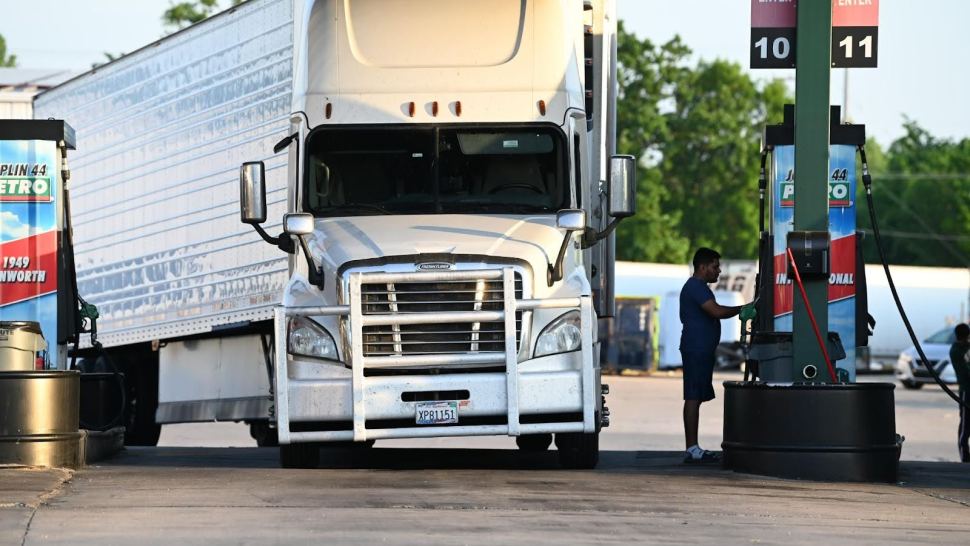
Here’s the truth: fuel is your second-biggest cost right behind your truck payment or labor. Yet too many fleets treat it like an afterthought. If you’re not planning fuel alongside your routes, you’re not running in the most effective way—you’re running blind. And in this market, blind spots cost real money.
The fleets that win don’t chase cheap pumps either. They engineer a fuel plan that ties directly into dispatch. They understand how IFTA works, they use their fuel card data, and they decide before they roll where those gallons are coming from. That’s how you stop bleeding profit at the pump.
Why Some Carriers Overspend on Fuel
It’s not always the pump price that kills you. It’s the lack of a system.
Here’s what happens too often:
- Drivers fueling wherever the tank runs low.
- Picking stations out of convenience, not price.
- Filling up without thinking about base price or state tax.
One week of that might not feel like much. But stretch it over a month, and you’re talking thousands in lost margin. Worse, your costs become unpredictable. If you don’t know your true fuel cost per mile, you can’t price loads confidently.
Fuel strategy is margin strategy. The carrier with a plan makes more from the same miles than the one winging it.
Understanding IFTA Before You Pick a Pump
Some small carriers misunderstand IFTA, and it’s costing them.
Here is a way to break it down plain and simple: you don’t pay fuel tax where you buy fuel—you pay based on where you burn it.
Example: You fuel in Missouri, where pump prices look cheap. Then you run most of your miles in Illinois, where taxes are high. Guess what? You still owe Illinois that higher tax difference.
That’s why the pump sign is misleading. What matters is the base price:
Base Price = Pump Price – State Tax
That’s the number you should be comparing along your route. Smart carriers check base prices before dispatch, not at the pump.
Building Fuel Into Your Route
Don’t wait for the low-fuel light. Don’t leave it up to chance. Build fuel stops into your load plan the same way you schedule pickup windows or HOS breaks.
Here’s how:
1. Identify Fuel Zones
Look at your pickup and delivery points, then overlay fuel tax zones and card discounts. Ask yourself:
- Where are the low base-price states?
- Which high-tax states should I avoid fueling in?
- Do I have card discounts along this corridor?
Sometimes, topping off earlier—before entering a high-tax state—saves you hundreds. Thinking ahead always beats reacting.
2. Use Your Fuel Card Tools
If you’ve got Comdata, EFS, or RTS, you’ve already got route-specific fuel data. Most carriers don’t even check it. Big mistake.
Spend five minutes before dispatch comparing net prices after discounts. That’s money in your pocket by the weekend.
3. Add Fuel Stops to the Trip Plan
Drivers should know the fuel plan before they roll. Every dispatch should include:
- Primary fuel stop (location and gallons)
- Backup stop
- Expected cost after discount
When drivers see that you’re treating fuel like a business expense—not a random pit stop—they gain confidence in your operation.
4. Stop Thinking in Full Tanks
Sometimes, a full tank is the wrong move.
Say you’re leaving Georgia (low base), passing Alabama, and ending in Mississippi (high base). If you top off in Mississippi, you’re hauling high-tax fuel you didn’t need. Better play: load up in Georgia, splash just enough in Alabama, and avoid paying top dollar in Mississippi.
5. Track Fuel Cost Per Mile by Lane
Revenue per mile is standard. But if you’re not tracking fuel cost per mile, you’re missing half the picture.
Track gallons, miles, net price, and CPM for each lane. That data tells you which lanes are worth it, which ones drain you, and how to quote loads with confidence.
Using Fuel Data as a Negotiation Tool
Imagine a broker offers you a Northeast run. You’ve already tracked your fuel CPM and you know that lane costs 18% more in fuel, plus tolls and terrain drag down MPG.
Now you’ve got leverage. You can push for a higher RPM—or walk if the numbers don’t work. That’s not guessing. That’s protecting your business with facts.
Five-Day Fuel Strategy Buildout
Here’s a simple plan to hardwire fuel strategy into your operation this week:
Monday – Map tax zones for your top five lanes.
Tuesday – Pull base prices and card discounts.
Wednesday – Add fuel stop instructions into your dispatch briefs.
Thursday – Analyze fuel CPM for your top three lanes.
Friday – Set gallon targets for each load moving this weekend.
Repeat weekly until it’s second nature. Remember, this is a business and we want you to add layers to it that can help you run better.
Final Word
Fuel isn’t just an expense. It’s a battleground for margin. If you don’t build a strategy around it, you’re giving money away one gallon at a time.
Many carriers will keep gassing up wherever they land and wondering why profits vanish. You don’t have to. When you plan fuel with the same discipline as dispatch, you start quoting with confidence, not guesswork.
Think like a fleet—even if you’re still one truck. Plan like a business owner, not just a driver. One load at a time. One lane at a time. One gallon at a time. That’s how you stay lean, stay profitable, and stay in the game.
Brokerage Compliance Symposium
The day before F3. Every compliance issue you face - fraud exposure, carrier liability, FMCSA rules, cargo theft, insurance gaps - navigated by attorneys and operators defining best practices in a changing industry.
F3 Awards Dinner
The night before F3. FreightTech100 companies honored. FreightTech 25 and Shipper of Choice winners revealed live. Cocktail reception into dinner and live music - 300 industry leaders in one purpose-built room.
F3: Future of Freight Festival
Industry-defining keynotes, rapid-fire technology demos, and industry leaders networking in experiences across Chattanooga - plus the inaugural F3 Awards Dinner featuring the FreightTech and Shipper of Choice reveals.
The day before F3. Every compliance issue you face - fraud exposure, carrier liability, FMCSA rules, cargo theft, insurance gaps - navigated by attorneys and operators defining best practices in a changing industry.
The Signal at Chattanooga Choo Choo • Chattanooga, TN Register NowThe night before F3. FreightTech100 companies honored. FreightTech 25 and Shipper of Choice winners revealed live. Cocktail reception into dinner and live music - 300 industry leaders in one purpose-built room.
The Signal at Chattanooga Choo Choo • Chattanooga, TN Register NowIndustry-defining keynotes, rapid-fire technology demos, and industry leaders networking in experiences across Chattanooga - plus the inaugural F3 Awards Dinner featuring the FreightTech and Shipper of Choice reveals.
The Signal at Chattanooga Choo Choo • Chattanooga, TN Register Now