







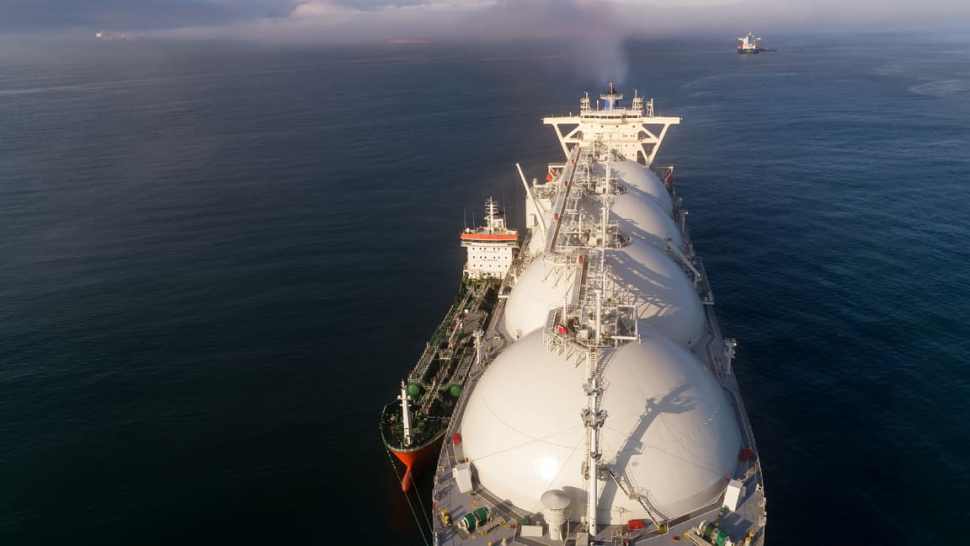
The United States’ ability to take advantage of new demand for liquefied natural gas (LNG) as a marine fuel post-IMO 2020 may get more scrutiny in the wake of an LNG export facility approval by the Federal Energy Regulatory Commission (FERC).
In approving the project, located near the Gulf of Mexico in Cameron Parish, Louisiana, FERC applied a “new approach” in the way it evaluates greenhouse gas emissions from LNG facilities, achieved through an agreement signed with the Pipeline and Hazardous Materials Safety Administration (PHMSA), an agency within the U.S. Department of Transportation. Both FERC and PHMSA have jurisdiction over LNG export facilities.
According to FERC, the new approach allows it to cut through red tape by signing a single federal decision instead of waiting on multiple decisions, at the same time increasing the number of engineers working on project reviews.
“This is a matter of truly strategic significance, and we as an agency are dedicated to doing our part in this historic American moment by conducting thorough, efficient and legally durable reviews of every LNG terminal application we receive,” said FERC Chairman Neil Chatterjee.
Charlie Riedl, executive director of the Center for LNG (CLNG), a Washington, D.C.-based advocate for LNG exports, said the announcement was a positive development for U.S. LNG exports as a whole. “As the global LNG market races to bring more supply to market, this decision helps ensure that U.S. LNG projects are not unnecessarily delayed and can compete for the growing global market.”
In addition, a spokesman for CLNG pointed out that with the approach of the IMO 2020 low-sulfur fuel requirement for commercial cargo vessels, there is “great potential” for LNG fueling – known as bunkering – “and this streamlined review process will allow for a more robust discussion on LNG bunkering in the U.S.”
With less than a year to go before the low-sulfur regulation goes into force on January 1, however, there has been little progress made so far in the U.S. to take advantage of the potential market opportunity for bunkering LNG. Because it is naturally low in sulfur content, LNG is considered one of three main options, along with low-sulfur fuel and exhaust scrubbers, that vessel operators are weighing to comply with the rule.
LNG bunkering efforts made so far in the U.S. has been limited to domestic shipping. At the Port of Jacksonville in Florida, for example, Eagle LNG provides shoreside fueling for new LNG-fueled ships built by vessel operator Crowley, operates container services between the U.S. and Puerto Rico.
In Port Fourchon, Louisiana, Harvey Gulf International Marine, which operates support vessels for offshore oil platforms, has been developing an LNG barge-bunkering service for the offshore supply vessel sector.
But demand uncertainty by the shipping sector, combined with a lack of bunkering infrastructure from LNG producers, has stalled expansion of LNG bunkering aimed at larger commercial carriers serving the international trades.
“Anything that makes it easier and less expensive to build the infrastructure, the better it is,” John Graykowski, president of Maritime Industry Consultants, told FreightWaves, in commenting on the FERC announcement.
Graykowski, a former Acting Administrator for the U.S. Maritime Administration, added however that strong market signals are still lacking for U.S. LNG bunkering.
“We’re the world’s largest trading country. I think the gas industry has to build a relationship with the shipping industry for the simple reason that, streamlined approval process or not, it’s still going to take three to four years to build an LNG export facility.”
To make more progress on securing LNG bunkering capacity along with export capabilities at the facilities coming online, “there have to be commitments made” by both suppliers and the maritime sector,” Graykowski said. “The supply is there, we just need to get the infrastructure.”
Brokerage Compliance Symposium
The day before F3. Every compliance issue you face - fraud exposure, carrier liability, FMCSA rules, cargo theft, insurance gaps - navigated by attorneys and operators defining best practices in a changing industry.
F3 Awards Dinner
The night before F3. FreightTech100 companies honored. FreightTech 25 and Shipper of Choice winners revealed live. Cocktail reception into dinner and live music - 300 industry leaders in one purpose-built room.
F3: Future of Freight Festival
Industry-defining keynotes, rapid-fire technology demos, and industry leaders networking in experiences across Chattanooga - plus the inaugural F3 Awards Dinner featuring the FreightTech and Shipper of Choice reveals.
The day before F3. Every compliance issue you face - fraud exposure, carrier liability, FMCSA rules, cargo theft, insurance gaps - navigated by attorneys and operators defining best practices in a changing industry.
The Signal at Chattanooga Choo Choo • Chattanooga, TN Register NowThe night before F3. FreightTech100 companies honored. FreightTech 25 and Shipper of Choice winners revealed live. Cocktail reception into dinner and live music - 300 industry leaders in one purpose-built room.
The Signal at Chattanooga Choo Choo • Chattanooga, TN Register NowIndustry-defining keynotes, rapid-fire technology demos, and industry leaders networking in experiences across Chattanooga - plus the inaugural F3 Awards Dinner featuring the FreightTech and Shipper of Choice reveals.
The Signal at Chattanooga Choo Choo • Chattanooga, TN Register Now