









FreightWaves is providing a forum – Market Voices – for a number of market experts.
Jim Blaze is a railroad career economist with an engineering background and a strategic analysis outlook. Jim’s career spans 21 years with Consolidated Rail Corporation (CONRAIL), 17 years with the rail engineering firm Zeta Tech Associates, 7 years with the State of Illinois Department of Transportation in Chicago urban goods movement research, and two years studying what to do with the seven bankrupt and unrecognizable Northeast railroads at the federal agency USRA. Now primarily a teacher and writer, Jim likes to focus on contrarian aspects of the railroad industry.
“What is behind PSR modeling?” Does it really work?
Six of the major North American freight railroads begin reporting their first quarter 2019 results in the near-term. The news media will fixate on the benefits of Precision Scheduled Railroading, which is often simply called PSR.
Is the term PSR hype? What is the substance of PSR as a business model?
Precision scheduling of railroad freight is a combination of both improved rail economics and at the same time, a marketing phrase.
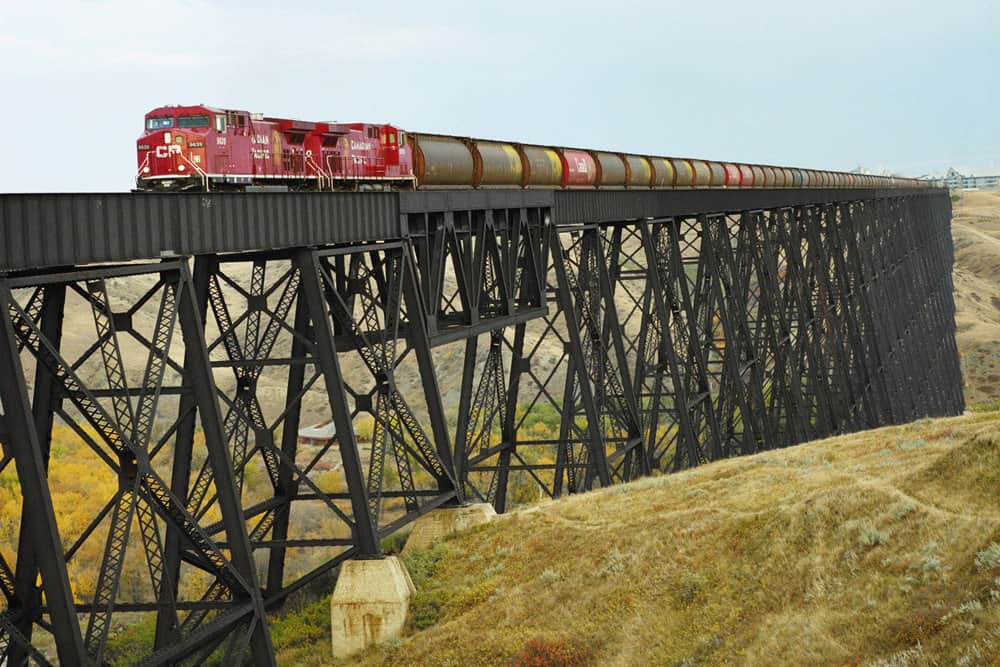
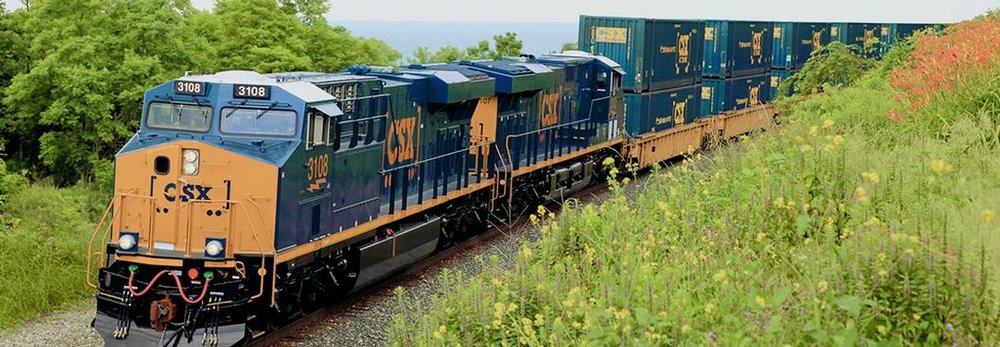
There is a body of evidence that shows the railroads’ managers and their Boards of Directors are improving financial performance. If you were a shareholder of record during the past 10 years at any of the early PSR initiators – Canadian National Railway (NYSE: CNI) or Canadian Pacific Railway (NYSE: CP), and then CSX (NASDAQ: CSX) – then yes, you absolutely reaped dividends and stock price accretion rewards.
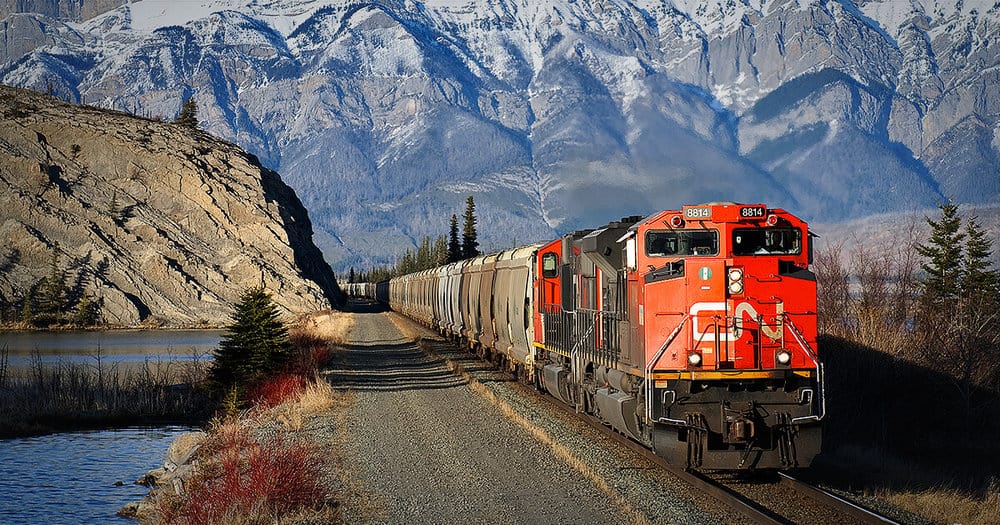
Investors and Wall Street railway watchers praised the “asset sweating” and cost-cutting prowess of managers like E. Hunter Harrison, Keith Creal, and lately James Foote as they powered CNI, CP, and then CSX into high-margin railroads.
How high, relatively speaking? High enough that the PSR rail freight companies have seen operating income margins of between 35 and 42 percent even as the growth rate of railway freight volume has slowed. Would you rather be invested in a PSR railroad, or a trucking company with a higher market share? While many trucking companies have higher volume growth rates, they generate with much lower margins of 10 to perhaps at best 12 percent.
Lower costs might provide higher traffic growth
PSR advocates hypothesize that by significantly decreasing unit costs per carload or ton-mile, a railroad will create a much lower cost base than transporting freight by truck. Thus, early PSR execution is marked by slashing operating expenses and the railroad’s asset base. Translation – the first changes are to operate with fewer employees, fewer train starts by increasing average train length and lowering other variable costs.
But, does the railroad share the PSR cost-savings with its customers by lowering its rates on a proportionate basis? That has not happened to any great degree, at least to-date.
Is PSR really new?
Career railroaders like myself (CONRAIL) and Larry Ratcliffe (CSX) worked with others who – well before Hunter Harrison and the current PSR leadership arrived – used PSR (or PSR-like) cost-cutting measures. The focus on shaving operating costs is hardly new. Before the current PSR breed, leaders like Don Swanson, Dick Hasselman, David Gunn, Ed Moyers and others practiced a balanced blend of productivity improvements and cost-cutting with positive results.
That older team also used engineering technology and service changes that attracted new freight volume that generated increased revenue. They implemented heavier axle loadings, longer trains and higher vertical trains. Those changes enabled Powder River coal and double-stack operations. That in turn drove the top line (revenues times traffic unit volumes) into what some called the Renaissance Years of rail freight (1980-2006).
The current PSR business model has not yet found that “top line revenue and volume” blended approach.
As one example, that reawakening period witnessed expansion of intermodal rail to new origin/destination market pairs. Railroads were expecting and often getting near-double digit intermodal year-over-year volume gains. They fully expected to take market share from highway truckers.
Then, something happened. Cost-cutting became the focus of PSR.
Intermodal origin/destination pairs have been cut by the current PSR railroads. They appear increasingly willing to manage for yield instead of growth.
Statistically, it now appears that highway truck share of freight is growing.
There are always some exceptions. Canadian National has been growing market share in strategic lanes. It is also adding people to its workforce. The company appears to have “rebalanced” its previous PSR model.
Last year Canadian Pacific also announced that following its early cost-cutting phase of PSR, management was going to re-engage with its customers and try to rebuild their confidence in returning to a better, lower cost-base Canadian Pacific PSR network.
PSR is partly true and partly marketing hype.
Cutting operating unit expenses (costs) and reducing the assets – combined with lowering the CAPEX (rate of capital to gross revenues) – are improving margin. That part works.
Tighter train yard sweeps on a more disciplined schedule operating plan likewise reduces expenses.
But capturing more shippers and share of freight from trucking through PSR is, at best, a work in progress. Train schedules and final deliveries of rail carloads to shipper docks are still woefully imprecise.
Until evidence is presented, over a significant number of lanes, that customer car load to reload cycles are dramatically improving, customer PSR benefits remain only an hypothesis.
Brokerage Compliance Symposium
The day before F3. Every compliance issue you face - fraud exposure, carrier liability, FMCSA rules, cargo theft, insurance gaps - navigated by attorneys and operators defining best practices in a changing industry.
F3 Awards Dinner
The night before F3. FreightTech100 companies honored. FreightTech 25 and Shipper of Choice winners revealed live. Cocktail reception into dinner and live music - 300 industry leaders in one purpose-built room.
F3: Future of Freight Festival
Industry-defining keynotes, rapid-fire technology demos, and industry leaders networking in experiences across Chattanooga - plus the inaugural F3 Awards Dinner featuring the FreightTech and Shipper of Choice reveals.
The day before F3. Every compliance issue you face - fraud exposure, carrier liability, FMCSA rules, cargo theft, insurance gaps - navigated by attorneys and operators defining best practices in a changing industry.
The Signal at Chattanooga Choo Choo • Chattanooga, TN Register NowThe night before F3. FreightTech100 companies honored. FreightTech 25 and Shipper of Choice winners revealed live. Cocktail reception into dinner and live music - 300 industry leaders in one purpose-built room.
The Signal at Chattanooga Choo Choo • Chattanooga, TN Register NowIndustry-defining keynotes, rapid-fire technology demos, and industry leaders networking in experiences across Chattanooga - plus the inaugural F3 Awards Dinner featuring the FreightTech and Shipper of Choice reveals.
The Signal at Chattanooga Choo Choo • Chattanooga, TN Register Now