




ORLANDO, Fla. — Employment numbers in the supply chain post-pandemic are revealing a tremendous amount of turnover and lack of employee engagement, according to the keynote speaker at this year’s Gartner Supply Chain Symposium.
Caroline Chumakov, a director and analyst at Gartner, spoke to a packed opening session Monday of a meeting with attendance soaring past 3,200 and asked the crowd: “Will we leave a supply chain that lights up careers, feeds global economics and sustains our planet?”
It’s a task that will be challenged by the fact that, according to Chumakov, employee turnover in the supply chain is 33% more than it was pre-pandemic. “Only a quarter of our employees are highly engaged and only 16% of them are willing to go above and beyond in their jobs,” she said.
“Our employees are checked out, challenged and choosing to ‘quiet quit,’ which is a problem because we kind of need their labor,” Chumakov added.
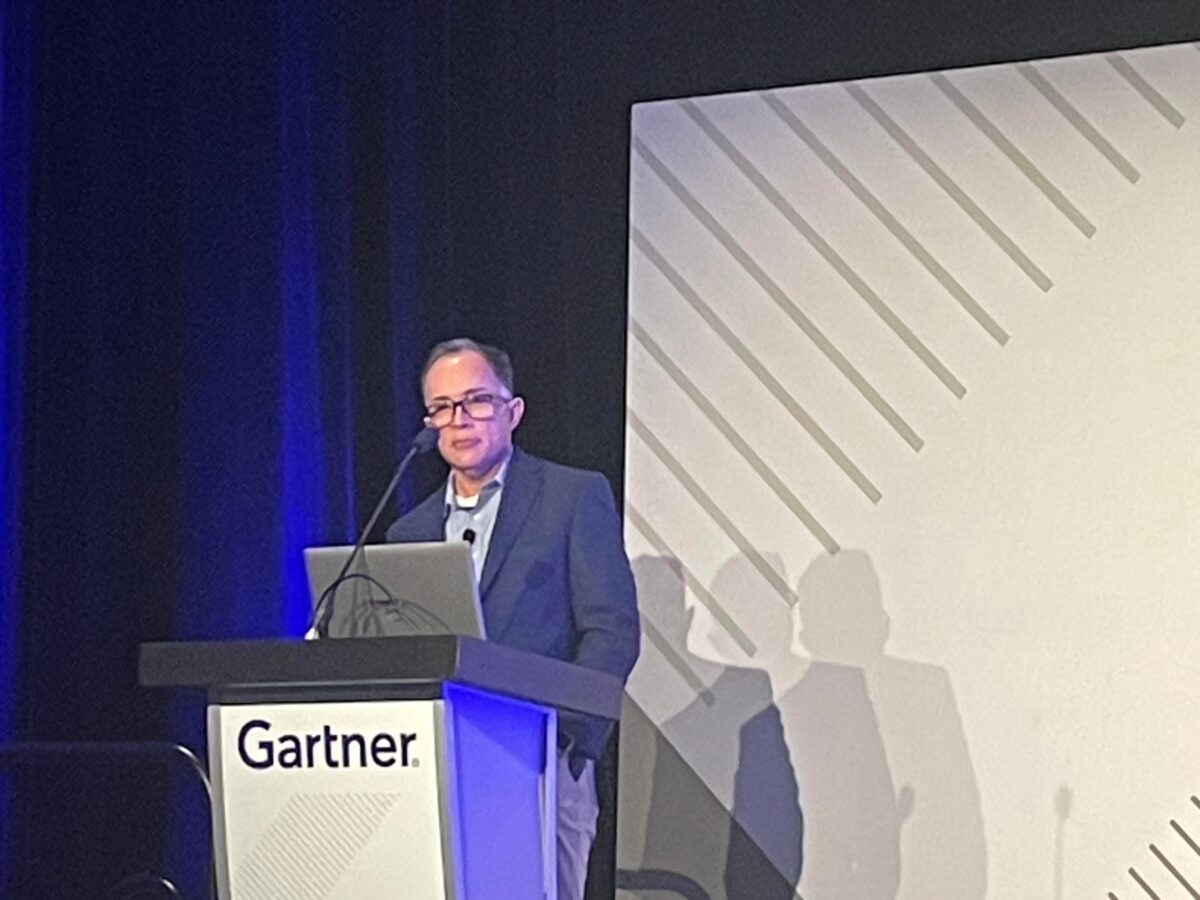
Jose Reyes, a senior director and analyst at Gartner, gave his definition of quiet quitting in a separate presentation and did so by way of an example.
“You notice that one of your employees that typically sits in front of the room at a meeting and is very interactive, asking questions is now sitting in the back of the room,” he said. “And you realize that’s been happening frequently, say for the last couple of months. They’re not engaged and they’re not asking questions.”
Chumakov put it more bluntly. Productivity in the supply chain “is at its lowest point in decades,” she said.
“The human story is one of progress,” Chumakov said. “And yet now our productivity is stalled.”
That situation, she said, raises the question: “Have we really reached peak human productivity?” There is data to suggest that may be the case, but “there are gaps in the story that suggest otherwise.”
The title of Reyes’ presentation asked the question: “Has the ‘quiet quit’ crept into your logistics team?”
“So you might ask, ‘OK, this is interesting but why does that matter to me?’” Reyes said, citing a Gallup survey that concluded that disengaged workers were costing the economy $7.8 trillion in lost productivity worldwide. Logistics executives need to ask “how much of that $7.8 trillion is hitting my bottom line and two, how do I avoid having a similar impact or any impact in my organization?”
To make sure quiet quitting isn’t hitting a company, Reyes said logistics executives first need to identify it. One thing to watch is if a manager stops coaching his employees. “So that in itself can lead to their direct reports quitting quietly,” he said. “They’re not getting any feedback and it’s not a good feeling to be in.”
Reyes ran through numerous strategies to combat quiet quitting, but he ultimately said that Gartner research has found logistics employees have “two main expectations” out of their management.
One is that employees “want to make sure there’s an environment where they’re encouraging discussion on open issues,” Reyes said. The second is similar: that there is “psychological safety and trust” in their teams.
Chumakov delivered the message that a team succeeds if it “unlocks the collective potential of the supply chain.” That concept “is the recognition that the whole of your supply chain is greater than the sum of its parts.” What matters is putting those assets of individuals together in a community within the organization. Add in technology and the result is that these assets contribute more together than apart.
Chumakov got the large audience’s attention when she asked anybody to stand up if “you have a skill that is not fully utilized in your current role,” a request that appeared to be greeted with 100% compliance.
“Take a look around,” she said. “There are thousands of skills going untapped in this room alone. Imagine what would happen if we asked this question of your teams.”
Supply chain companies are “in the midst of a labor shortage,” Chumakov said. “But we are leaving valuable skills on the table.”
Chumakov, looking over the post-pandemic quit rate, had praise for the way supply chain companies reacted to the onset of the pandemic and that those days contained some lessons for the future.
“We had to pivot and find creative solutions.” Decisions needed to be made quickly and often to “take on more risk,” she said. “To meet this challenge, there was no time.”
Chumakov said that “the high risk of moving slowly forces us to do what was necessary to make decisions quickly.” The result? Teams moved across organizational lines and decisions were often taken by “those best suited to make them. We chose to make trade-offs in our decisions.”
Coming back to the message of community, supply chain companies facing the pandemic “chose to work together, we chose to trust each other and we chose the pursuit of a common objective. That is the power of community,” she said.
Those lessons need to continue even now that the pandemic is over. “We can mobilize people to action by building communities targeted at specific challenges and aligned on key objectives,” Chumakov said. The way supply chains responded to COVID showed that “we can solve problems within the structures we have today.”
More articles by John Kingston
Truck transportation jobs aren’t afraid of heights; they rose again in April
RXO comes in relatively strong in quarter full of weak freight earnings
Uber Freight EBITDA continues to fall; revenue drops 23% from a year ago
Brokerage Compliance Symposium
The day before F3. Every compliance issue you face - fraud exposure, carrier liability, FMCSA rules, cargo theft, insurance gaps - navigated by attorneys and operators defining best practices in a changing industry.
F3 Awards Dinner
The night before F3. FreightTech100 companies honored. FreightTech 25 and Shipper of Choice winners revealed live. Cocktail reception into dinner and live music - 300 industry leaders in one purpose-built room.
F3: Future of Freight Festival
Industry-defining keynotes, rapid-fire technology demos, and industry leaders networking in experiences across Chattanooga - plus the inaugural F3 Awards Dinner featuring the FreightTech and Shipper of Choice reveals.
The day before F3. Every compliance issue you face - fraud exposure, carrier liability, FMCSA rules, cargo theft, insurance gaps - navigated by attorneys and operators defining best practices in a changing industry.
The Signal at Chattanooga Choo Choo • Chattanooga, TN Register NowThe night before F3. FreightTech100 companies honored. FreightTech 25 and Shipper of Choice winners revealed live. Cocktail reception into dinner and live music - 300 industry leaders in one purpose-built room.
The Signal at Chattanooga Choo Choo • Chattanooga, TN Register NowIndustry-defining keynotes, rapid-fire technology demos, and industry leaders networking in experiences across Chattanooga - plus the inaugural F3 Awards Dinner featuring the FreightTech and Shipper of Choice reveals.
The Signal at Chattanooga Choo Choo • Chattanooga, TN Register Now