



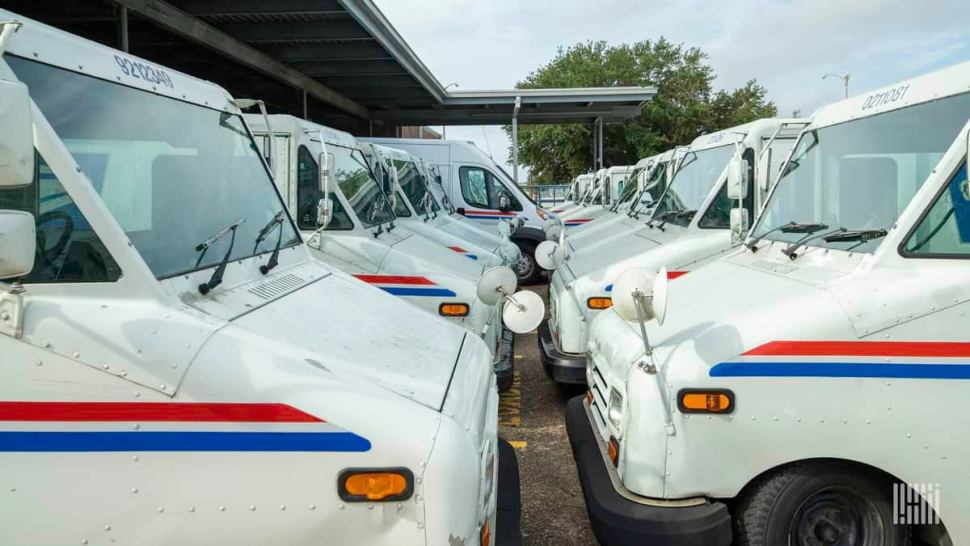
The U.S. Postal Service may not have all the resources in place to handle what is expected to be another deluge of peak-season packages, according to a recent investigation by the agency’s Office of Inspector General (OIG).
The report, published Nov. 19, found that as of late October, the Postal Service had leased 40 of the 70 temporary annexes that it expects to be up and running to process holiday packages. In addition, the Postal Service had yet to install all 89 package-sorting machines at its processing centers, falling five units short as of late October, the report said.
The Postal Service said the remaining machines should be installed later this month. All 23 machines ordered for the Postal Service’s delivery units have already been installed, the OIG report said.
More concerning than any equipment shortfalls would be the possible scarcity of labor. The Postal Service may have trouble filling 45,000 temporary holiday positions due to an acute and persistent worker shortage, the report found. A nationwide shortage of commercial truck drivers could deprive the agency of adequate surface transport capacity, OIG said. The concerns over available surface transport capacity were voiced by 26 postal logistics and processing division executives who were surveyed for the report.
Despite the challenges, the executives said they were “very confident or confident” the agency would deliver peak-season packages and mail in a timely manner. The ability to secure sufficient surface transportation capacity was the only area where the executives’ confidence wavered somewhat.
According to the report, the Postal Service has made progress in peak-season readiness from last year’s holiday season, when parcel and mail delivery performance declined due to unprecedented volume spikes, fewer employees and unexpected transportation challenges due to the COVID-19 pandemic that was raging nationwide at the time.
To avoid a repeat of last year’s fiasco, the Postal Service implemented several permanent operational changes, among them a plan to staff up for peak season through year-round hiring rather than bulking up right before the holidays. The Postal Service has hired 33,000 people since January to help prepare for peak staffing needs.
Facility space was brought online throughout the year as well, rather than being deployed toward the peak period. As a result, the number of full-time employees has risen by 8%, facility floor space by 48% and package processing capacity by 16% over last year’s peak, the OIG report said.
In addition, the Postal Service has increased air transport capacity by 12% from last year’s peak, the report noted. The division executives surveyed for the report were very optimistic about the prospects for the air network’s performance this holiday.
The Postal Service expects to handle 850 million to 950 million packages this peak. Last year’s number was 925 million. On Nov. 28, the agency launched its expanded Sunday delivery service. It expects to deliver more than 9.7 million packages each Sunday throughout the holiday period.
Brokerage Compliance Symposium
The day before F3. Every compliance issue you face - fraud exposure, carrier liability, FMCSA rules, cargo theft, insurance gaps - navigated by attorneys and operators defining best practices in a changing industry.
F3 Awards Dinner
The night before F3. FreightTech100 companies honored. FreightTech 25 and Shipper of Choice winners revealed live. Cocktail reception into dinner and live music - 300 industry leaders in one purpose-built room.
F3: Future of Freight Festival
Industry-defining keynotes, rapid-fire technology demos, and industry leaders networking in experiences across Chattanooga - plus the inaugural F3 Awards Dinner featuring the FreightTech and Shipper of Choice reveals.
The day before F3. Every compliance issue you face - fraud exposure, carrier liability, FMCSA rules, cargo theft, insurance gaps - navigated by attorneys and operators defining best practices in a changing industry.
The Signal at Chattanooga Choo Choo • Chattanooga, TN Register NowThe night before F3. FreightTech100 companies honored. FreightTech 25 and Shipper of Choice winners revealed live. Cocktail reception into dinner and live music - 300 industry leaders in one purpose-built room.
The Signal at Chattanooga Choo Choo • Chattanooga, TN Register NowIndustry-defining keynotes, rapid-fire technology demos, and industry leaders networking in experiences across Chattanooga - plus the inaugural F3 Awards Dinner featuring the FreightTech and Shipper of Choice reveals.
The Signal at Chattanooga Choo Choo • Chattanooga, TN Register Now