



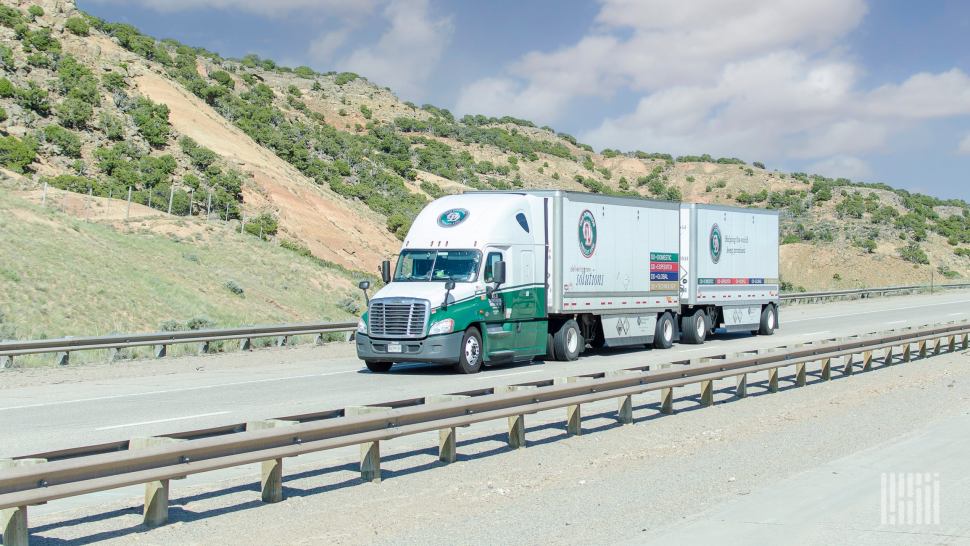
The stock market reaction to Trump winning the election for the second time was far less disorienting than the whiplash reaction in 2016. But it was noteworthy nevertheless. On Wednesday, the Dow, S&P 500 and Nasdaq all soared to new records, up 3.6%, 2.5%, and 3.0%, respectively. The industry-focused Dow Jones Transportation Average (INDEXDJX: DJT) beat those broader indexes, up 5.4%. Only, the small-cap focused Russell 2000 beat the transports on Wednesday, up 5.8%.
The implication is that investors expect a combination of:
- companies to grow revenue faster and earn more pre-tax profit under a Trump administration than they would have under a Harris administration
- investors are willing to pay more for a set amount of pre-tax earnings because corporate taxes will be lower, and
- the Trump administration to be more advantageous for industrials and freight-intensive sectors than for non-freight intensive sectors.
Transport stocks are more economically sensitive than most other sectors and are also considered “early cycle” names since raw materials and other goods are moved by carriers ahead of sales by companies in other industries. But, some sectors within freight transportation should see more benefit than others, here are a few examples below.
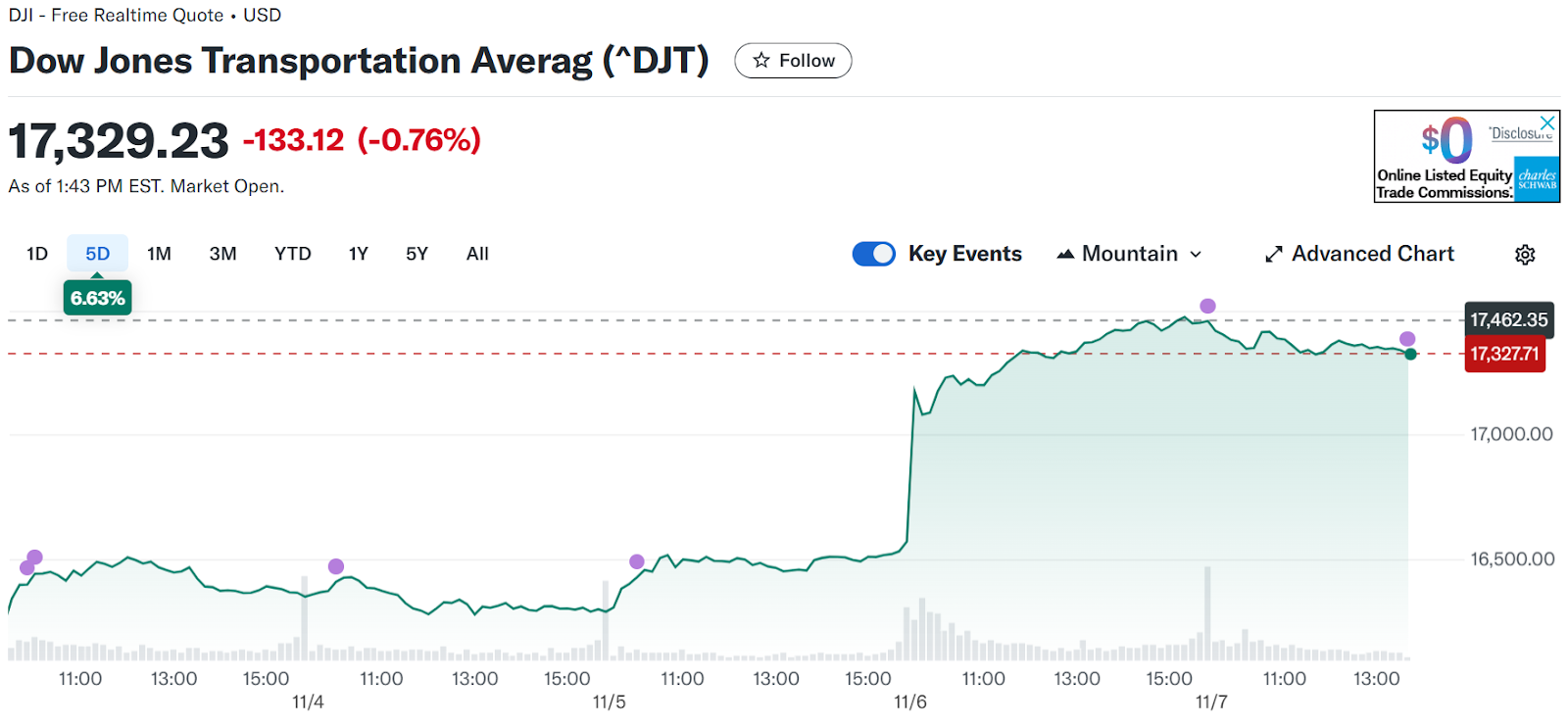
Following the election results, the Dow Jones Transportation Average surged to a new 52-week high and is up 6.6% the past five trading days. (Chart: Yahoo! Finance)
Taxes
Perhaps the most obvious reason why freight stocks surged following the election is the expectation for lower corporate tax rates. U.S. freight carriers have much to gain if corporate tax rates are cut in a manner similar to 2017 when they were cut from 35% to 21%. Again, Trump has proposed cutting rates further – this time from 21% to 15%. That also serves to explain freight’s outperformance relative to other sectors on Wednesday.
For many carriers, virtually all their pre-tax income is subject to U.S. corporate tax rates. In contrast, many less freight-intensive companies – such as multinational tech firms – earn large portions of their profit overseas and can avoid paying U.S. corporate taxes by reinvesting that pre-tax profit in those foreign countries rather than repatriating it.
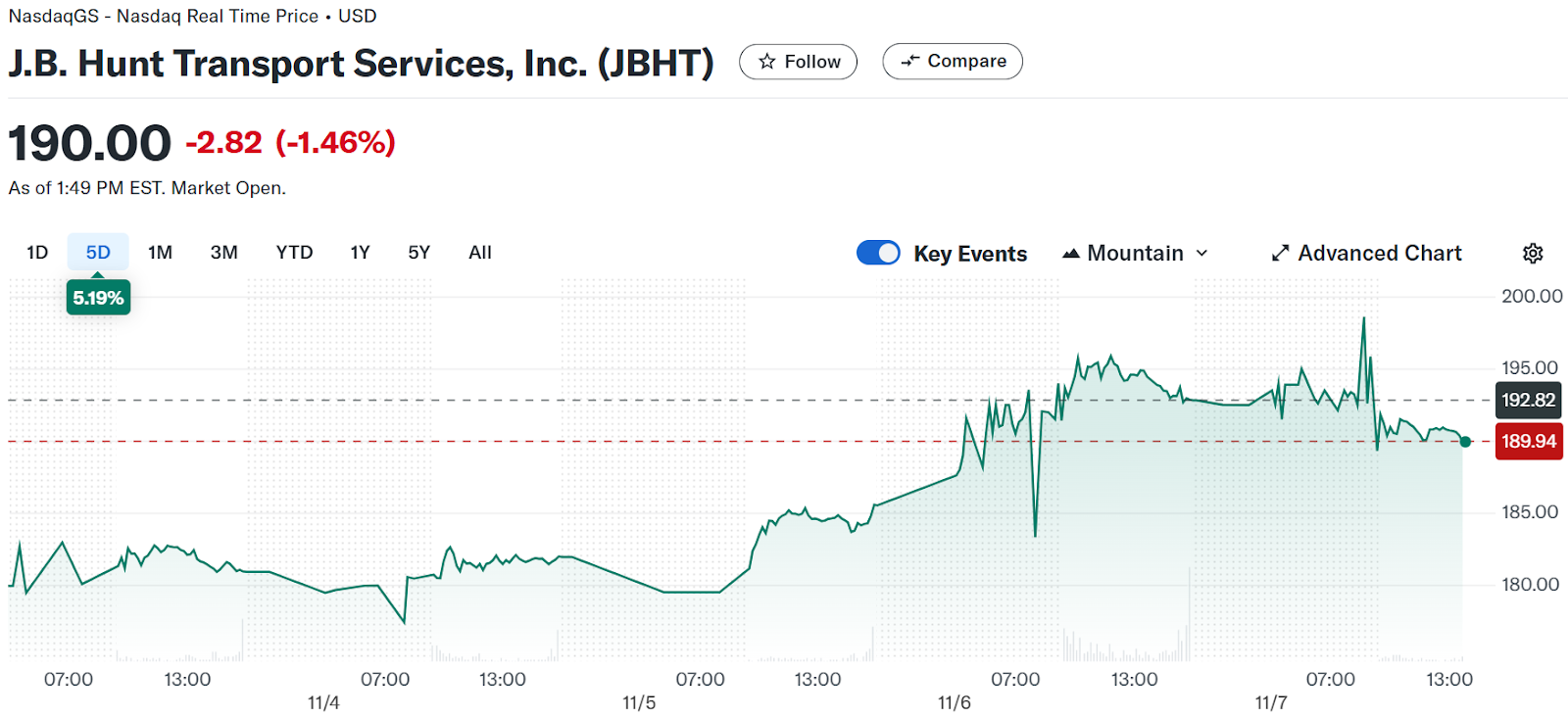
Multi-modal carrier J.B. Hunt had an effective tax rate of 26.8% in the first nine months of 2024. Its shares were up 4% on Wednesday. (Chart: Yahoo! Finance)
Tariffs
Tariffs are likely a mixed bag for the economy as a whole, but could be great for domestic freight carriers. Tariffs raise revenue, but the primary intention is to bolster U.S. industries, spur domestic manufacturing activity, avoid sending dollars overseas to trading partners using labor and trade practices deemed unfair and support national security. Supply chains don’t change overnight, and certainly much of what is imported is not coming back, but any pickup in domestic manufacturing is bullish for freight carriers.
Tariffs that protect domestic steel and aluminum producers from overseas competition should not only support those industries, but the haulers of those materials, which include flatbed carriers and the railroads. In fact, rail carload traffic typically increases during periods of expanding industrial production.
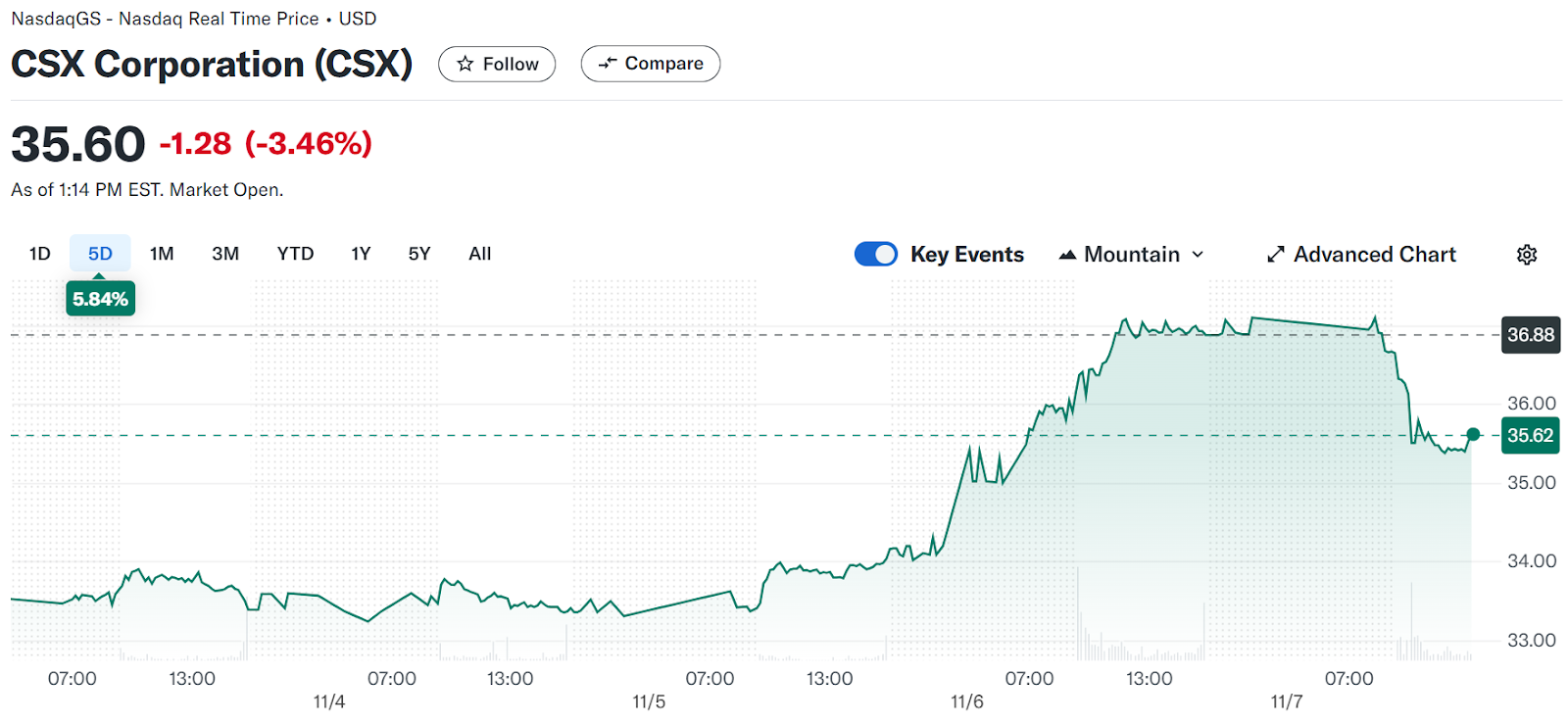
CSX shares were among the top Nasdaq performers on Wednesday before giving back part of that gain Thursday. (Chart: Yahoo! Finance)
In addition, imported goods generally arrive in their finished form, needing only to be distributed to consumption centers. In contrast, goods that are manufactured domestically more often require multiple points of handling, as raw materials and goods in the processes of being produced are moved at intermediate points. That can require shippers to make greater use of LTL carriers.
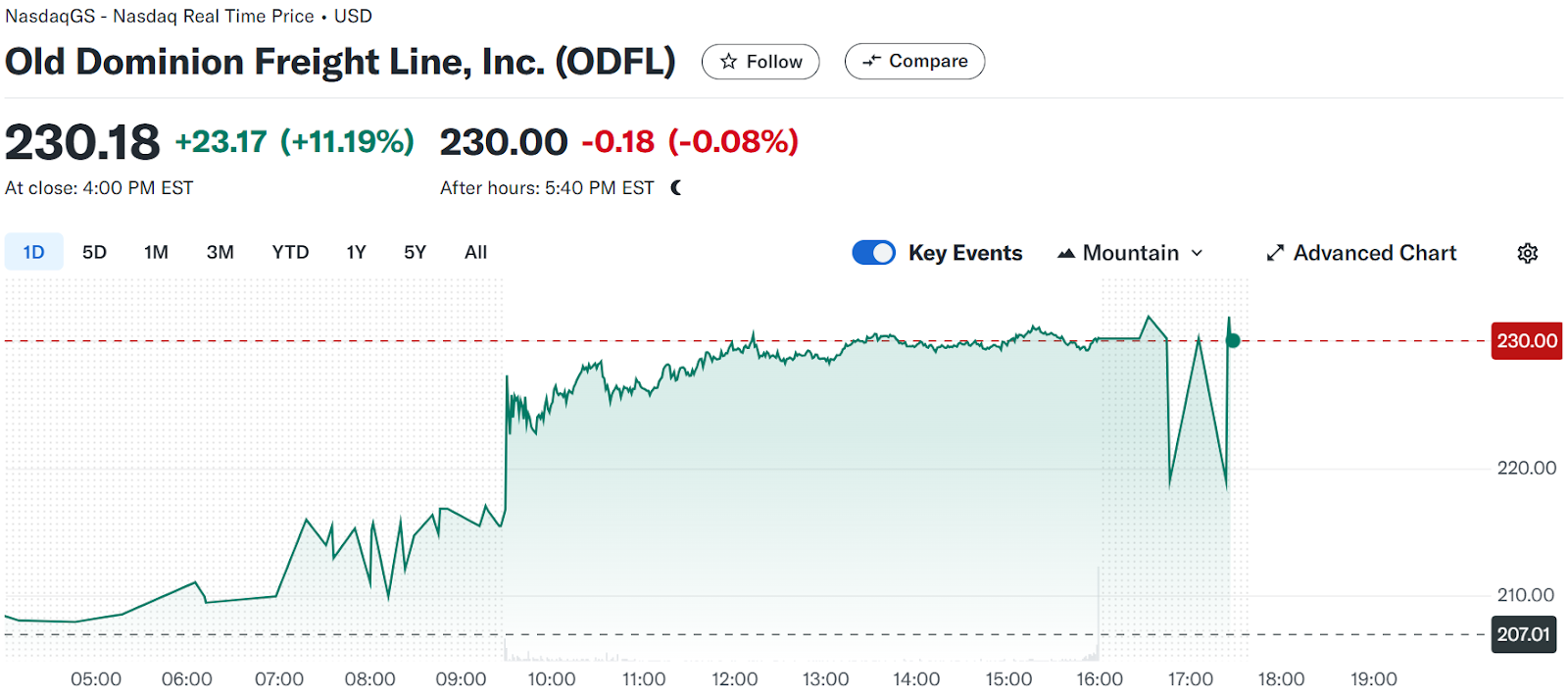
LTL carriers, such as Old Dominion, stand to benefit both from greater industrial production and domestic manufacturing. (Chart: Yahoo! Finance)
The ‘Trump trade,’ which supports the thesis of greater domestic manufacturing, also supports bearishness on global trade. That was evident in Wednesday’s trading. For instance ZIM shipping lines retreated 3%.
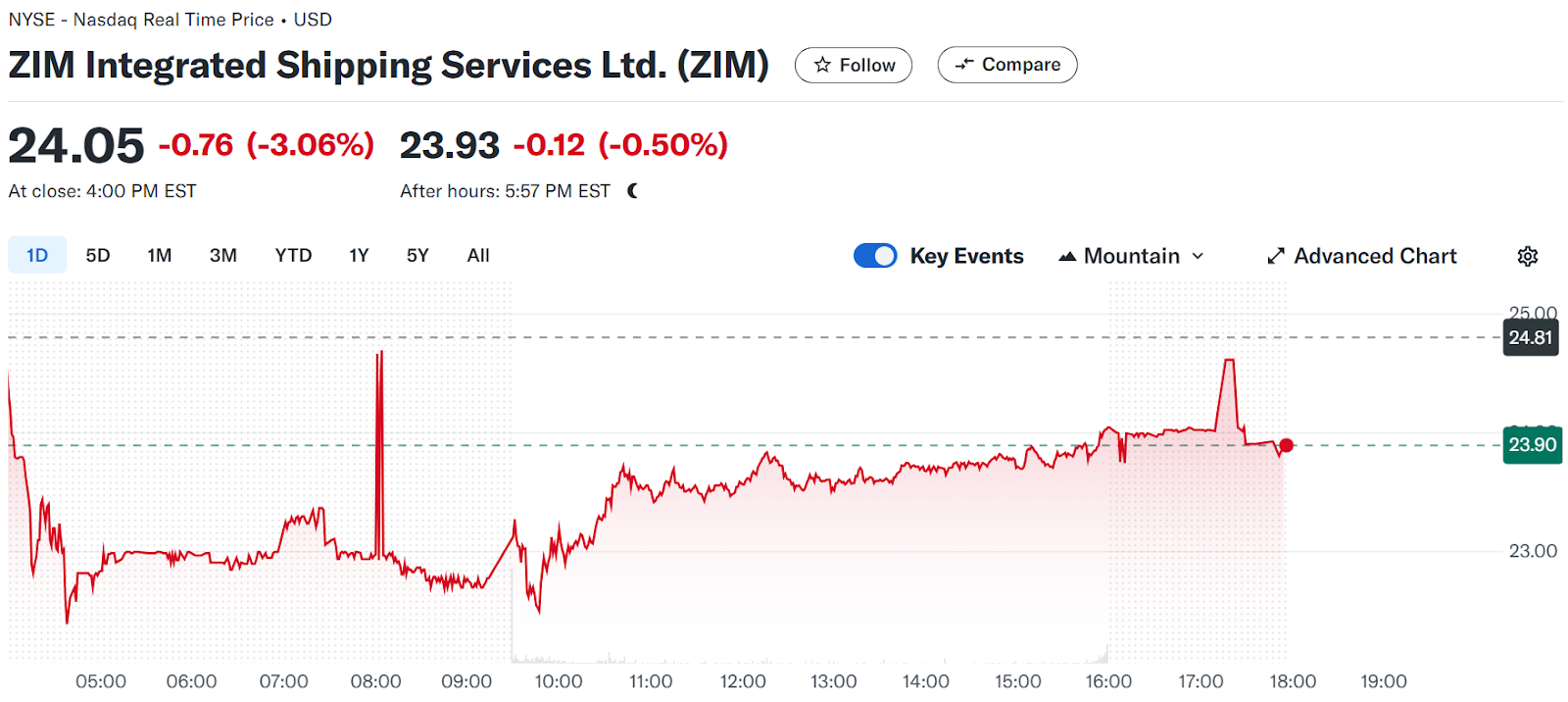
Shares of ocean carrier Zim declined 3% following the election results. (Chart: Yahoo! Finance)
Regulations
Regulations should look much different across industries under a Trump administration. Elon Musk expects the merger-wary head of the Federal Trade Commission to be fired and Robert F. Kennedy Jr. is likely to oversee numerous food and drug regulatory agencies that he currently views as ‘sock puppets.’ But, while regulations may get stricter for food (which sent “junk food stocks” lower on Wednesday), regulatory changes should benefit trucking companies. Yesterday, FreightWaves reporters and market experts John Gallagher and John Kingson described 10 changes to trucking policy which, on balance, should reduce truckers’ costs, reduce their lawsuit risk and increase demand.
Brokerage Compliance Symposium
The day before F3. Every compliance issue you face - fraud exposure, carrier liability, FMCSA rules, cargo theft, insurance gaps - navigated by attorneys and operators defining best practices in a changing industry.
F3 Awards Dinner
The night before F3. FreightTech100 companies honored. FreightTech 25 and Shipper of Choice winners revealed live. Cocktail reception into dinner and live music - 300 industry leaders in one purpose-built room.
F3: Future of Freight Festival
Industry-defining keynotes, rapid-fire technology demos, and industry leaders networking in experiences across Chattanooga - plus the inaugural F3 Awards Dinner featuring the FreightTech and Shipper of Choice reveals.
The day before F3. Every compliance issue you face - fraud exposure, carrier liability, FMCSA rules, cargo theft, insurance gaps - navigated by attorneys and operators defining best practices in a changing industry.
The Signal at Chattanooga Choo Choo • Chattanooga, TN Register NowThe night before F3. FreightTech100 companies honored. FreightTech 25 and Shipper of Choice winners revealed live. Cocktail reception into dinner and live music - 300 industry leaders in one purpose-built room.
The Signal at Chattanooga Choo Choo • Chattanooga, TN Register NowIndustry-defining keynotes, rapid-fire technology demos, and industry leaders networking in experiences across Chattanooga - plus the inaugural F3 Awards Dinner featuring the FreightTech and Shipper of Choice reveals.
The Signal at Chattanooga Choo Choo • Chattanooga, TN Register Now