








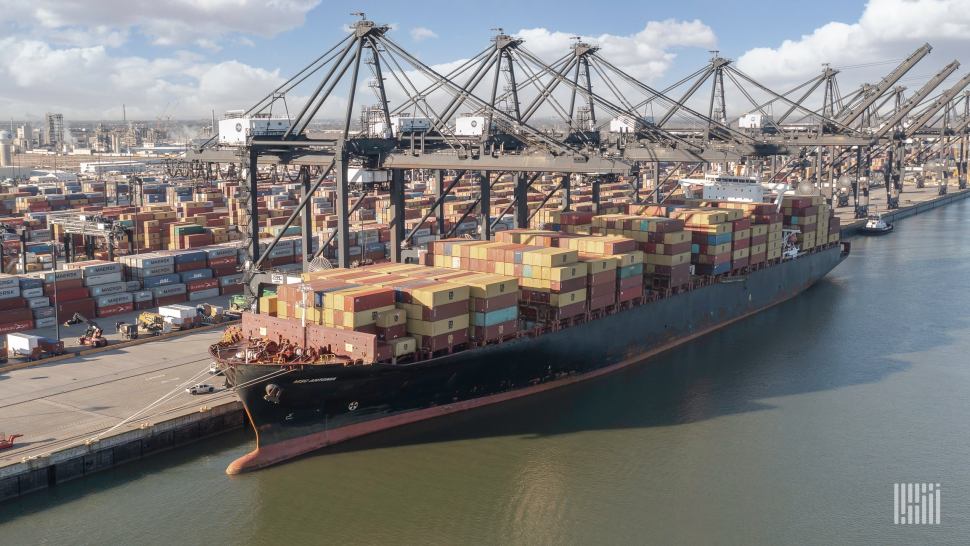
The Federal Maritime Commission is considering regulating how ocean carriers bill their customers for late fees related to picking up and dropping off containers.
An Advance Notice of Proposed Rulemaking (ANPRM) approved by the agency on Friday sets out the details of the proposal setting standards for demurrage and detention billing and seeks public comment to help shape it.
Carriers charge demurrage when full containers have not been picked up by their customers — taking up valuable terminal space — within a certain number of days. Detention is charged when the customer is late returning the empty container to the terminal.
While the FMC has broad jurisdiction over demurrage and detention, the proposal aims to set standards on reasonable practices by ocean carriers, and whether the new oversight should also apply to billings made by non-vessel-operating common carriers and marine terminals.
“Specifically, the commission is considering the merits of establishing regulations mandating certain minimum information be included in bills issued for demurrage and detention charges and prescribing the maximum period in which an invoice can be sent,” the FMC stated.
The ANPRM defines “demurrage and detention” to include any charges assessed by ocean carriers and terminal operators related to using marine terminal space or shipping containers.
“Demurrage and detention charges and policies should serve the primary purpose of incentivizing the movement of cargo and promoting freight fluidity,” the ANPRM points out. However, such charges have “substantially increased” over the past two years while rising cargo volumes have negatively affected carrier and port performance. A California drayage company recently informed the FMC that it had racked up over $250,000 in alleged illegal detention charges.
According to the ANPRM, the FMC will consider requiring that demurrage and detention bills contain certain information to make the charges clearer for customers. For example, carriers and terminals would be required to identify whether the bill is being issued to the correct party as well as the appropriate time period for which demurrage and detention are being assessed. They would also have to provide “more concise information in the event a bill is disputed” and include information on how to access the dispute resolution process.
Watch: What’s going on with dramatic demurrage/detention increases?
In addition to information necessary to identify the shipment, the FMC is requesting comments on whether bills should include information on how the charges are calculated.
Mandating that such information be included on the bills “may ultimately lead to fewer disputed bills and therefore streamline the demurrage and detention billing process,” the proposal states.
Due to complaints from shippers that they are receiving bills long after the dates on which the alleged violations have occurred, the FMC will weigh whether to require carriers and terminal operators to adhere to certain practices regarding when they actually issue demurrage and detention bills.
“The longer it takes to receive a demurrage or detention bill the more difficult it may be for a shipper to validate the accuracy of the charges,” the agency asserted, stating it is considering a requirement that such bills be issued within 60 days of when the late charge occurred.
Because the FMC has received anecdotal examples of refunds of demurrage and detention charges taking several months, it will consider whether it should regulate the timing of refunds as well.
Related articles:
Brokerage Compliance Symposium
The day before F3. Every compliance issue you face - fraud exposure, carrier liability, FMCSA rules, cargo theft, insurance gaps - navigated by attorneys and operators defining best practices in a changing industry.
F3 Awards Dinner
The night before F3. FreightTech100 companies honored. FreightTech 25 and Shipper of Choice winners revealed live. Cocktail reception into dinner and live music - 300 industry leaders in one purpose-built room.
F3: Future of Freight Festival
Industry-defining keynotes, rapid-fire technology demos, and industry leaders networking in experiences across Chattanooga - plus the inaugural F3 Awards Dinner featuring the FreightTech and Shipper of Choice reveals.
The day before F3. Every compliance issue you face - fraud exposure, carrier liability, FMCSA rules, cargo theft, insurance gaps - navigated by attorneys and operators defining best practices in a changing industry.
The Signal at Chattanooga Choo Choo • Chattanooga, TN Register NowThe night before F3. FreightTech100 companies honored. FreightTech 25 and Shipper of Choice winners revealed live. Cocktail reception into dinner and live music - 300 industry leaders in one purpose-built room.
The Signal at Chattanooga Choo Choo • Chattanooga, TN Register NowIndustry-defining keynotes, rapid-fire technology demos, and industry leaders networking in experiences across Chattanooga - plus the inaugural F3 Awards Dinner featuring the FreightTech and Shipper of Choice reveals.
The Signal at Chattanooga Choo Choo • Chattanooga, TN Register Now