









The LMI is an insightful measure that reveals underlying trends impacting the transportation sector. As mentioned in the Why you should care article, the LMI is a survey of North American logistics executives that combines eight components to gauge the health of the industry from various perspectives. The LMI is compiled by Arizona State University, Colorado State University, Rochester Institute of Technology, Rutgers University and the University of Nevada, Reno, in conjunction with the Council of Supply Chain Management Professionals (CSCMP). The LMI is similar to the well-known Purchasing Managers’ Index (PMI), released by the Institute for Supply Management, wherein a reading above 50 indicates growth and below 50 signals contraction within the logistics industry. Unlike the PMI, the LMI takes both manufacturing and consumer-facing segments into consideration.
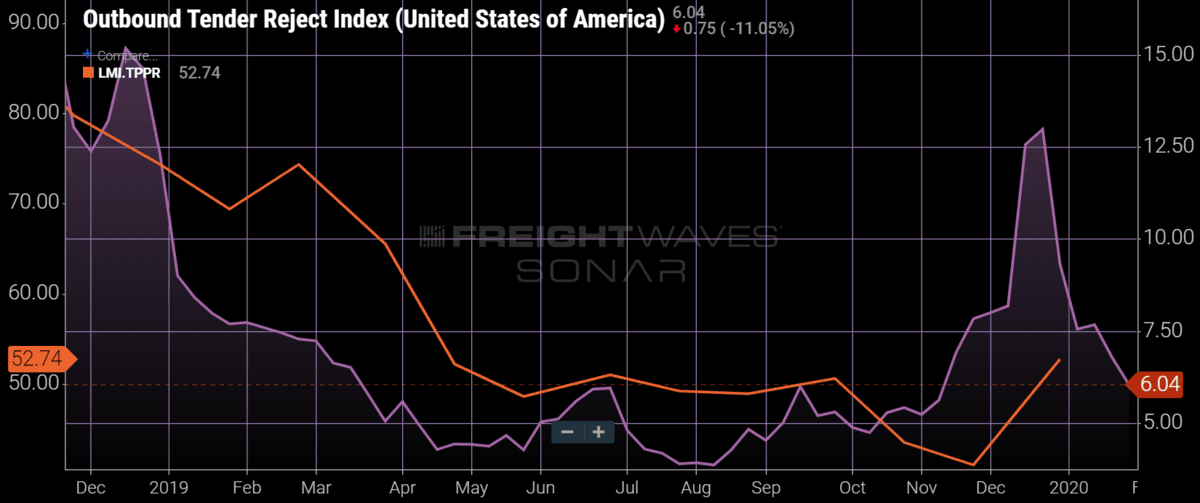
The most recent reading for the Logistics Managers’ Index (LMI) showed the industry has expanded. However, it’s at the slowest rate in the history of the LMI. December’s reading registered a 54, the sixth time in nine months that the index hit a new low. Additionally, the 54 for the composite is a significant decline from the year-ago level of 67. There is a significant relationship between the transportation prices (LMI.TPPR) component of the LMI and tender rejections (OTRI.USA). The transportation prices index rose to 52.74 in December after registering a 41 in November. The increase is correlated with tender rejections over the same period during the busy retail season. The decline in rejections signals that transportation prices also are coming down in January. The LMI also revealed that transportation capacity is increasing, which will weigh down rates.
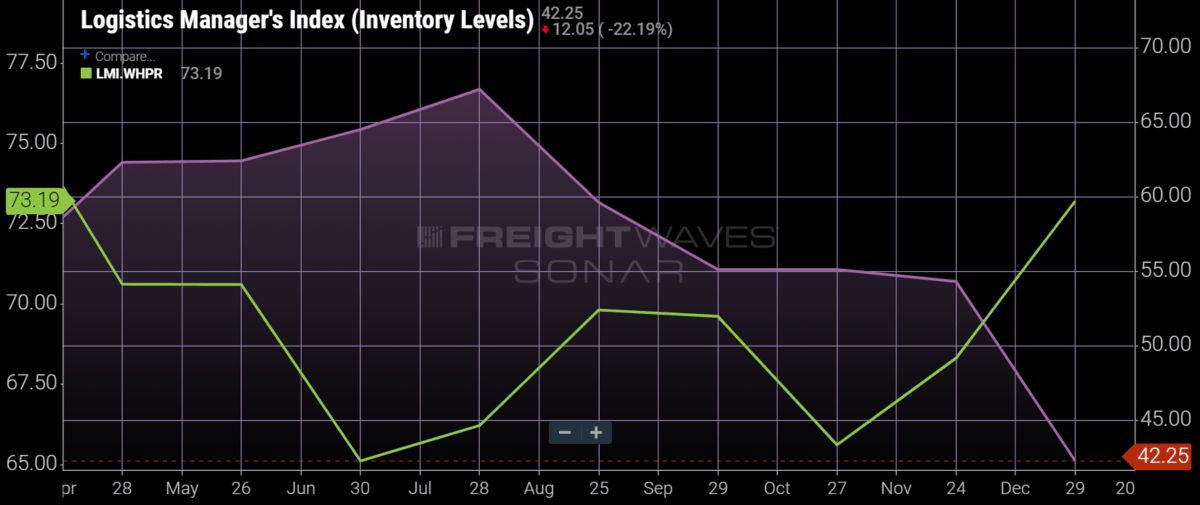
Inventory levels took a dip in the latest LMI; the component plunged 12 points, now registering a 42.3. The December results are the lowest inventory level value in the history of the LMI and the first time falling below 50, signaling that there was a substantial buildup prior to the holiday season. Further, the December index is down 20.8 points from the year-ago level. The contraction is also likely connected to the firms depleting inventories that were built earlier to avoid tariffs. Conversely, the warehousing price component increased 4.9 points to 73.2. Zac Rodgers of Colorado State University indicated the increasing prices are likely due to two factors: 1) There was no growth in warehouse capacity in December, as it was down 2.13 points to 50; and 2) due to the increasing popularity of same- and next-day delivery, more facilities are being located close to large population centers in what tends to be more expensive real estate. So warehouses are not being built quickly enough to keep up with growing demand, and the facilities that are the most attractive at the moment tend to be the most expensive.
The outlook is positive. Respondents predict that over the next year, the LMI will be at 63.3, up slightly 1.2 from November’s future prediction of 62.1. This indicates that respondents believe the logistics industry will grow at a rate similar to its three-year average of 62.5. You can learn more about the LMI here.
Brokerage Compliance Symposium
The day before F3. Every compliance issue you face - fraud exposure, carrier liability, FMCSA rules, cargo theft, insurance gaps - navigated by attorneys and operators defining best practices in a changing industry.
F3 Awards Dinner
The night before F3. FreightTech100 companies honored. FreightTech 25 and Shipper of Choice winners revealed live. Cocktail reception into dinner and live music - 300 industry leaders in one purpose-built room.
F3: Future of Freight Festival
Industry-defining keynotes, rapid-fire technology demos, and industry leaders networking in experiences across Chattanooga - plus the inaugural F3 Awards Dinner featuring the FreightTech and Shipper of Choice reveals.
The day before F3. Every compliance issue you face - fraud exposure, carrier liability, FMCSA rules, cargo theft, insurance gaps - navigated by attorneys and operators defining best practices in a changing industry.
The Signal at Chattanooga Choo Choo • Chattanooga, TN Register NowThe night before F3. FreightTech100 companies honored. FreightTech 25 and Shipper of Choice winners revealed live. Cocktail reception into dinner and live music - 300 industry leaders in one purpose-built room.
The Signal at Chattanooga Choo Choo • Chattanooga, TN Register NowIndustry-defining keynotes, rapid-fire technology demos, and industry leaders networking in experiences across Chattanooga - plus the inaugural F3 Awards Dinner featuring the FreightTech and Shipper of Choice reveals.
The Signal at Chattanooga Choo Choo • Chattanooga, TN Register Now