









The views expressed here are solely those of the author and do not necessarily represent the views of FreightWaves or its affiliates.
An old quip in transportation management is that passengers are freight that complain. But what about giving freight the window seats? In these challenging times it takes imaginative ideas to keep freight shipments moving along their supply chains. It also makes sense for carriers to use their conveyances in as many ways as they can to mitigate the fixed costs of their operations. If the conveyance is parked it is only incurring costs; but if it is moving it is able to earn revenue to mitigate some (though preferably all) of those fixed costs. Economists call it loss minimization when operating at a loss while covering at least some fixed costs. In other words, it is better to stay in business and be out of pocket for just some of the fixed costs than to shut down business and incur the entire amount. Loss minimization is a good strategy when a carrier is faced with fixed costs (e.g., leases and other contracts) that cannot be cancelled easily or if it simply wants to try to ride-out a downturn in business.
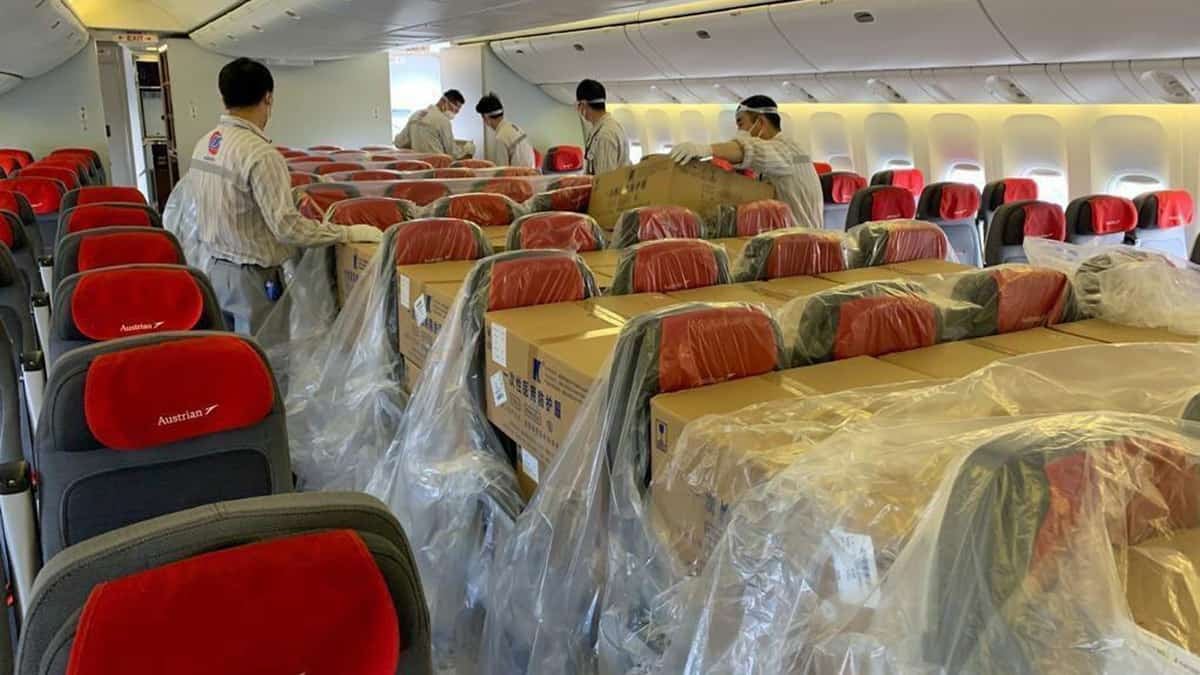
Some passenger airlines recently put loss minimization strategies into action when they turned their airplanes into makeshift air freighters. Falling passenger demand due to travel bans to/from China and Europe and 14-day self-quarantine requirements at several domestic destinations mean that passenger airplanes can either be parked or used to carry freight. Passengers may be grounded but the substantial amount of freight that travels along global supply chains in the bellies of those airplanes still needs to move somehow. Without luggage in the belly space there is now even more room for freight.
American Airlines reentered the all-cargo market on March 20, 2020 when it began offering scheduled service from Dallas/Fort Worth International Airport (DFW) to Frankfurt Airport (FRA). Freight is carried in the belly of its wide-body Boeing 777-300s. While the cargo capacity of this aircraft is about 100,000 pounds, the inaugural outbound trip carried 37,000 pounds and the return trip carried 60,000. Fully loaded this aircraft has 14 positions for palletized freight. The last time the airline did this kind of work was with Boeing 747 freighters back in 1984. But the rise of the cargo integrators (i.e., FedEx, UPS and DHL) squeezed many passenger airlines out of the all-cargo market. Of course, with backlogs in the air cargo industry due to China’s restarting production and transportation after the COVID-19 shutdown earlier this year, there are cargo opportunities for passenger airlines that have the appropriate routes. American Airlines will provide its DFW-FRA round-trips into early April in order to see how the scheduled service is working.
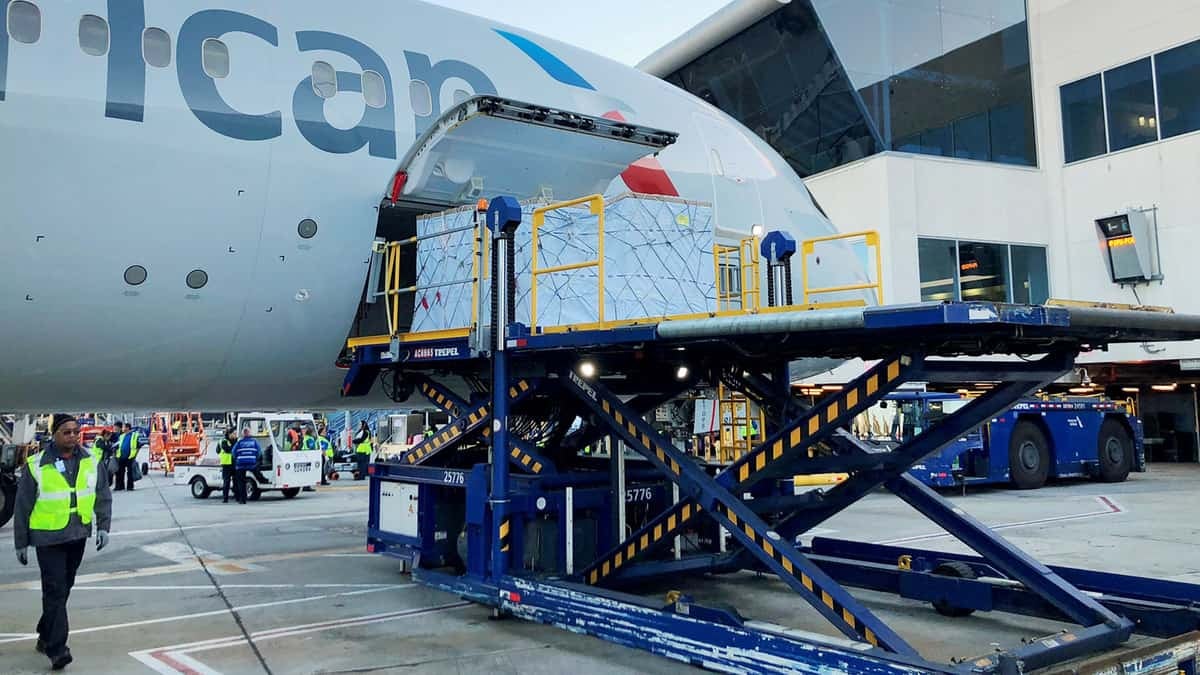
Typically, about 500 passenger flights per day travel between the United States and Europe and 50-60% of the total air freight along these routes is carried in the bellies of those airplanes and not on air freighters. Since the air cargo integrators cannot pick up all that capacity it makes sense for the passenger airlines to try to keep some of their airplanes flying in order to keep the freight moving.
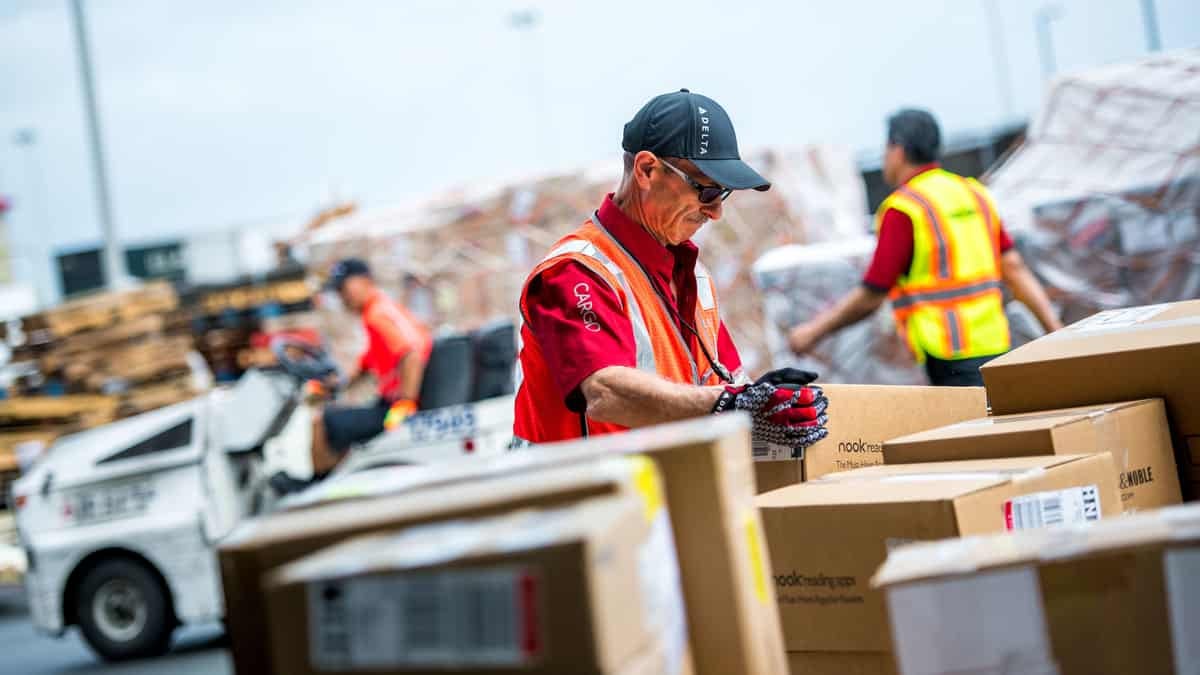
Delta Airlines re-entered the all-cargo market on March 16, 2020 when it began offering charter service for both domestic and international air cargo. Delta, after its merger with Northwest Airlines in 2009, sold off its Boeing 747 freighters. Today, its Boeing 777-200/300s and Airbus A350-900s are the most likely choices for air cargo forwarders requesting capacity. Of course, Delta noted that other types of airplanes in its fleet are also eligible to charter for cargo services. On March 23, 2020 United Airlines announced a similar plan to use its passenger airplanes to move freight though domestic hubs and into Europe and Asia. Finally, Southwest Airlines, while reducing its scheduled flights by 40%, began offering all-cargo charters on April 2, 2020.
What about giving freight the window seats? Putting freight in the belly is one thing but putting freight onto passenger seats secured by standard netting would provide even more capacity. While the U.S. Federal Aviation Administration (FAA) has not approved that option, some European airlines have already started the practice. Lufthansa carried 30 tons of medical supplies from Shanghai to Frankfurt on March 25, 2020. Its Airbus A330 had freight in its belly, on its seats and even in the overhead compartments. Of course, Lufthansa’s cargo division operates seven B-777 and six MD-11 freighters, but there is enough cargo demand right now to validate using passenger airplanes to do the work.
Emergencies such as the COVID-19 pandemic tend to bring out either the best or the worst in people. The airlines, while under a lot of financial stress right now, are showing their customers their best.
Keep ‘em flying!

Brokerage Compliance Symposium
The day before F3. Every compliance issue you face - fraud exposure, carrier liability, FMCSA rules, cargo theft, insurance gaps - navigated by attorneys and operators defining best practices in a changing industry.
F3 Awards Dinner
The night before F3. FreightTech100 companies honored. FreightTech 25 and Shipper of Choice winners revealed live. Cocktail reception into dinner and live music - 300 industry leaders in one purpose-built room.
F3: Future of Freight Festival
Industry-defining keynotes, rapid-fire technology demos, and industry leaders networking in experiences across Chattanooga - plus the inaugural F3 Awards Dinner featuring the FreightTech and Shipper of Choice reveals.
The day before F3. Every compliance issue you face - fraud exposure, carrier liability, FMCSA rules, cargo theft, insurance gaps - navigated by attorneys and operators defining best practices in a changing industry.
The Signal at Chattanooga Choo Choo • Chattanooga, TN Register NowThe night before F3. FreightTech100 companies honored. FreightTech 25 and Shipper of Choice winners revealed live. Cocktail reception into dinner and live music - 300 industry leaders in one purpose-built room.
The Signal at Chattanooga Choo Choo • Chattanooga, TN Register NowIndustry-defining keynotes, rapid-fire technology demos, and industry leaders networking in experiences across Chattanooga - plus the inaugural F3 Awards Dinner featuring the FreightTech and Shipper of Choice reveals.
The Signal at Chattanooga Choo Choo • Chattanooga, TN Register Now