









Editor’s note: This article is part of an ongoing series that examines key innovations in transportation and teases out lessons that can lead to better innovation in sea freight. The views expressed here are solely those of the author and do not necessarily represent the views of FreightWaves or its affiliates.
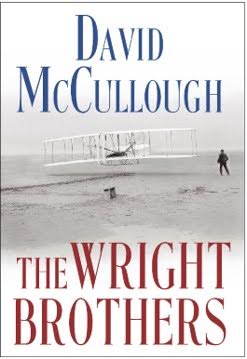
David McCullough’s “The Wright Brothers” is the fascinating story of how two bicycle mechanics from Dayton, Ohio, became the first people to safely fly a powered heavier-than-air machine. The book describes the life experiences that enabled the brothers to initiate humankind’s first flight on Dec. 17, 1903. It then follows the brothers as they further developed their designs and gained world renown as the inventors of flight.
Using the Wrights’ diaries and personal letters, McCullough spends much of the book describing the process used by the brothers to innovate the three key technologies of flight: control while airborne, the propeller and the engine. The successful core team consisted of only four individuals: Wilbur and Orville Wright, their sister, Katherine, and their chief mechanic, Charlie Taylor. At key times during the process, 10 to 15 other individuals played invaluable roles that enabled the project to continue moving forward, but almost all of the innovation was done by the core team.
The hardest problem to solve was to have full control of the machine while it was in the air. Wilbur Wright first researched all that was currently known, using local libraries and the Smithsonian Institution in Washington, D.C., as sources. But given the state of knowledge at that time, none of these sources were able to identify the secrets to controlled flight. Something else was needed.
The inspiration for the key inventions necessary to control flight were literally overhead and all around. Wright began a concentrated study of multiple species of birds and how they maintain equilibrium while in flight. His decision to learn from birds and ultimately imitate them was the original advance that led directly to successful flight a few years later.
Once the brothers had mastered controlled flight in a glider, they needed to add self-propulsion to the machine. This required the invention of an aerial propeller and a light engine that could turn the propeller. For the propeller, the Wright brothers used the marine propeller as a starting point and innovated from there. For the engine, they used an auto engine as a starting point and worked to make it substantially lighter for their purposes.
The plane was ready for initial marketing purposes by 1905 and actually received orders by 1908. Its success generated countless imitators so that multiple different designs were available in Europe and America within a short time. Progress was rapid and led to the famous Lindbergh solo flight across the Atlantic in 1927, less than 25 years after the first flight had occurred.
Three lessons for sea freight
1. Process. McCullough makes it clear that Wilbur Wright’s innovation process contributed mightily to the results. Wright leveraged all known research and then used the power of cross-fertilization of ideas to solve all three of the major technical challenges. His study of bird flight led to his breakthrough ideas for control of flight. He used the expertise of the marine propulsion industry and the automobile industry to generate rapid solutions to the other two major technical hurdles.
The sea freight industry has long-term unsolved challenges like zero-carbon propulsion and electronic bills of lading. Looking for out-of-industry analogies to stimulate new thinking could lead to dramatic breakthroughs.
2. People. It is astonishing that a core group of just four people could solve a problem that had never been achieved before. Wilbur Wright is an acknowledged genius, but that does not fully explain his results. The design of the core team and the complementary roles played by each member were likely vitally important to the end result.
Creating a few small teams with exceptional members and challenging them to try new methods for innovation might lead to exciting outcomes.
3. Prolific progress. McCullough spends the last part of the book describing how quickly the Wright brothers’ innovations were adopted globally and led to prolific innovation. In only 25 years, humankind went from being earthbound to flying across the Atlantic.
A major breakthrough on an important sea freight problem is likely to lead to a similar outcome. The sea freight industry has a track record of rapid adoption of good ideas. When a breakthrough idea is developed, it is quite reasonable to expect that it will rapidly spread through the entire industry and deliver global benefit.
The challenge for the sea freight industry is to create the environment for breakthrough innovation. The experiences of the Wright brothers can provide inspiration and instruction.
Brokerage Compliance Symposium
The day before F3. Every compliance issue you face - fraud exposure, carrier liability, FMCSA rules, cargo theft, insurance gaps - navigated by attorneys and operators defining best practices in a changing industry.
F3 Awards Dinner
The night before F3. FreightTech100 companies honored. FreightTech 25 and Shipper of Choice winners revealed live. Cocktail reception into dinner and live music - 300 industry leaders in one purpose-built room.
F3: Future of Freight Festival
Industry-defining keynotes, rapid-fire technology demos, and industry leaders networking in experiences across Chattanooga - plus the inaugural F3 Awards Dinner featuring the FreightTech and Shipper of Choice reveals.
The day before F3. Every compliance issue you face - fraud exposure, carrier liability, FMCSA rules, cargo theft, insurance gaps - navigated by attorneys and operators defining best practices in a changing industry.
The Signal at Chattanooga Choo Choo • Chattanooga, TN Register NowThe night before F3. FreightTech100 companies honored. FreightTech 25 and Shipper of Choice winners revealed live. Cocktail reception into dinner and live music - 300 industry leaders in one purpose-built room.
The Signal at Chattanooga Choo Choo • Chattanooga, TN Register NowIndustry-defining keynotes, rapid-fire technology demos, and industry leaders networking in experiences across Chattanooga - plus the inaugural F3 Awards Dinner featuring the FreightTech and Shipper of Choice reveals.
The Signal at Chattanooga Choo Choo • Chattanooga, TN Register Now