









The views expressed here are solely those of the author and do not necessarily represent the views of FreightWaves or its affiliates.
As recently as February, many companies considered work-from-home arrangements for their employees unrealistic and unlikely to happen. They recognized that they lacked the necessary IT infrastructure and other systems but had little reason to pursue making remote work possible. When our society shut down earlier this year, not only were a lot of companies faced with the reality that they were unprepared to work remotely, but in many instances, supply chains shut down as a result.
“Companies are beginning to realize that transportation infrastructure is quite a fragile ecosystem. COVID caused a dramatic increase in flight cancellations greatly reducing available options that supply chains can utilize. The only way to cope with these changes is using technology that can adjust in real time with the objective of minimizing impact on its customers,” said Ryan Rusnak, chief technology officer and co-founder of Airspace Technologies, a tech-enabled, time-critical logistics service provider.
Many businesses staying open during the initial quarantine quickly realized they needed a large number of new processes in place. Restaurants, for example, had a better chance of doing well if they already had an online ordering and pickup system; those that didn’t had to implement one fast or think of an alternative that met social-distancing requirements. Prioritizing this adaptation could have meant the difference between a small business going under and one successfully remaining open.
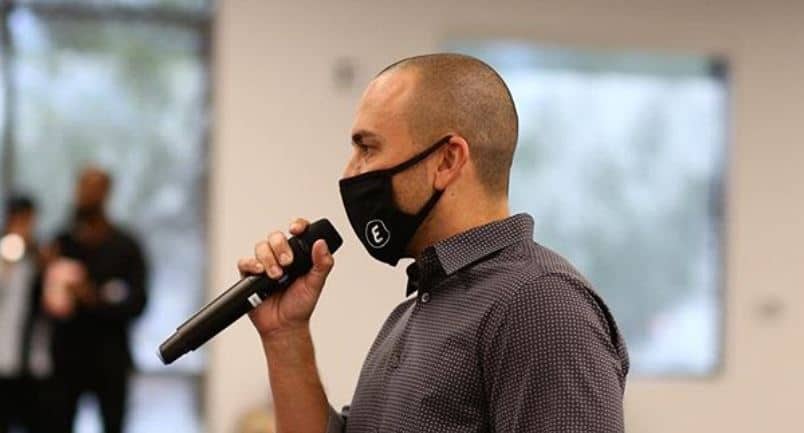
“When COVID hit, we immediately implemented a work-from-home strategy, and although we saw a slight decrease in production, we were overall happy with the way our team responded. As the restrictions in Arizona started to lift, we started a phased approach to bringing people back into the office. We had just signed a lease on a 40,000-square-foot facility in March, so we have plenty of space to socially distance and we allowed anyone with underlying health conditions, living with at-risk individuals, and child care issues to remain working from home. Out of our 150 employees, we currently have about 115 of them working from our headquarters,” explained Micheal Leto, CEO and co-founder of Emerge.
It’s the same need for adaptation and advancement that drives technology in logistics. From minimized contact in operations, remote back-office services, digitization and overarching visibility, in the past few months we’ve seen the need to accelerate the innovation of systems and solutions beyond what would have occurred without the COVID-19 pandemic. Many technology-enabled service providers and marketplaces have seen a significant uptick in shipper adoption throughout the pandemic as shippers were forced to digitize every area of their business as fast as possible.
The first necessity was contactless shipping operations. Contactless pickup or delivery protects facility teams and truck drivers by minimizing their exposure. Many shippers turned to technology platforms that enable streamlined communication from planning to delivery and billing in an effort to improve overall process, while optimizing for safety.
“Like every other industry, COVID has certainly accelerated trends in logistics. It’s very clear who has made investments in their customers, carriers and systems over the last 2 years, and that will become more obvious over the next two years,” said Ed Stockman, founder and CEO of Newtrul, a next-generation truckload collaboration platform. More can now be done without the driver leaving the truck, including check-in and other communication for loading and unloading. This lends itself to electronic bills of lading and other paperwork, which has the added benefit of being ideal for back-office teams that are working remotely.
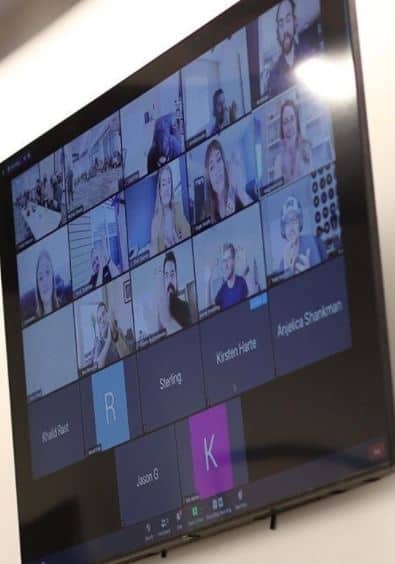
These office support roles now in distributed teams need tools for real-time sharing and collaboration between teammates. Companies are implementing solutions to replace the in-person communication of an office. It’s not a simple undertaking but involves messaging (such as on Microsoft Teams), calls (VoIP calls or videoconferencing such as on Zoom) and a system for workflow, including a document-management system to replace anything previously on paper. Many shippers have also adopted technology to enable their new normal of having a distributed operations team.
“What we have seen is that companies are more inclined to entertain our platform because they realize that connecting to more capacity in an efficient way is something that is necessary to avoid the struggles they have endured this year. With the current uncertainty in the market, shippers are asking a lot of questions about when to go to bid. Should they do a quarterly bid instead of an annual bid? Is now the right time? This along with other procurement questions that are managed through the Emerge platform are the hot topics as these shippers are pushing to digitize their process,” said Leto.
Once a part of the process is paperless, it can be applied toward the goal of supply chain visibility. This is a matter of extracting data and reporting the relevant information to the involved parties. Better visibility allows for monitoring to reduce risk, and subsequently costs, within the supply chain. Companies are able to predict disruptions and the effects of disruptions on suppliers. There are even companies using artificial intelligence for a “control tower” purpose, receiving end-to-end data, making decisions, and using the accuracy of the last predictions for constant improvement and to increase overall efficiency.
“We have seen an accelerated realization and shift across shippers that frictionless routing guides have become more important in navigating today and tomorrow’s market volatility,” said Kyle Engdahl, manager of sales and solutions engineering at Loadsmart.
The disruptions we’ve experienced from COVID-19 have not only caused an immediate change in logistics technology, but they have also brought awareness to the need for future innovation. The idea of an unforeseen circumstance is more tangible, causing industry professionals now to consider how their company, or a company they’re relying on, is equipped to handle another unanticipated situation. As everything is settling down from the initial shockwave of the pandemic, the next step is for companies to assess the solutions they implemented, perhaps in a hurry, and work to correct weaknesses and ensure the solutions support their vision moving forward.
Brokerage Compliance Symposium
The day before F3. Every compliance issue you face - fraud exposure, carrier liability, FMCSA rules, cargo theft, insurance gaps - navigated by attorneys and operators defining best practices in a changing industry.
F3 Awards Dinner
The night before F3. FreightTech100 companies honored. FreightTech 25 and Shipper of Choice winners revealed live. Cocktail reception into dinner and live music - 300 industry leaders in one purpose-built room.
F3: Future of Freight Festival
Industry-defining keynotes, rapid-fire technology demos, and industry leaders networking in experiences across Chattanooga - plus the inaugural F3 Awards Dinner featuring the FreightTech and Shipper of Choice reveals.
The day before F3. Every compliance issue you face - fraud exposure, carrier liability, FMCSA rules, cargo theft, insurance gaps - navigated by attorneys and operators defining best practices in a changing industry.
The Signal at Chattanooga Choo Choo • Chattanooga, TN Register NowThe night before F3. FreightTech100 companies honored. FreightTech 25 and Shipper of Choice winners revealed live. Cocktail reception into dinner and live music - 300 industry leaders in one purpose-built room.
The Signal at Chattanooga Choo Choo • Chattanooga, TN Register NowIndustry-defining keynotes, rapid-fire technology demos, and industry leaders networking in experiences across Chattanooga - plus the inaugural F3 Awards Dinner featuring the FreightTech and Shipper of Choice reveals.
The Signal at Chattanooga Choo Choo • Chattanooga, TN Register Now