

From near bankruptcy to IPO, Deliveroo set to go public
Amazon-backed Deliveroo announces plans to go public less than a year after British regulators questioned the viability of the business.
Modern Shipper covers the gig economy, including same-day, on-demand, and last-mile delivery jobs and services. Readers will find current news on gig economy companies, gig economy workers, gig economy data and trends. In addition, Modern Shipper focuses on e-commerce, e-commerce platforms and companies, and e-commerce services and technologies.
Amazon-backed Deliveroo announces plans to go public less than a year after British regulators questioned the viability of the business.
As Amazon continues to dominate e-commerce, major retailers are stepping up their investments hoping to benefit from shifting consumer demands.
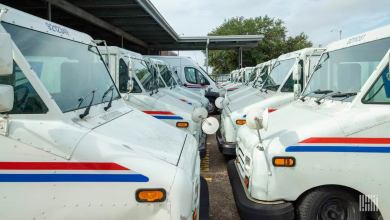
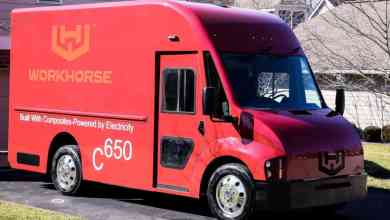
Workhorse expects a “prolonged process” in trying to wrest mail truck business from the U.S. Postal Service that contracted with defense contractor Oshkosh.
As drone delivery tests ramp up, a patchwork of regulations make some states more friendly to the process than others.
The company sets ambitious fleet electrification goals and establishes a center at Yale University to research climate-capture techniques.
The asset-light warehouse startup will use the capital to expand its network, co-founder says.
The Biden administration signaled on day one that it was going to roll back some late Trump administration rules; the independent contractor rule came out Jan. 7.
Instacart has announced a new funding round of $265 million, increasing its valuation to $39 billion.
New York-based Fillogic has secured a $2.5 million seed funding round to expand its e-commerce logistics platform.
Uber is spinning off the robotic delivery division of Postmates into a new entity.
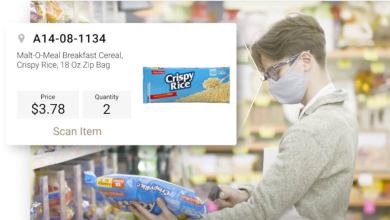
Ox uses augmented reality to speed the order picking process and improve accuracy. It has landed a $3.5 million seed round of funding to grow its business.
Instacart has announced a new funding round of $265 million, increasing its valuation to $39 billion.
The bankruptcy filing by Hertz threatened to dump a glut of trucks and cars onto the used vehicle market if the company did not find a way to survive.
Some people think the B2B exception is almost hopeless, but others see it as difficult but still the only way the independent contractor mode can survive in the Golden State.
As cryptocurrencies gain in popularity, more e-commerce brands and payment platforms are incorporating the coins into their payment systems.
Workhorse Group is not taking the loss of a contract to make battery-electric mail trucks for the U.S. Postal Service lying down.
The Los Angeles Cleantech Incubator and the city of Santa Monica have launched what they said is the first Zero Emissions Delivery Zone in the nation for electric and other non-petroleum-powered vehicles.
Just weeks after a U.K. court ruled that Uber drivers are essentially employees, a new push is on in Canada to unionize gig workers.
Companies like DoorDash and Uber Eats exploded during the pandemic as Americans ordered out for meals, but they face a more difficult path forward as COVID vaccines could reopen in-person dining.
FreightWaves is bringing back its in-person events this year with the F3: Future of Freight Festival in November, celebrating all things freight in a communitywide celebration throughout the city of Chattanooga.
In its first earnings statement as a public company, DoorDash posted record revenue and order volumes, but cautioned on 2021.
Volatile rates per hour and supply demands impacted gig economy drivers in 2020, but a brighter outlook is ahead.
Berkshire Grey, which provides AI-enabled integrated robotic solutions for the supply chain, will get $413 million in cash.
Third-party sellers using the BigCommerce e-commerce platform can now integrate with Walmart.com, opening up new online avenues to sell their products.
The store’s opening is part of DHL unit’s focus on contactless transactions, social distancing, it says.
Best Buy is shrinking its retail footprint in several locations as it moves to using stores for e-commerce order fulfillment operations.
A bad returns experience can turn off nearly three-quarters of consumers on a brand, so developing solutions to simplify this process are vital.
The software platform could help restore “lifetime value” to the 9.5 million tons of furniture that end up in landfills each year.
COVID altered the way CPG retailers and manufacturers interacted with, and delivered products to, consumers, and it is unlikely to ever return to the old ways.
Workhorse Group shares tanked after the U.S. Postal Service awarded a 10-year contract to Oshkosh Truck Corp. to modernize the aging mail delivery fleet.
Payment services provider Square posted 101% net revenue growth in 2020 over 2019 and 45% growth in net profit as it benefited from large growth in its Cash App division.
The e-commerce shipping platform said it is now valued at nearly half a billion dollars.
Brian Devine, senior vice president at ProLogistix, discusses the future of warehouse labor.
DoorDash is accepting applications from women-, immigrant- and BIPOC-owned restaurants to participate in a new accelerator program designed to improve their chances of success.
Warehousing has changed more in the past five years than in the previous 70 years. Chris Riemann, managing director of Deloitte Consulting, and A.K. Schultz, co-founder and CEO of SVT Robotics, discuss the role of automation in this warehousing revolution and how organizations must move their supply chains forward to compete during the e-commerce boom and the spike in online ordering because of the COVID pandemic.

Geodis’ Jeff McDermott joined FreightWaves to talk about challenges that parcel carriers are facing and lessons learned from the pandemic.
Last mile may be the final stop, but it needs to be front of mind for shippers, according to two industry experts.
Greater Philadelphia’s near-invisible vacancy rates paced the logistics real estate market’s 2020 gains.
With large players like Amazon adopting electric vehicles, pressure will start building on smaller fleets and owner-operators to adopt them as well, and that will require companies like GoFor Industries to provide support and all-in-one packages.
As ghost kitchens have popped up across the country, few have appeared on college campuses. Chartwells, which provides dining hall services, is rolling out the concept at client schools.
Andrew Lockwood, senior manager of solutions design at Suddath Global Logistics, discusses last-mile logistics strategies for manufacturing companies.
Motional, the Hyundai-backed autonomous vehicle developer, announced that it is now testing vehicles with no driver in the seat.
A $250 million e-commerce- and transportation-focused SPAC was filed Friday. Logistics industry veteran Dick Metzler is behind the deal.
While the opinion letters don’t have the force of law, they do suggest which way the new administration will go in classification of compensation issues
A test of drone delivery this week by manufacturer AgEagle and startup Valqari successfully delivered food and beverages to golfers while on the course.
Uber recently sent out a white paper on its views of compensation and other benefits for its drivers in Europe.
A former Jet.com co-founder is rethinking the way e-commerce orders are delivered — specifically, when orders are delivered and in what vessel they arrive at their destination. Nate Faust believes after 25 years of e-commerce, it’s time for a new way of imagining delivery.
On-demand driver platform Haul has attracted a diverse group of investors as it looks to disrupt the CDL staffing industry.
Walmart shares drop hard as investors focus on lower-than-expected fiscal year 2021 fourth-quarter results and uninspiring FY 22 guidance.
The COVID-19 pandemic highlighted the importance of artificial intelligence in e-commerce, with companies utilizing the technology able to adapt quicker to changing consumer demands.
Demand for technology platforms that can automate the entire D2C experience is growing, and Pipe17 is the latest to secure funding to expand its solution.
This labor economy has historically dealt with an information deficit, which forces companies to overhire in order to find the correct employee for the job.
Several Latin America-focused freight and logistics-related startups have recently secured more funding, including Mundi, Jüsto and Valoreo.
anadian e-commerce firm Shopify continues to slowly ramp up its U.S. fulfillment network on the heels of record fourth-quarter financial results.
As more packages and groceries are being shipped to consumers’ front doors, the demand for systems that can secure and maintain the freshness of items is growing.
The rate increases could generate needed revenue and profits, but they may narrow the price-service gap between the Postal Service and its rivals.
Autonomous vehicle startup Gatik has announced it will deploy electric trucks as part of its autonomous testing in New Orleans with partner Walmart.
Amazon is an e-commerce rocket ship. Making those deliveries possible is Amazon Air, which is growing so fast it could make it possible for more people to receive orders within a day.
Amazon has acquired Selz, a provider of technology that allows sellers to build an online storefront.
As rideshare has plummeted because of the COVID-19 pandemic, Lyft has had to chart a new path forward in the next decade. That path features a reliance on autonomous vehicles and e-commerce deliveries.
How quickly drone package delivery becomes a reality is dependent on a couple of factors, perhaps none bigger than whether the public is ready to accept it.
Isuzu will launch new Class 6 and 7 low-cab-forward trucks later in 2021 with Cummins B6.7 engines.
We’ve long touted retail inventory restocking as a primary growth driver for the freight bull run, but apparel brands aren’t aligning with this thesis. Rather than reverting back to habitual overordering and year-end discounting, retailers are sticking with the conservative ordering tactics that helped them win the holiday season.
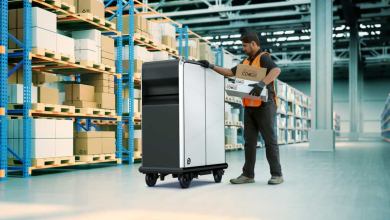
BrightDrop, a startup launched by GM, thinks that to solve last-mile delivery you need a provider that looks at the issues holistically — from vehicles to technology.
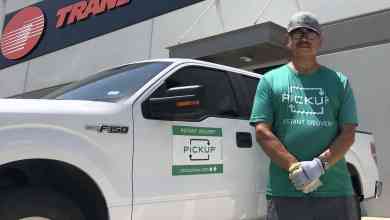
PICKUP’s white-glove delivery for big and heavy items transforms the last-mile customer experience.
Investments in its Eats and Delivery platforms have Uber on a path toward profitability as its Rides business recovers post-pandemic.
Hyundai’s concept vehicle TIGER represents the automaker’s vision of last-mile delivery in both urban and remote environments.
Commerce platform Fabric has leveraged market demand for its product to close a $43 million Series A round of funding just months after it secured its seed round.
A streamlined, automated and transparent approach has taken Airspace to the next level of modern shipping.
Lyft said it is investing in the business so it is positioned to benefit in an expected rideshare rebound, perhaps as early as Q2.
FreightWaves has announced the launch of Modern Shipper. The editorial brand will provide news and information about e-commerce, the gig economy and the important roles each plays in the supply chain.
Lyft reported a 45% decline in active riders and 44% decline in revenue in Q4 as the pandemic continued to affect ridesharing.
The agency’s revamp will likely include cost reductions, price increases and efforts to streamline what many consider a bloated organization.
A top FedEx reverse logistics expert says the online returns tsunami has just begun.
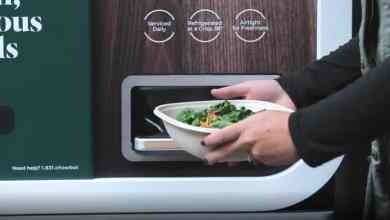
DoorDash is acquiring Chowbotics, hoping to leverage the firm’s salad-making robots to provide DoorDash partners new revenue opportunities.
Demand for its products skyrocketed, but port congestion and freight capacity constraints have prevented their delivery, and now Peloton is spending $100 million to try and fix its supply chain.
The gig economy grew at a 33% rate in 2020 as more workers looked for flexible work schedules and ways to supplement, or even replace, lost income during the pandemic.
President Biden has pledged to pump funding into state and local agencies in a bid to make last-mile freight delivery smarter and safer.
A new organization in New Jersey backed by app-based companies and community leaders is working to ensure gig workers can maintain their flexible and independent employment status.
Slync.io, a Dallas-based operating system for global logistics, announced the close of its $60 million Series B funding round.
SmartHop is more than just a freight dispatch; its “business-in-a-box” tools distinguish it as a comprehensive solution for over-the-road-trucking.
E-commerce sales for alcohol are outpacing overall online sales, and Uber is betting that will continue post-pandemic, paying $1.1 billion for on-demand delivery company Drizly.
Amazon announces a leadership shift as it crushes fourth-quarter 2020 estimates and reports $125 billion in revenue.
Scott Ruffin’s company is poised to exploit weaknesses in legacy delivery networks to take B2C share.
BrightDrop, the new General Motors business-to-business electric first-to-last-mile delivery subsidiary, will sell 12,600 of its vans to Merchants Fleet.
Uber will acquire Drizly, an on-demand alcohol marketplace, for $1.1 billion in cash and stocks.
As online sales of furniture and other heavy goods grows, smaller sellers have been at a disadvantage without a national logistics partner. Deliveright and Shopify are changing that.
EcoCart offers e-commerce consumers a chance to purchase carbon offsets at checkout to lessen the environmental impact of the order.
Grubhub will provide delivery of Girl Scout Cookies to customers using the Grubhub platform to place orders from local troops.
SamCart, an D2C e-commerce platform, has closed a $10 million Series A round of funding, led by TTV Capital.
Social Auto Transport aims to connect the gig economy with car dealers to help improve the customer service experience.
Grocery is the only retail segment that has maintained (and even grown) its e-commerce penetration since peak levels in March, indicating the new normal is already here. The new normal is a much higher level of online demand, and grocers are getting wise about their fulfillment methods.
Bringg is now offering its retail customers the ability to leverage Uber’s vast driver fleet to help fulfill e-commerce orders.
UPS takes part in a business panel on why Congress should support last-mile delivery and electric vehicles.
German drone manufacturer Wingcopter has raised $22 million, with plans to expand health care-related delivery programs and build a U.S. facility.
Retailers with physical footprints have been able to leverage new modes of fulfillment to pass increased costs associated with online delivery to consumers and their suppliers. But for digitally-native brands without access to physical stores, this could be painful should it become the new normal. If you ask FedEx, it already has.
Walmart’s U.S. e-commerce chief, Marc Lore, departs with the company well positioned, but with a mixed bag of results.
Instacart is cutting approximately 1,800 in-store shoppers nationwide as it moves to a technology-focused “Partner Pick” model.
The past 12 to 18 months have been nothing short of spectacular for Peloton. It has cemented itself as a prominent fitness brand with a base of fiercely loyal customers while growing revenues 233% yoy in Q3. But the company has outkicked its coverage and capped potential growth due to its supply chain constraints and lack of visibility.
A St. Louis restaurant is alleging that DoorDash purposely drove customers away from its location and to other area restaurants that used its services.