








Greg Miller
Tuesday, February 21, 2023
Container trade’s next turn: Price wars, cheap contracts, new ships
Two container shipping experts give their take on how the hangover after the pandemic boom could play out.
Two container shipping experts give their take on how the hangover after the pandemic boom could play out.

Air Canada is investing heavily in its dedicated cargo operations at a time when freight rates are slumping.

Ameriflight is tentatively betting on two futuristic cargo aircraft from startup manufacturers to augment its feeder service for integrated express carriers.

EgyptAir has two interests in 737-800 freighters: flying them and rebuilding cargo versions from used passenger jets.
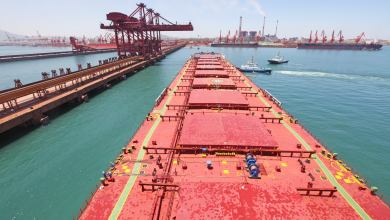
The Baltic Dry Index has fallen 91% since October 2021 to one of its lowest levels ever, yet shipowners remain confident.

An upcoming supply chain legislation package will include curbs on Chinese influence over global shipping.

More than 43,500 people in Turkey and Syria have died as a result of the Feb. 6 earthquake, which the United Nations is calling a “once-in-a-generation disaster.”

Los Angeles continues to face a double whammy of sinking demand and fears over the port labor contract that expired in July.

The Georgia Ports Authority said a 16% drop in imports year over year “was fueled in part by reduced orders in retail and manufacturing.”

APM Terminals Mobile has begun a $60 million rail expansion project at the Port of Mobile, Alabama.

The recognition by the Maritime Association of the Port of New York and New Jersey “is reserved for those who have made a lasting difference in our industry and helped advance all aspects of the global transportation industry.”

Belgian data and analytics company Kpler has acquired MarineTraffic and FleetMon in an effort to improve maritime intelligence.

Finnair got creative redefining aircraft characteristics for the A350 jetliner so it could carry more fuel, cargo and people on long Asia routes.

HMM acknowledged that “freight rates in most key trade lanes have been under downward pressure since H1 2022.”

Ocean carrier Zim will increase the frequency and size of ships used for its e-commerce Baltimore Express service.

Executive Director Mario Cordero said he is optimistic the Port of Long Beach will recapture market share.

Business is very soft in the air cargo sector and likely to get softer still, but there are signs that demand could spark up in the second half of the year.

Ocean carrier revenues fell sharply in the fourth quarter versus the third and continued sinking in January.

Sanctions have split the world’s tanker fleet in two. On one side, those that follow Western rules; on the other, those that don’t.
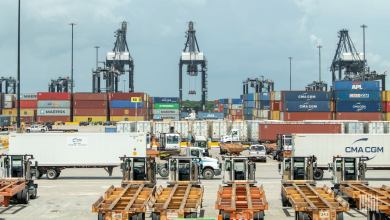
Flexport and Shopify are partnering on a new app designed to reduce the complexity of managing ocean shipments for small businesses.

Aloha Air Cargo is seeking to change an unusual federal limit on its fleet size so it can deliver more mail between the Hawaiian Islands.

Chicago Rockford is moving into the major leagues of cargo airports with big expansion plans and the arrival of a global ground handling agent.

After a bounce in January, containerized imports could drop this month to the lowest level since May 2020.

Ocean carrier Maersk sees a rough second half of the year, when remaining support from contract rates “will disappear.”

A maritime law judge has ruled that ocean carriers violate the Shipping Act when they limit container chassis choices for intermodal truckers.

Air Transport Services Group will see its Amazon business dip this year as the retailer decreases freighter utilization to match slower retail sales.

Burrell Aviation has named an ex-Southwest Airlines director to lure cargo airlines to properties it controls at second-tier airports.

The reversion in spot rates is pulling down contract rates, with a significantly delayed effect on ocean carrier earnings.

Maintenance downtime at Sun Country cut into cargo revenue and growth was limited by slower Amazon e-commerce business.

The tanker industry has a storied history of corporate showdowns. The latest, a three-way tussle involving Euronav, looks far from over.

UPS is replacing MD-11s with more fuel-efficient Boeing 767 freighters as reducing costs and carbon emissions become increasingly important.

Hawaiian Airlines faces some headwinds in 2023, including some extra temporary costs to prepare for new business flying freighters for Amazon.

Republican lawmakers blame the Biden-backed $1.2 trillion infrastructure bill for boosting inflation and vow to step up oversight on how the money is spent.

The 2M partnership between MSC and Maersk — which is breaking up — is the smallest of the three alliances. The Ocean Alliance is much larger.

Three furry sloths died when the heat stopped working on a Qatar Airways jet during a long delay at frozen Liege Airport

Fly Meta has one aircraft and no pilots, but it plans to acquire four Boeing 777 jets transformed for dedicated cargo carriage.

Look at ocean freight bookings as a signal that manufacturing orders are increasing.

ONE’s profit dropped by 50% quarter over quarter to $2.76 billion.

German ocean shipping company Hapag-Lloyd said its earnings before interest, taxes, depreciation and amortization jumped by $7.6 billion year over year.

It’s the end of an era for the “Queen of the Skies.” Boeing will make its final 747 delivery on Tuesday, but cargo airlines could fly them for another 40 years.

Container shipping rates from Europe to the U.S. are finally falling, but they’re still exceptionally high.

Ameriflight, an air cargo contractor for big express companies, is considering a large purchase of uniquely designed, semi-autonomous freighters from Natilus.
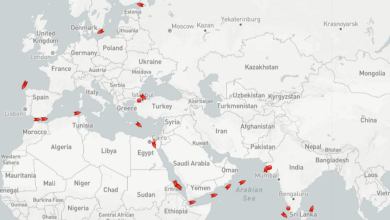
Russian crude restrictions are having the predicted effect on tanker trades, soaking up more vessel capacity as sailing distance lengthens.

2004: The capsizing of two vessels rocks the project cargo industry.

Martinair, with the help of parent company Air France-KLM, is buying four new freighters from Airbus.

American Airlines generated strong cargo sales in 2022 even as market conditions deteriorated.

FreightTech startup Freightos is raising money through a public offering rather than seeking venture capital.

Speculation is swirling on how the end of a global container shipping alliance will affect ocean carriers and cargo shippers.

“Terminal and infrastructure investments are a crucial element of our strategic agenda and India is one of our key growth markets,” Hapag-Lloyd CEO Rolf Habben Jansen said.

1994: Those involved in response to the 600,000-gallon spill reflect on their efforts.

Air Canada is sticking with a Canadian, Jon Turner, as cargo chief after two Americans in that position left in recent years.

Shipping services around the globe will be reconfigured after the top two carriers end their vessel-sharing agreement.

Amazon is still investing in its air cargo network despite cost cuts elsewhere in the company. Next up: India.

A new contract for pilots at Hawaiian Airlines is setting the bar for all-cargo carriers above traditional industry leaders even though the carrier has never flown freighters before.

“We are proud to be part of this first-in-history interoperability launch between eBOL platforms,” said CargoX founder and CEO Stefan Kukman.

Steel, crude oil and refrigerated shipments rose as ports in Texas, Louisiana and Alabama recorded increased freight volumes in 2022.

Are falling commodity shipping spot rates the result of normal seasonality or a symptom of global economic malaise?

White House economic adviser Brian Deese points to supply chain improvements while new pressures loom overseas.

American imports remain a tale of two coasts, with continued strength in container volumes headed to Atlantic ports.

“Terminal49’s automation has saved us thousands of dollars a year, but more importantly it’s helped improve customer trust,” said Trade XCelerators’ Spencer Strader.

United Airlines saw cargo revenue dip but exceeded financial expectations in the fourth quarter.

The 9,133,657 twenty-foot equivalent units the Port of Long Beach handled in 2022 were only 2.7% off the record-setting 2021.

South Carolina Ports moved nearly 2.8 million TEUs in 2022, the most in the state’s history.

Annual volumes at the Nova Scotia port exceeded 600,000 twenty-foot equivalent units for the first time in its history.

RoadOne IntermodaLogistics has acquired The Transporter Inc., an intermodal service provider with facilities in Houston, Dallas and Laredo, Texas.

2023 was a banner year for the Port of Virginia, with annual volumes higher year over year as more traffic went to East Coast ports.

“It was a challenging year, but collaborative effort across Georgia’s supply chain ensured cargo movement remained fluid,” Executive Director Griff Lynch said.

NASA hauls the longest heavy cargo delivery; Reefers run food to the Bahamas; Submarine cables connect the Virgin Islands.

Two Chinese logistics companies have started their own airlines and now have expanded their routes within China, and internationally.

The biggest container ships sailing on the oceans can carry more than 24,000 TEUs and are as tall as the Empire State Building.

Delta Air Lines carried more than $1 billion in cargo below passengers’ feet last year, setting a company record.

1971: Londoners are able to buy American melons for the first time after test shipments to the U.K. proved successful.

A year ago, shippers were in scrums to find cargo space on airlines. The market has softened considerably and 2023 could see more declines before things get better.

Legislation aimed at “fixing the supply chain” would allow drivers under age 21 to haul freight to and from ports.

Swissport, a large cargo handler at Chicago O’Hare airport, has finally complied with the city’s requirement for a labor peace agreement, ensuring uninterrupted cargo flow.

Influential logistics provider Flexport says it will reduce its staff by 20% in the face of a looming global recession.

A first-ever strategy aimed specifically at decarbonizing transportation encourages maritime and rail over highway freight.

Imports continue to decline and are close to where they were before COVID-19, but the coastal mix is very different.

We take a look back at the state-of-the-art technology that streamlined trucking in 1961.

Trade has been proven time and time again to blow away the bluster of political rhetoric. China’s sleight of hand with its COVID reporting has the WHO accusing China of “under-representing” the severity of cases, and the flow of trade can back up the WHO’s statement.

A private investment group is rolling up large chunks of land at smaller airports to develop air cargo facilities.
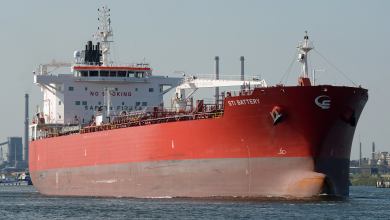
Sanctions on Russian crude exports have yet to boost tanker rates. Some question whether sanctions on Russian diesel will either.

Remaining queues of waiting ships are dwindling, another sign that supply chain pressure is winding down.

Alliance Ground International has agreed to give a major union access to workers at its O’Hare airport cargo facilities, averting a potential suspension of operating rights.

Port Houston plans to begin implementing fees for long-dwell containers beginning Feb. 1.

1992: 2-D bar codes provide an almost infinite variety of codes, which could prove especially useful in international shipping.

Jason Berry was key to getting Air Canada’s new-and-improved cargo unit off the ground but isn’t sticking around to see it reach cruising altitude.

The top 10 liner operators hiked aggregate capacity by 13% in 2000-22 and continue to control 85% of the global fleet.

Flexport is hiring top tech talent to scale up its digital logistics platform.

The city of Chicago is pressuring cargo agents at O’Hare airport to make a deal with a powerful union. If they don’t, significant cargo backlogs could occur.

As cars gained popularity, ships were converted and built specifically for transporting vehicles overseas.

Specialized freighters with nose cones that open are helping National Airlines and its sister logistics company capture more oversize business.
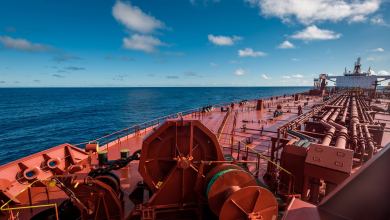
The predicted boost to tanker rates from Russian crude disruptions has yet to materialize. Instead, rates have declined.

Bankruptcies, freight demand, trucking legislation and more dominated the headlines this year.

Just as the pandemic wound down, another market-altering event for shipping — the Ukraine-Russia war — ramped up.

Making money was more difficult for the air logistics sector in 2022, but the future remains bright.

Container shipping lines are gradually getting their services back on schedule, but they still have a long way to go.

Trans-Pacific spot rates fell first. Trans-Atlantic spot rates and Asia-U.S. contract rates look like they’re next in line.

2000: World container port throughput increased 7.8% last year to about 201 million TEUs — the first time volume exceeded 200 million TEUs.

FedEx Express is looking to trim fat at the largest cargo airline in the world and lean on rental fleets to fill in needs.