









Carriers level up communication expectations for driver results – Taking the Hire Road
During this episode of Taking The Hire Road, guest host Leah Shaver, president and CEO of the National Transportation Institute, chats with Kameel Gaines, founder, president and CEO of Rig on Wheels, a third-party driver recruiting firm.

Shippers buoyed by strong 3PL, carrier partnerships amid LTL crunch
The Yellow bankruptcy represents one of the biggest industry shakeups of the past two decades. Remaining less-than-truckload carriers and shippers alike continue to feel the impacts of the company’s shutdown.

Creating a more cyber secure supply chain requires group effort
When the ELD mandate was put into effect, fleets across the nation became vulnerable to cybersecurity threats.
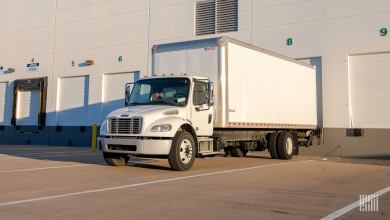
Shippers, carriers must work together to solve detention crisis
At the end of the day, logistics is a relationship-driven industry. Solving widespread issues – like detention time – requires collaboration between all shippers and carriers.

Open platforms hold key to supply chain optimization
Despite the growing importance of interoperability in supply chains, there are more technology companies marketing closed platforms than ever before.

Automated quoting solution helps brokers win more freight
LiveQuote allows brokers to send their shippers automated quotes tailored to each company’s expectations, capacity and requirements.

Is there relief in sight for trucking companies?
The market is still depressed, but recent layoffs and closures have fueled enough uncertainty to make some players wonder about changing market tides.

Increasing supply chain velocity with combined FTL, yard visibility
Issues in the yard can threaten tight delivery windows just as much as issues on the road. Every inefficiency in the supply chain creates a domino effect, but so does every improvement.

Tai helps brokers tame unruly email inboxes
Tai has been working on email improvements utilizing AI and machine learning for over three years now. . Most recently, the company introduced a new email feature – helping brokers write emails.

How parcel shippers are leveraging accurate SKU data to save millions
Shippers are exploring new technologies to mitigate rising costs and hit sustainability goals, but to maximize results they need to have a rock-solid foundation of data and a streamlined dimensioning process.

SH 130 offers reprieve from Central Texas bottlenecks
Traveling all 41 miles of the SH 130 toll road will cost drivers about $32. The value proposition lies primarily in saved time and predictability, a commodity that invariably aligns with money in the transportation world.

Freight agent autonomy: What does it take?
For freight agents attempting to navigate today’s volatile market, partnering with the right company can mean the difference between success and failure.

Eradicating data silos is crucial to unlocking power of today’s technology
The fleet management ecosystem has undergone a serious technological transformation over the past several years, leading to more data being collected than ever before.

Waterfall tracking takes automation to new heights
“Waterfall tracking” means that a visibility provider, like Trucker Tools, automatically assigns the best available tracking method to each individual load based on information provided when the track was created and what the company already knows about the carrier.

Next-gen routing solution promises to boost profitability, service levels
Modern tour planning tools — like HERE Tour Planning API — make next-generation route visibility and optimization possible.

Drivers on demand: How F|Staff brings flexibility for all – Taking The Hire Road
Jeremy Reymer, CEO and founder of DriverReach, is joined on this episode of Taking The Hire Road by a great friend and innovative leader, Justin Clarke. Clarke is the founder and CEO of F|Staff, an on-demand truck driver staffing company.
Tenstreet provides smoother connection between drivers, carriers through continued acquisitions
The team at Tenstreet prides themselves on being visionaries and problem solvers, always working to increase the company’s offerings while solving client pain points.

Scorecards hold the key to shifting industry pricing power
Companies that are able to make data-driven decisions gain a competitive edge over their peers in any market.

Who’s the champion for drivers in your fleet? – Taking The Hire Road
NTI works to provide carriers with actionable data and benchmarking studies, enabling them to make informed decisions about their own compensation packages.

Improving broker reputation starts with integrity
When brokers remember their role as communicators, they are able to build stronger relationships with both their shipper customers and their carrier partners.

Choosing the right temp-controlled partner can provide profit boost
Cold chain failures lead to the same profit losses and headaches as other supply chain mishaps, but on a much greater scale.

Uniforms can protect drivers from dangers of extreme weather
The effects of dangerous weather conditions on drivers can range from minimal to detrimental, and not only when they’re driving.

Trailblazing trucking: Gregg Troian’s progressive pursuit of innovation – Taking The Hire Road
PGT is well known for its innovative approach to all things flatbed. The company applies this same attitude to driver hiring and training.

Lanefinder makes no-risk recruiting a reality for trucking industry
CDL job platform Lanefinder pioneers new hiring model to aid trucking companies amid freight recession
It is time to take control of low-volume contract lanes
Low-volume contract lanes are often overlooked due to their size, but if mismanaged, these small volumes can have a large impact on a shipper’s bottom line.
How nearshoring is unlocking growth opportunities for LTL industry
Canada and Mexico are seeing tremendous growth as a result of nearshoring efforts. This has generated significant interest in cross-border capabilities.
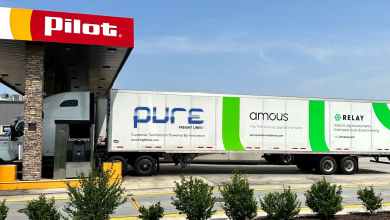
Relay Payments, Amous TMS and PURE Freight Lines team up to stop fuel fraud
Partnering with Relay for digital fuel payments — and utilizing its integration through Amous — has completely eliminated fuel theft for PURE, saving the company an average of $10,000-$15,000 per month.

Rating, booking APIs make complete procurement automation possible
These new API offers from p44 represent the next step in supply chain connectivity, paving the way to a more transparent and collaborative future.
AI is not ready to tackle human nuances within logistics industry
People remain invaluable in solving the unanticipated problems that arise in the course of everyday operations.

It is time for brokers to leverage integrations as selling points
By making integrations accessible and affordable, Bitfreighter enables brokers to enter into the once-dreaded “EDI conversation” with shippers on the front end, using connectivity as a selling point.

Daylight Transport leads pack in service, sustainable infrastructure investment
Daylight recently opened the first LEED-certified trucking facility in Texas, proving its continued commitment to both sustainability and the people of the Lone Star State.
How AI is transforming transportation planning and execution
AI is helping the logistics industry solve a massive coordination problem to establish transportation reliability and save shippers, carriers, and brokers a serious amount of time and money.

Real-time visibility helps halt cross-border fraud
Criminals looking to steal high-value cargo are attracted to the vulnerabilities associated with international border crossings.

Tackling fraud requires industrywide collaborative effort
The marketplace is at its most fragile when rates plummet and virtually every carrier is scouting out opportunities to earn more. Unfortunately, many of the “too good to be true” rates carriers come across in a precarious market are just that: not true.

Common misconceptions hinder shippers from unlocking full advantages of ocean visibility
Common misconceptions around data quality and connectivity stand in the way of maximizing value from visibility solutions and improving overall supply chain performance.

How can you unlock service excellence and cost efficiency in logistics?
The best shipping partners are those who collaborate to cut costs without service degradation.
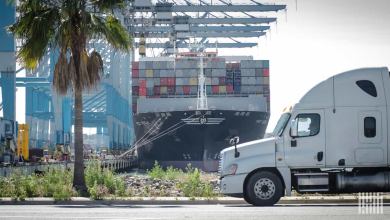
Project44 comes out on top in 2023 Gartner Magic Quadrant
Gartner’s Magic Quadrant stands out as one of the clearest – and most trusted – ways to evaluate the most popular real-time visibility options.

Retailers can now provide customized tracking information, shipping alerts to customers
As the popularity of online shopping increases, so do consumer expectations around shipment visibility and on-time delivery. This can lead to challenges for many retailers, especially when relying on generic carrier tracking solutions.

Fighting double brokering starts with strong partnerships
The more volatile and opaque market conditions become, the more opportunities scammers have to take advantage of unsuspecting companies. This is especially true when it comes to double brokering.

Roadrunner continues to invest in ambitious growth plan as year marches on
Roadrunner has reduced transit times five times over the last 21 months, according to Roadrunner Vice President of Longhaul Operations Shari Leon.

How XPO plans to become a talent magnet in transportation
In the fast-paced world of freight transportation, a carrier’s success is determined by its ability to deliver goods damage-free and on-time. But it all starts and ends with the people behind the scenes who make it all happen.

‘Unlimited everything’ disrupts long-standing EDI pricing model
The recent explosion of freight technologies has benefited companies of all shapes and sizes, but these solutions have had an outsized effect on small and mid-sized operations.

Supply chain industry gets new generative AI software
Generative AI is capable of overhauling the day-to-day realities of the supply chain industry by automating human-intensive processes and creating a pathway for fast-paced innovation.

Pioneering incentive program offers savings without implementation woes
Reward and incentive programs are often thought of as financial expenditures. When executed well, however, these programs can garner serious savings thanks to improved driver behavior, allowing carriers to free up cash without making sacrifices.

Actionable ocean insights provide pathway to success amid industry evolution
While every sector has seen its fair share of upgrades, challenging and shifting priorities, the ocean environment has proven especially rife for change.

Stop saying no to EDI and API integrations: Introducing Bitfreighter
At its core, Bitfreighter is an integration enablement platform. The company’s driving principle is to make integrations affordable and accessible by stepping away from the transactional pricing model and offering unlimited everything.

Small carriers, owner operators remain lifeblood of transportation during market downturn
Current market conditions – combined with the climbing expenses of operating and maintaining a truck – have created a difficult situation for the small companies that keep America moving.

US lags behind China in race to improve transportation infrastructure
Transportation infrastructure across the U.S. is woefully underprepared to support manufacturers, retailers and logistics companies in navigating the new consumer landscape.

Auto industry finds just-in-time success via next-gen visibility
Most sectors, especially retail, are experiencing weakened demand and falling volumes. This is not the case for the automotive industry.

Retail sector grapples with shifting consumer behavior
Most of the time, March brings some reprieve from the post-holiday demand slump. This year, consumers appear to be less apt to resume their normal spending habits.
3 tools shippers, carriers cannot afford to miss out on
Echo Global Logistics has held true to the same goal since its inception almost 20 years ago: Make transportation management simpler.
Top 5 KPIs to lower shipping costs, boost profitability
FLS Transport Services offers a free KPI scorecard to shippers.

Tenstreet digs deep into client success with new team
Companies across the supply chain have been inundated with new technologies and solutions over the past several years. As a result, many leaders are underutilizing their recently adopted tools, leaving money and efficiencies on the table.

Project44 takes on shipping disruptions via actionable in-terminal insights
In-transit visibility options have skyrocketed over the past several years, making it easier than ever to track a shipment’s en route movements. The same cannot be said, however, for terminal visibility.

Manufacturers move away from China in light of supply issues, cost increases
In-transit visibility options have skyrocketed over the past several years, making it easier than ever to track a shipment’s en route movements. The same cannot be said, however, for terminal visibility.

Subdued holiday season offers opportunity for service improvements
Last year’s peak retail season stands apart from previous years in that there wasn’t much of a “peak” at all.

How can shippers adapt to changing market dynamics?
Shippers and carriers alike have been forced to deal with the financial fallout of a global pandemic, war, rising fuel costs and the looming threat of an economic recession.

A clean fuel alternative for heavy-duty trucks in the Ports of Los Angeles and Long Beach
What can be done to alleviate emissions and decarbonize transportation in the ports?

Education-centered perks set companies up for recruiting, retention success
Ongoing education — from short training to complete degree programs — is one of the best ways to keep employees from feeling stagnant. Companies that offer access to those opportunities will have an edge when recruiting and retaining today’s future-minded workers.

DHL Supply Chain widens promising electric truck pilot program
To address the ongoing climate crisis and slow global warming, governments, corporations and organizations across the globe have set their sights on a greener future.

Advice for cell and gene therapy manufacturers amid medical breakthrough
The world’s first allogeneic T-cell therapy — a type of universal immunotherapy treatment that relies on donor blood — was approved in Europe earlier this month. This is a game changer for medicine. It is also a game changer for the logistics industry.

Tenstreet offers 1-stop shop for hassle-free hiring
Tenstreet’s Job Store allows clients to post their openings across major job boards, partners, and social media websites from one central platform, seriously cutting down on the amount of time companies must spend fine-tuning, managing and checking up on listings.

ELD tracking changes the game for real-time visibility
Not all that long ago, real-time, end-to-end visibility was considered a perk. Over the past few years, however, on-demand visibility has become a consistent expectation.

Truckstaff Solutions offers custom-built trucking companies for entrepreneurs, investors
While trucking is attracting plenty of attention from hopeful entrants, breaking into a new industry can be difficult. That is where Truckstaff Solutions comes in.

From startup to trendsetter: Port X Logistics takes drayage world by storm
Over the past five years, Port X Logistics has grown from a startup to a major player in the drayage, transloading and trucking worlds. This level of growth — especially in the midst of a pandemic — has required serious planning, hard work and commitment.
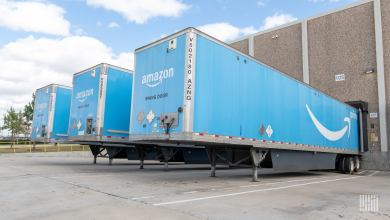
Amazon offers innovative freight transportation solutions
First, the company popularized two-day shipping. Then, Amazon Relay was created to help fill growing capacity needs. This paved the way for further innovation, including Amazon Freight for shippers and Amazon Freight Partner for carriers.

XPO meets differing customer needs through commitment to quality teams, technologies
Operating a successful business requires pinpointing — and meeting — customer expectations. XPO services thousands of customers daily, and doing that well means finding out what each of those customers needs.

Muted peak season continues push toward lower rates
The holidays are quickly approaching, and shoppers are checking off their gift lists. This year, however, the festive frenzy has not been strong enough to create a traditional peak season effect.

Not all or nothing: Carriers have variety of options when embracing sustainability
The holidays are quickly approaching, and shoppers are checking off their gift lists. This year, however, the festive frenzy has not been strong enough to create a traditional peak season effect.

Customized training programs boost recruiting, retention
Safety training was once largely considered a one-size-fits-all endeavor, often consisting of in-person classes. That is no longer the case.
Consumer, carrier relationships both thrive when transportation expectations are clear
Meeting consumer demands is a team effort that involves shippers, carriers, retailers and technology providers.

Carriers work with drivers to navigate tech learning curve in challenging market
While the drive to secure new solutions is strong, adopting technology and digitizing processes in an industry that operates 24/7 may be challenging. We sat down with DDC FPO to learn how carriers should address these issues.

Port X Logistics solves airfreight emergencies with Carrier 911
Port X Logistics has made a name for itself in drayage, expediting containerized freight throughout the U.S. and Canada. Now the company has brought its expertise into the airfreight arena.

RXO makes dedicated freight accessible, desirable for shippers and carriers
Shippers and carriers interact with the market differently, but one thing has become clear over the past few years: Contracts and dedicated lanes allow both parties to gain stability in an unpredictable landscape.

Expedited carrier utilizes factoring partner to ensure drivers remain top priority
On a practical level, being dedicated to drivers includes making sure they bring home reliable, predictable paychecks. C5 Expedite has partnered with OTR Solutions to pay drivers on a weekly basis.

Georgia Ports Authority puts customers, drivers first as demand surges
GPA is working hard to meet growing demand. To achieve this goal, it has focused on infrastructure improvement and expansion.

Focusing on the Autonomous Relay Convoy driver
Locomation’s technology will have a game-changing impact on the quality of life for drivers by providing them with fixed schedules, static routes and dependable operations.

PrePass Safety Alliance teams with trucking industry and public sector to improve highway safety, reduce emissions
PrePass Safety Alliance is a nonprofit public-private partnership devoted to the safe, secure, and efficient use of North America’s highway system.
Owner-operators find solace in contractor roles as market turns
Aligning with a carrier’s independent contractor fleet provides added resources that assist with the stability of their long-term success — in both good and bad market conditions.

Driver surveys offer retention, safety benefits
Recruiting is a difficult — and expensive — process, and focusing on retention is a good way to avoid piling on costs.

Shippers focus on consistency, customer service
Many shippers are relying on contracts and favoring their tried-and-true carrier partnerships instead of taking advantage of plummeting spot rates.

Relationships, technology buoy carriers in down market
Carriers are grappling with unfavorable market shifts across the board. With prowess and the right partners, however, carriers can remain profitable — and even competitive — in a loosening market.

Trucker Tools’ loyalty program rewards drivers, not carriers
The easy-to-use program allows brokers to reward drivers directly for specific actions they complete within the Trucker Tools app.

‘Tis the season: Preventing holiday cargo theft
As the holiday shopping season descends, companies should be aware that law-abiding consumers are not the only folks hoping to get their hands on this season’s hottest gifts.
Driver surveys cut to the heart of retention crisis
Carriers often experience turnover rates above 90%. To combat this staggering statistic, carriers need to know why drivers are leaving. The best way to figure that out is to ask them.

Shorter bid cycles offer better rates in every market
While shorter bid cycles can prove especially valuable during market shifts, it’s important to remember that freight markets are characterized by their volatility.

Shippers must stay aware of carrier regulations to avoid costly penalties
Shippers are expected to do their due diligence when it comes to choosing carrier partners. That includes choosing companies that are working within FMCSA guidelines, a task that requires knowledge of said guidelines.
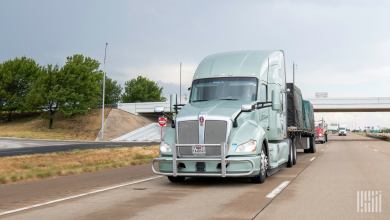
Driver satisfactions becomes more important during market downturns
Driver turnover is expensive, and trucking operators cannot afford to keep turning over virtually their entire workforces on a yearly basis if they hope to bolster their bottom lines.

Your ‘chassis deal’ – and terms – may be costing you
Steamship lines sometimes offer an included chassis for trucking companies. Similarly, non-vessel operating common carriers sometimes offer a chassis program linked to the chassis pools for their carrier partners. While these offers may sound attractive, is a typical “chassis deal” really a deal at all?

Shippers need top-notch data visualization to navigate peak season surcharges
One area that carriers have emphasized this year is “ugly freight” – or non-conveyable shipments. These are packages that are hard to put through their automated systems.

Blurred lines: Carrier expansion creates challenges, opportunities for shippers
With more choices than ever, shippers must come up with a plan for choosing — and evaluating — their carrier partners.

Shipper technology offers serious benefits for carriers
For many carriers, the rapid adoption of technology has sparked skepticism and reticence.

DHL Supply Chain using visibility to drive customer savings
DHL Supply Chain provides visibility across the entire supply chain with top-notch transparency and easy-to-understand performance-tracking tools.

Strong relationships help bolster cost savings amid port crisis
Many of the pandemic-fueled headwinds that have plagued the logistics industry over the past two years are beginning to subside, but U.S. ports are still being slammed with more volume than they can handle on a daily basis.

Real-time driver coaching helps carriers save big on fuel costs
Though often overlooked, improving truck driver behavior packs a punch when it comes to maximizing fuel efficiency. Research shows up to 30% of fuel consumption comes from decisions drivers make on the road.

Stay the course: Keep recruiting efforts top of mind as market shifts
Tenstreet’s Marilyn Surber says it’s better to refrain from making serious strategy changes or even exiting the recruiting game altogether in the evolving truck driving climate.

Breakdowns cost more than just dollar amount on maintenance invoice
The easiest way to keep roadside incidents in check — and protect profits — is to invest in predictive maintenance technology upfront.

Technology proves important to relationship management
The holiday peak season could provide carriers with the perfect opportunity to strengthen their relationships with shippers going into the new year, securing more consistent and higher-value freight as the market continues to loosen.

Understanding your network with the right tools helps shippers navigate unknown
In order to be proactive in both the planning stage and throughout the year, shippers need access to accurate, digestible and up-to-date data.
Carriers should focus on acquiring, honoring contracts ahead of potential recession
The logistics industry is collaborative by nature and leaning into that fact is one of the most effective ways carriers can ward against turmoil during market shifts.