





Humans are back in the driverless driver’s seat but only as window dressing, according to a recent update from Aurora Innovation. In a blog post, Aurora Chairman and CEO Chris Urmson said Paccar, one of the company’s OEM partners, “requested we have a person in the driver’s seat, because of certain prototype parts in their base vehicle platform.” This comes after Aurora announced the launch of its driverless trucking service on May 1. Astute observers would note the vehicle showcased in the release was an autonomous Peterbilt with the logos masked.
Urmson added, “PACCAR is a long-time partner and, after much consideration, we respected their request and are moving the observer, who had been riding in the back of some of our trips, from the back seat to the front seat. This observer will not operate the vehicle — the Aurora Driver will continue to be fully responsible for all driving tasks, including pulling over to a safe location if required.”
Aurora remains confident that the observer is not required to operate the truck safely, citing its exhaustive testing of nearly 10,000 requirements and 2.7 million tests which served as the foundation of its safety case. The change is not expected to impact the company’s near-, mid- and long-term development plans.
Regarding more details on what role the human observers now in the driver’s seat will play, the company told Trucking Dive humans are only there to “assist with a timely recovery” in the event the Aurora Driver must pull to the shoulder of the road due to events like a tire blowout or bad weather.

ACT Expo electric vehicles and charging infrastructure thoughts: Part 1
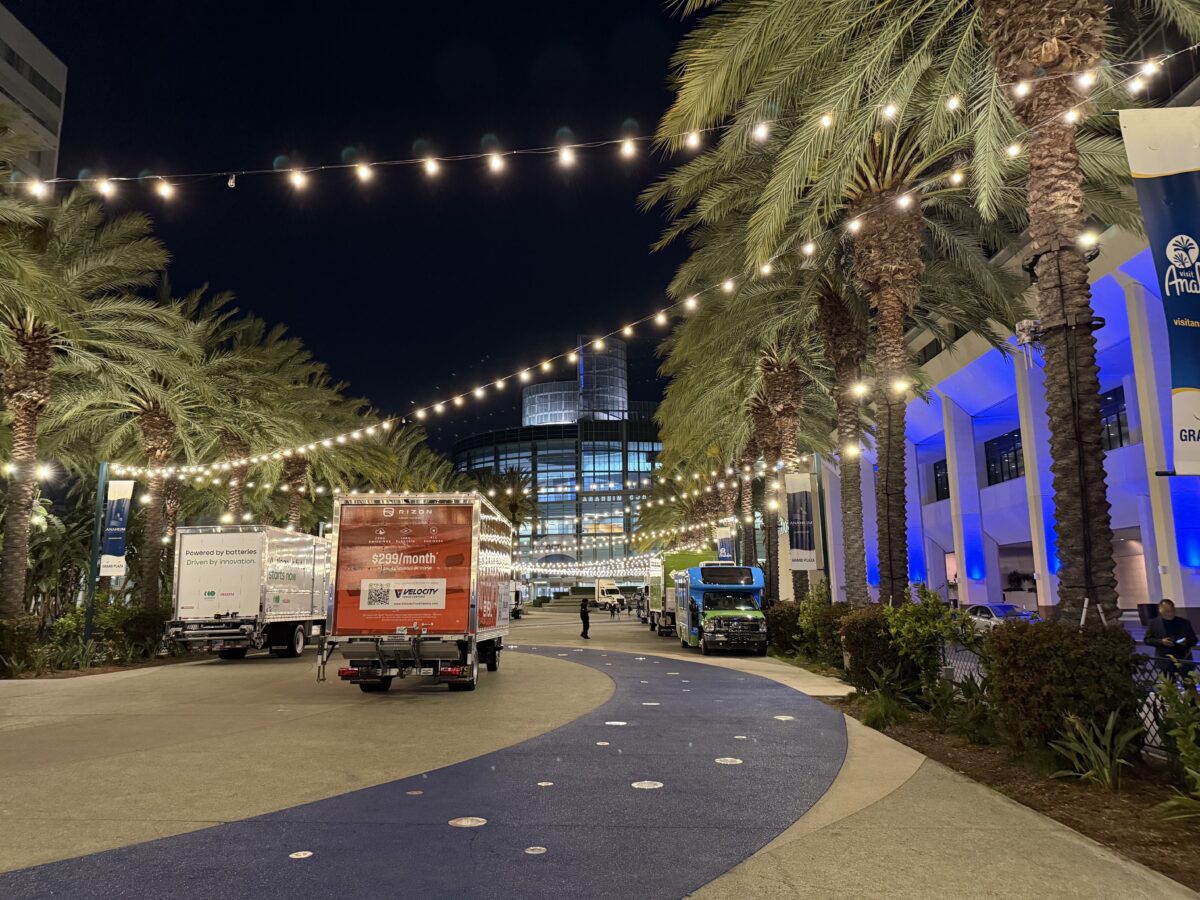
I meant to get around to writing my thoughts about electric vehicles and charging infrastructure from ACT Expo earlier, but in this digital world of content and page views, I got sidetracked. Here’s some of the infrastructure and electric vehicle thoughts from some of the companies I talked with and interviewed. I’ll keep adding more observations but for the sake of brevity, I’ll focus on Zeem Solutions and Better Fleets first.
Zeem Solutions: Before the event, I toured two Zeem facilities around the Los Angeles airport. The first thing that stood out was how much EV adoption had occurred. For someone from Chattanooga, Tennessee, the EV scene is some Chinese-made electric buses, small Chinese-made go-kart taxis, and a smattering of Teslas and Rivians around the Whole Foods Tesla chargers. Talking with Zeem CEO Paul Gioupis alone made the trip worthwhile. You can find my interview here.
Gioupis is a wealth of knowledge, as Zeem buys the electric vehicles, builds the charging infrastructure and develops the sites for said infrastructure. Things that stood out were Windrose and its Chinese EV, which introduced me to the term parasitic draw. That is the draining of the battery when the EV is off and not in use. I stood next to a Class 8 EV tractor and there was a buzzing sound. Per Gioupis, there shouldn’t be a buzzing sound. Therefore, a sign of EV quality is if it is actually turned off and not running something in the background. Parasitic draw is a big problem for infrastructure providers like Zeem, as clients want their vehicle at a full charge when they start their shift, not at 90% or 95% because the EV maker’s engineering team couldn’t figure out the buzzing sound.
Gioupis also gave another important test for potential EV buyers: the “Does it roll backward when on a hill” test. If you are wanting to purchase an EV, make sure to take it up a hill, then wait at a stop light or stop sign and see if it rolls back. If it does, the EV engineers are one to two generations behind and haven’t discovered that modern EVs don’t roll backward.
Finally, the chargers themselves create a unique challenge for power requirements. I am not an engineer so for the sake of this I shall refer to battery charge as “the juice” as in, how much juice do I need for a kilowatt charger versus a Tesla-size megawatt charger. Most EVs like the newly released Kenworth and Paccar, plus most commercial ones, have the 350 or 400-ish Kwh chargers, which work well with their battery configurations but take one-and-a-half to two hours to charge. I was told Tesla really likes the juice and requires megawatt chargers, to the tune of around 1,200 kilowatts, or 1.2 megawatts. Someone will correct me on the exact specs, but for the sake of argument, you can use the larger Tesla chargers on the other EVs but they’ll still take one-and-a-half to two hours to charge, as their batteries have safety features built in because they can’t handle that much juice. Food for thought as infrastructure providers work on figuring out the exact type and juice requirements when speccing out sites.
BetterFleet: This company gave the example of a utility company and also how adoption is slow and steady due to how fleets upgrade their vehicles. Fleet owners must answer two questions: 1. Can the EV run this route and get the bang for my buck? 2. Once I figure that out, how do I implement that into my purchasing plan? This specific utility only replaces a tenth of its truck fleet each year, which also filled in a question I had: “How come, with the regulatory whiplash against EVs, California is still chugging along?” It turns out adoption continues, just at the slow pace of replacement. Compare that to a trucking fleet, which may replace a quarter of its fleet each year. It also explained why large OEMs like Paccar decided to release their Kenworth and Peterbilt EVs for short haul and vocational use.
Keep an eye out for my interview with BetterFleet to release on June 4 at 3 p.m. EDT.
You’re halfway there! To read the rest of the Truck Tech newsletter, subscribe below. It’ll be delivered to your inbox every Friday at 11am eastern.
While you’re at it, check out this week’s episode.
Brokerage Compliance Symposium
The day before F3. Every compliance issue you face - fraud exposure, carrier liability, FMCSA rules, cargo theft, insurance gaps - navigated by attorneys and operators defining best practices in a changing industry.
F3 Awards Dinner
The night before F3. FreightTech100 companies honored. FreightTech 25 and Shipper of Choice winners revealed live. Cocktail reception into dinner and live music - 300 industry leaders in one purpose-built room.
F3: Future of Freight Festival
Industry-defining keynotes, rapid-fire technology demos, and industry leaders networking in experiences across Chattanooga - plus the inaugural F3 Awards Dinner featuring the FreightTech and Shipper of Choice reveals.
The day before F3. Every compliance issue you face - fraud exposure, carrier liability, FMCSA rules, cargo theft, insurance gaps - navigated by attorneys and operators defining best practices in a changing industry.
The Signal at Chattanooga Choo Choo • Chattanooga, TN Register NowThe night before F3. FreightTech100 companies honored. FreightTech 25 and Shipper of Choice winners revealed live. Cocktail reception into dinner and live music - 300 industry leaders in one purpose-built room.
The Signal at Chattanooga Choo Choo • Chattanooga, TN Register NowIndustry-defining keynotes, rapid-fire technology demos, and industry leaders networking in experiences across Chattanooga - plus the inaugural F3 Awards Dinner featuring the FreightTech and Shipper of Choice reveals.
The Signal at Chattanooga Choo Choo • Chattanooga, TN Register Now