




The growing importance of the Green Renaissance challenges private companies to Go Green or Go Home
In a highly polarized world grasping for common ground, one hot-button debate never fails to unite us all: the fight for environmental protection. Although some politicians abhor rising GHG levels while others deny that global warming even exists, the general consensus of the private sector is that if corporations don’t get on board with safe environmental practices now, they will quickly fall behind their competitors.
This has been a catalyst for change in the last couple of decades in all fossil fuel dependent industries, especially trucking, a major global GHG culprit. The green renaissance has some buzzing with excitement and others trembling in fear about the future innovations and roadblocks on the path towards a greener tomorrow. The government, corporations and consumers all have a voice here, but will the private sector be able to handle the consumers’ call to innovation faced with government opposition?
Consumers all around the world are becoming increasingly aware of the harmful effects that GHG has on the environment. Today, trucking causes approximately 16% of all global GHG, and about 27% of U.S. emissions, according to the EPA.
As more progressive individuals start sporting green goggles, industry standards will inevitably change as entire communities begin to focus on minimizing their own environmental impact. Even though trucking turns the wheels of the American economy and fuels our mass consumption, the industry leaders aren’t just relishing in their leverage: they know that they will be at a major disadvantage if they don’t start practicing corporate responsibility now.
Nikola, Tesla, Toyota and Volvo are all working on innovative technologies that will mitigate harsh CO2 emissions levels, making calculated economic decisions to not forego future losses. This serves as a classic example of the power of the informed consumer: even when government fails to prioritize environmentally safe practices, private companies must step up to the plate and face the challenges head-on if they want to retain customer loyalty.
Beyond the cry of the consumer is the weight of global governance and the fear of our nation’s potential pollution polemic. Even when President Trump hastily pulled the U.S. out of the Paris Agreement, 30 CEOs, among them Tesla’s Elon Musk, took up arms in the form of an open letter to Trump featured in the Wall Street Journal expressing their strong support for the agreement. The CEOs immediately received word from the EU announcing that it would directly support the U.S. private sector to meet global standards despite the federal situation. Countries like Denmark and the UK have already publicly declared that they are moving to zero-diesel trucking models, and many other big cities are following suit. So how do we move forward?
A lot of people immediately think green vehicles. According to Sandeep Kar, global vice president of mobility at Frost & Sullivan, trucks on the road today are already 35 times more efficient than they were in the 70s and 80s, a huge success that is not often spoken about. Every last component of the trucks has been tweaked and reengineered, from tire pressure monitoring systems (TPMS) to sleek trailer skirts and tire flaps, all with the intent to optimize the aerodynamics of the vehicle to improve fuel efficiency. Fuel is not only the biggest cost to the truck owner, but also the biggest cost to the environment. Since all parts of the outdated truck model are being revamped, why not just design an innovative truck from the ground up?
There are a couple major issues. Two of the biggest diesel fiends are China and the U.S. While the rest of the world is building up forces and deadlines to destroy diesel, the U.S. still argues that natural gas prices are not cost-efficient. Kar remarked that this year, 91% of medium- and heavy-duty trucks will continue to run on diesel, and by 2025 this number will remain at 85%. To make moves away from diesel, either China will have to concede to the world trend, in which case the U.S. wouldn’t be far behind, or the states will have to move natural gas reserves out of the country, dropping global prices.
Another alternative to diesel would be full electric trucks, which sound utopic and squeaky clean until you investigate the underlying problem – the power grids that supply energy to electric cars can emit fumes that are even more noxious for the environment than gasoline. Power grids continue to derive the majority of their energy from coal, which excretes nitrogen oxides and sulfur dioxides in far greater quantities than gas-powered vehicles.
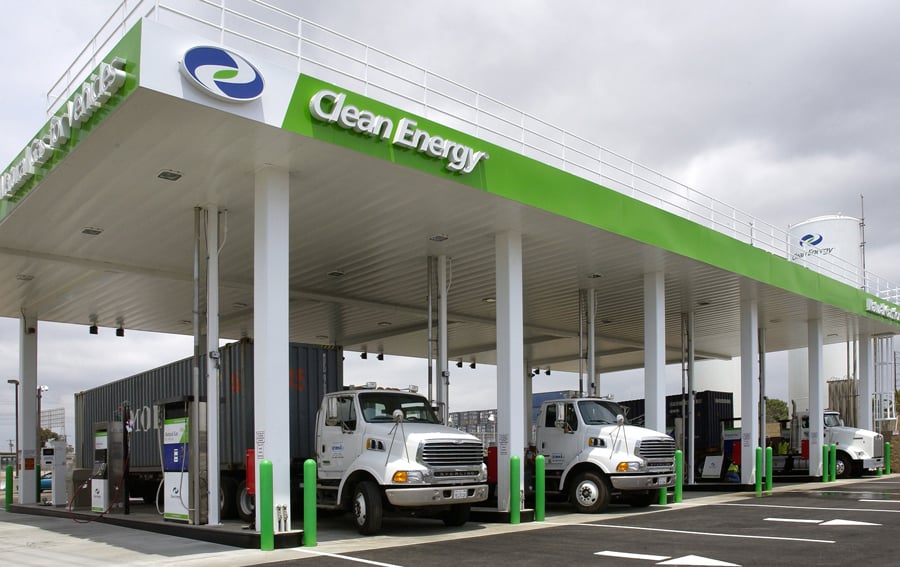
The fact that green technology in trucking focuses solely on the vehicles themselves is a common misconception. There are many noteworthy companies that are making strides towards eliminating carbon footprints in different complementary ways. These include CNG and LNG suppliers, focusing on compressed and liquefied natural gas alternatives; telematics service providers, who incorporate telecommunications, electrical engineering and computer science to maximize the efficiency of truck usage and routes, and autonomous driving, including platooning of vehicles which increases fuel efficiency 4-7% per truck. Additionally, free market initiatives are popping up to connect trucks with free cargo space to companies sending goods along the same route, decreasing the amount of trucks on the road while simultaneously reducing carbon emissions.
Creativity fills the streets.
Brokerage Compliance Symposium
The day before F3. Every compliance issue you face - fraud exposure, carrier liability, FMCSA rules, cargo theft, insurance gaps - navigated by attorneys and operators defining best practices in a changing industry.
F3 Awards Dinner
The night before F3. FreightTech100 companies honored. FreightTech 25 and Shipper of Choice winners revealed live. Cocktail reception into dinner and live music - 300 industry leaders in one purpose-built room.
F3: Future of Freight Festival
Industry-defining keynotes, rapid-fire technology demos, and industry leaders networking in experiences across Chattanooga - plus the inaugural F3 Awards Dinner featuring the FreightTech and Shipper of Choice reveals.
The day before F3. Every compliance issue you face - fraud exposure, carrier liability, FMCSA rules, cargo theft, insurance gaps - navigated by attorneys and operators defining best practices in a changing industry.
The Signal at Chattanooga Choo Choo • Chattanooga, TN Register NowThe night before F3. FreightTech100 companies honored. FreightTech 25 and Shipper of Choice winners revealed live. Cocktail reception into dinner and live music - 300 industry leaders in one purpose-built room.
The Signal at Chattanooga Choo Choo • Chattanooga, TN Register NowIndustry-defining keynotes, rapid-fire technology demos, and industry leaders networking in experiences across Chattanooga - plus the inaugural F3 Awards Dinner featuring the FreightTech and Shipper of Choice reveals.
The Signal at Chattanooga Choo Choo • Chattanooga, TN Register Now