




Welcome back to Truck Tech. This week, we’re unpacking the recent CES panel discussion I moderated that featured autonomous truck developer TuSimple, its manufacturing partners Navistar and Scania, and Nicole Nason, a veteran administrator of federal highways and previously the nation’s top safety regulator.
Autonomous trucking’s challenges
Taking stock of the challenges facing autonomous trucking led to some unexpected observations around route planning, infrastructure, the driver shortage and a few other topics during a TuSimple panel discussion at the recent CES in Las Vegas.
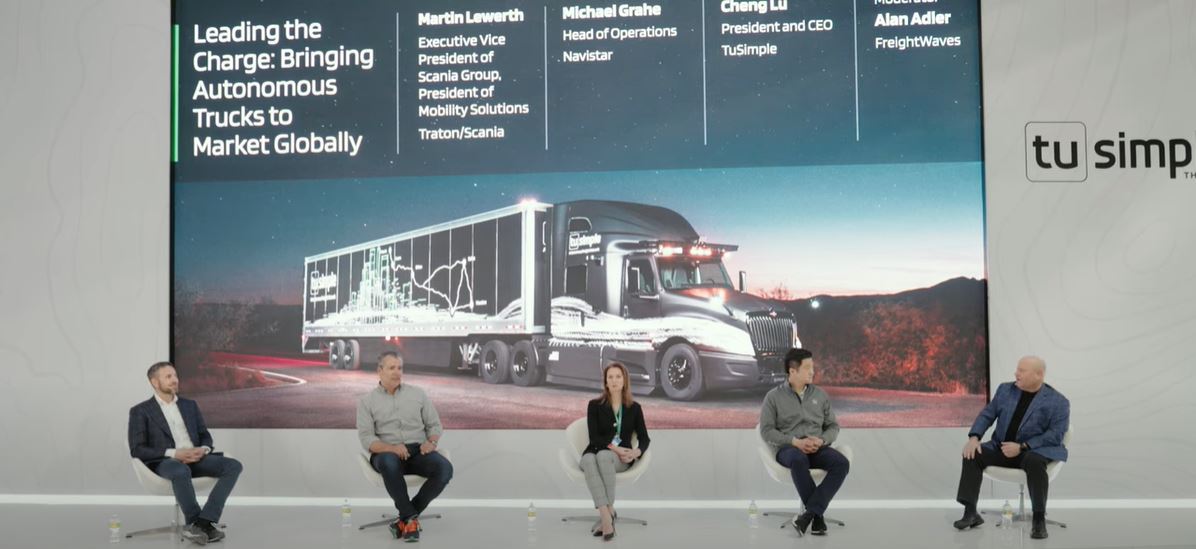
I moderated the session featuring TuSimple CEO Cheng Lu; Michael Grahe, Navistar executive vice president of operations; Martin Lewerth, executive vice president and head of operations for Sweden’s Scania; and Nicole Nason, chief safety officer and head of external affairs at Cavnue, and former head of the Federal Highway Administration and the National Highway Traffic Safety Administration.
While the session lacked significant give and take among the participants, several topics elicited “I hadn’t thought of that” perspectives.
The global drive
Scania has been working with TuSimple to test its software with human safety drivers on a 400-mile round trip between two Swedish cities. “What’s working in the U.S. is highly applicable in Europe,” Lewerth said. “I think one of the learnings is there are differences in how you drive in North America and in Europe.’
“Once you get started running real pilots for real customers, you start to get the attention and the interest from other stakeholders,” he said. “There is a growing awareness that autonomy is happening. We engage quite a lot with legislators, both on the national level, but also on the European Union level. So the more we do, the more interest we get.”
Scania and Navistar are both investors in TuSimple, which means they have the attention of their parent, Traton SE (OTC: TRAFT), the truck holding company of Volkswagen AG.
Picking routes
TuSimple (NASDAQ: TSP) got a lot of attention for its first “driver out” — no human in the cab — pilot on Dec. 22, an 80-mile nighttime run from Tucson, Arizona, to Phoenix. More of those runs are planned, not just on the startup’s most familiar route.
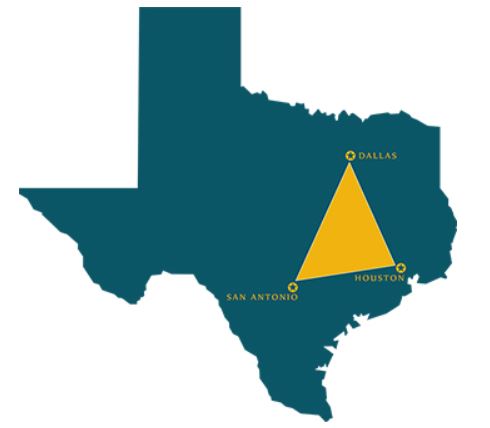
“On these initial routes, we are making good progress,” Grahe said. “But the further we are going out from the Texas Triangle [Austin, Dallas-Fort Worth, Houston and San Antonio connected by Interstates 45, 10 and 35] the more complicated it gets.”
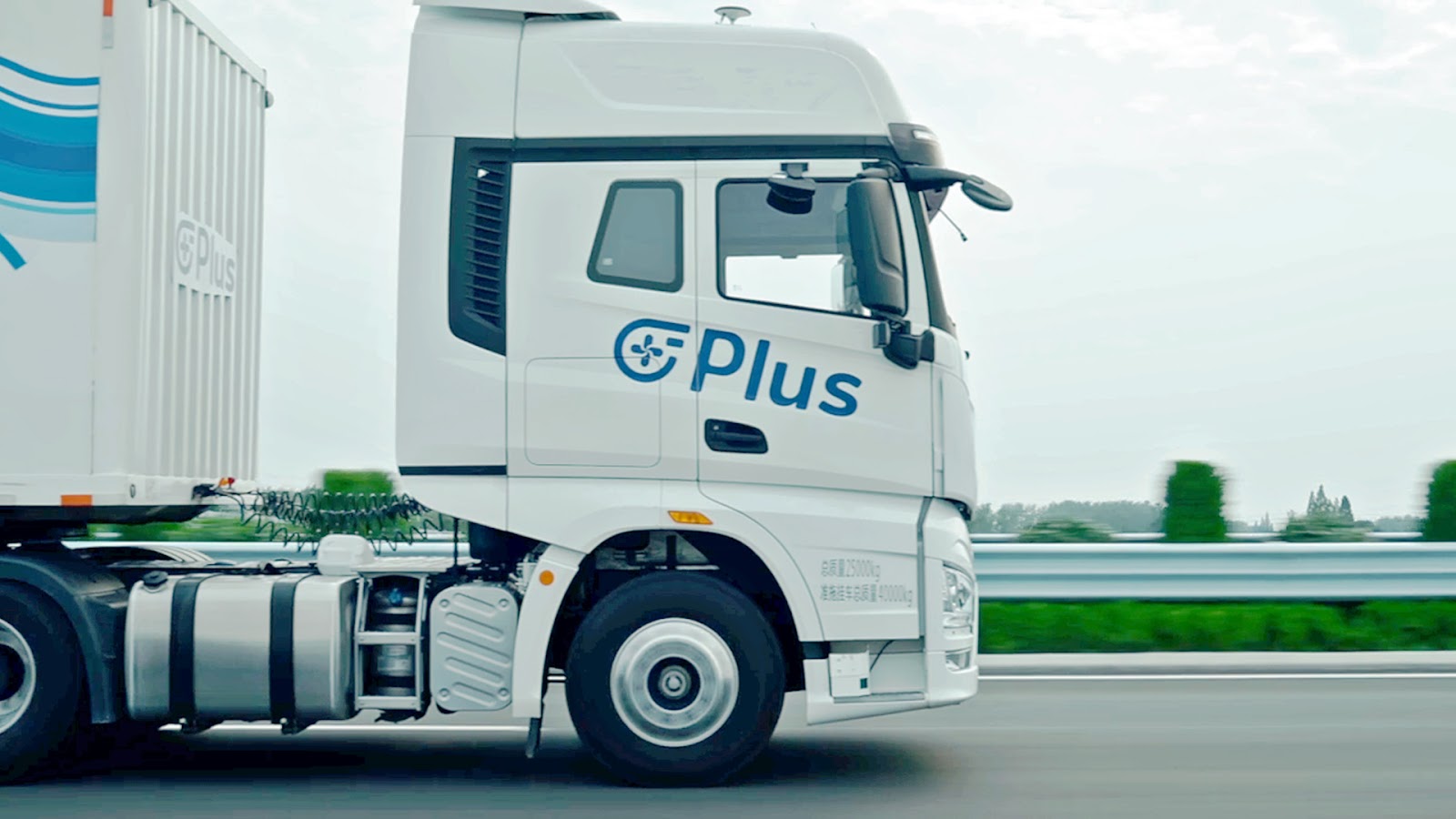
Initial recipients of the ground-up International LT that will run TuSimple’s software will get early technology that will likely be upgraded over time. Autonomy is not one size fits all. It must be tailored to customer needs.
“You shouldn’t start with the most complicated route but because you have to learn, you have to collect your experience there,” Grahe said. “Then we will venture out more and more to come to overall coverage.”
Changes to driving and delivery
One of the misconceptions of autonomous trucking is that it will cost existing drivers their jobs. That is far from the case, both in the U.S. and in Europe.
“It’s job rotation,” Lewerth said. “You’re not taking opportunities away. You’re changing to different positions.” That means that unloved long-haul driving that keeps drivers away from home for weeks at a time will shift to robots, while final mile and other functions that allow a driver to spend most evenings at home will be created.
“It will be a different type of job going forward,” Lewerth said. “I think we’re solving a problem rather than creating a job problem.”
And it is not a zero-sum or one-for-one game, according to Lu.
“The demand for trucking is increasing because of consumer behavior, e-commerce [and] the on-demand economy. We want goods delivered today, tomorrow and that’s driving the overall pie to be bigger, and that sometimes gets lost.”
Nason said her teenage children want the instant gratification of same-day delivery.
“There’s over 4 million navigable roadway in the United States and the public wants everything they want within two days. If my children are to be believed, they would like everything by the afternoon. They don’t want to wait two whole days,” she said.
Autonomous trucks, when proven, will be able to run 20 or more hours a day, stopping only for refueling. No rest breaks, food or other demands of human drivers.
The power question
Autonomous trucks in testing today run exclusively diesel fuel. Switching to alternative zero-emission powertrains will happen as regulations and customer sensibilities around sustainability take hold.
“It is a challenge to go from a diesel-driven truck to a zero-emissions truck, but this is a challenge we are used to [and] we are good at as an OEM,” Grahe said. “We are powertrain-agnostic. Is it a diesel? Is it a fuel cell? Is it a battery-electric truck? We can deal with all of them.”
And once the powertrain is chosen, the autonomous software can be programmed to efficiently use the energy on board on par with the best human driver.
Public acceptance
It is going to take awhile to win public acceptance for sharing the road with autonomous trucks. On TuSimple’s first pilot, another driver saw the empty cab and strained to get a picture. That behavior will eventually subside, but comfort with robot drivers is easier for industry players than for the public, Lu said.
“That’s something that’s incumbent upon us and our partners, the regulators, to try to do more to slowly get that acceptance,” he said.
Nason cited AAA surveys that for years have found 80% of the public unwilling to try or nervous about autonomous vehicles.
“We’re finally at a point where they’re going to be out and on the roads,” she said. “I think you’re going to see an incredible acceleration of public acceptance once it’s out and people see it works.”
Lewerth isn’t so sure. “It’s a bit of a marathon to develop the technology and get the acceptance. I don’t think there’s a simple, quick fix.”
Best of the rest
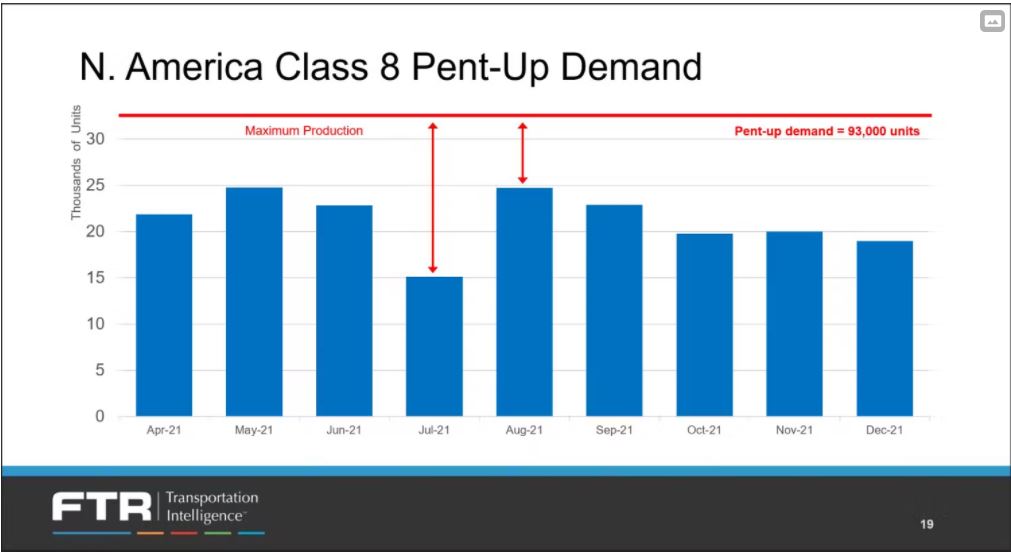
FTR Transportation Intelligence crunched the numbers looking at pent-up demand for Class 8 trucks. From April to December of 2021, the shortfall totaled 93,000 trucks. Take away semiconductor shortages — the biggest culprit — and a pandemic and other parts shortages, and manufacturers might have been able to make up much of that gap.
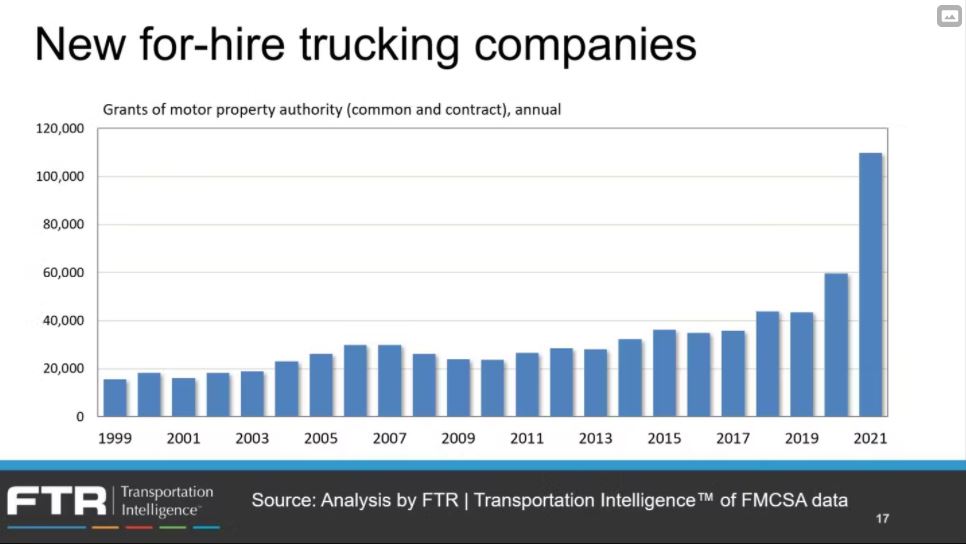
The current backlog of trucks on order is 275,300, not far from the 2018 record of 304,500. While the number of employees on for-hire payrolls has shrunk during the pandemic, the Federal Motor Carrier Safety Administration authorized nearly 110,000 new for-hire trucking companies in 2021. That is 85% more than in 2020 and 150% more than in 2018 and 2019, the two previous record years for new authorities.
In brief … Cummins Inc. (NYSE: CMI) and Rush Enterprises Inc. (NASDAQ: RUSHA) have closed on Cummins’ acquisition of 50% equity interest in Momentum Fuel Technologies from Rush Enterprises. … Affinity Truck Center has achieved Certified Electric Vehicle Dealer status at its Fresno, California, dealership to support the Volvo VNR Electric and Mack LR electric refuse vehicle. … Corcentric Fleet Funding has signed on to purchase Nikola hydrogen fuel cell electric trucks and charging equipment to offer customers a bundled lease that includes hydrogen fuel and truck maintenance for one price. Nikola (NASDAQ: NKLA) has touted the bundled lease approach since its early days.
That’s it for this week. Thanks for reading. You can get Truck Tech via email on Fridays. Subscribe here.
Alan
Brokerage Compliance Symposium
The day before F3. Every compliance issue you face - fraud exposure, carrier liability, FMCSA rules, cargo theft, insurance gaps - navigated by attorneys and operators defining best practices in a changing industry.
F3 Awards Dinner
The night before F3. FreightTech100 companies honored. FreightTech 25 and Shipper of Choice winners revealed live. Cocktail reception into dinner and live music - 300 industry leaders in one purpose-built room.
F3: Future of Freight Festival
Industry-defining keynotes, rapid-fire technology demos, and industry leaders networking in experiences across Chattanooga - plus the inaugural F3 Awards Dinner featuring the FreightTech and Shipper of Choice reveals.
The day before F3. Every compliance issue you face - fraud exposure, carrier liability, FMCSA rules, cargo theft, insurance gaps - navigated by attorneys and operators defining best practices in a changing industry.
The Signal at Chattanooga Choo Choo • Chattanooga, TN Register NowThe night before F3. FreightTech100 companies honored. FreightTech 25 and Shipper of Choice winners revealed live. Cocktail reception into dinner and live music - 300 industry leaders in one purpose-built room.
The Signal at Chattanooga Choo Choo • Chattanooga, TN Register NowIndustry-defining keynotes, rapid-fire technology demos, and industry leaders networking in experiences across Chattanooga - plus the inaugural F3 Awards Dinner featuring the FreightTech and Shipper of Choice reveals.
The Signal at Chattanooga Choo Choo • Chattanooga, TN Register Now