



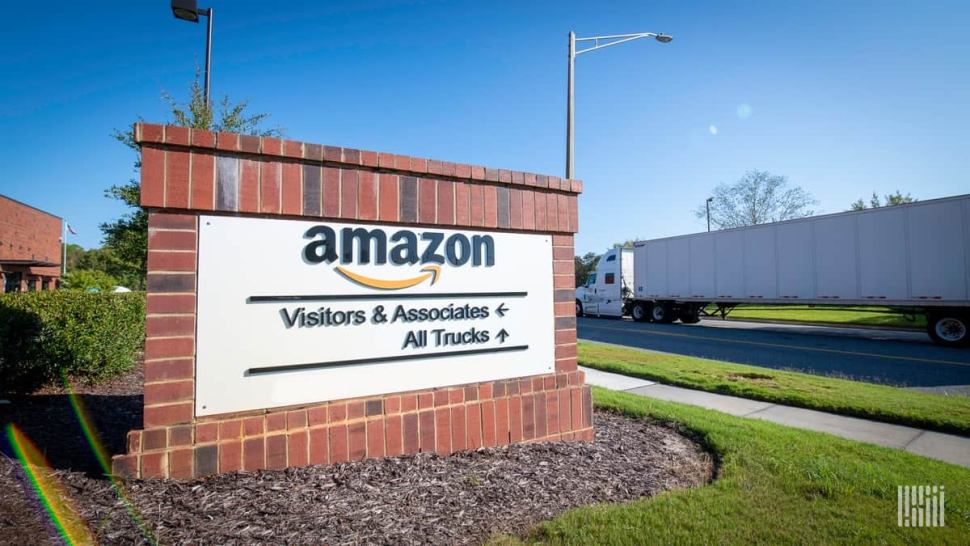
There is no love lost between Jeff Bezos and Fred Smith, given the unpleasant break-up of their companies’ shipping marriage in 2019. Yet in decisively thwarting efforts to organize 5,800 workers at Amazon.com Inc.’s (NASDAQ:AMZN) Bessemer, Alabama warehouse, Bezos took a page right from the FedEx Corp. (NYSE:FDX) founder’s anti-union playbook.
Other than about 5,000 unionized pilots that came over after FedEx acquired the old Flying Tiger Line cargo airline in 1988, and a smattering of workers at its FedEx Freight LTL unit, FedEx has remained non-union for its 50-year history. Smith and Co. have beaten back multiple organizing efforts by persuading FedEx workers that wages, benefits, working conditions and an open-door relationship makes third-party bargaining units irrelevant.
Amazon followed a similar strategy in Bessemer, where the Retail, Wholesale and Department Store Workers Union (RWDSU) made the most serious effort to organize Amazon’s workers in the company’s 27-year history.
Amazon, which opened the warehouse in March 2020, paid the workers more than $15 an hour to start, twice the national minimum wage. It offered good health insurance, a 401K plan, and opportunities for advancement.
With Bessemer being its first warehouse in Alabama, Amazon sought to show, or at least convey the impression, that it considered the workers more than just disposable assets. That’s an issue that has plagued the warehouse labor relations for decades until surging demand for e-commerce fulfillment flipped the script.
Amazon’s goal was to appeal to the workers’ collective common sense. The implied message was: What would union dues give you that the status quo couldn’t? Amazon hammered home the message every chance it got. It seemed to resonate with a workforce that sees the free-market pendulum swinging in its favor as demand for warehouse workers, and the prevailing wage to keep and attract them, continues to rise.
“This particular union can’t give us anything that Amazon does not already offer,” LaVonette Stokes, a Bessemer worker who voted against unionizing said in an NPR story published Friday. “There are a [lot] of people who never have issues.”
In the end, the company won big. Of the 2,536 workers who voted, 1,738 cast ballots against unionizing. The wide margin was surprising in light of the union’s aggressive campaign and pro-labor momentum that had built up in recent weeks. The pro-union sentiment included support from President Joe Biden, a near-unprecedented act from a sitting president.
“I knew the union was going to lose, but I didn’t think it would lose that badly,” said Kate Bronfenbrenner, director of labor education research at Cornell University’s School of Industrial and Labor Relations. That a union election of such historical significance would draw less than half the eligible voters spoke volumes about the rank-and-file’s apparent lack of energy to be organized, Bronfenbenner said. The seeming ennui, Bronfenbrenner said, “is on the union.”
After the tally was made public, both sides retreated to their corners with their expected reactions. The union said it would file objections with the National Labor Relations Board (NLRB) charging Amazon interfered with a free and fair election, and will demand a hearing to determine if the results should be set aside because Amazon “created an atmosphere of confusion, coercion and/or fear of reprisals and thus interfered with the employees’ freedom of choice.” The union said it would continue its efforts to organize the warehouse.
Amazon assumed the mantle of generosity in its statement. The company, it said, “didn’t win — our employees made the choice to vote against joining a union.” Workers, it added, “are the heart and soul of Amazon, and we’ve always worked hard to listen to them, take their feedback, make continuous improvements, and invest heavily to offer great pay and benefits in a safe and inclusive workplace. We’re not perfect, but we’re proud of our team and what we offer, and will keep working to get better every day.” The tally was made public around mid-day, and Amazon shares rose more than 2% on the session.
No one knows how Amazon would have reacted had the vote gone the other way. What is known is Amazon has a need for speed, and pivots fast. Its operations might have been severely compromised by the emergence of bargaining units with the freedom to organize without the federal government standing in its way, as is called for under the National Labor Relations Act (NLRA).
Bezos, like FedEx’s Smith, plays for keeps. More than a decade ago, FedEx faced the possibility that it would be re-classified as a trucking company under the National Labor Relations Act, and would no longer be governed by the Railway Labor Act (RLA), labor law that applies only to railroads and airlines. The RLA disallows terminal-by-terminal organizing and, most importantly, makes it very difficult for unions to strike. Smith, furious over the potential impact on his company, pulled out all the lobbying stops, going so far as to threaten to cancel contracts to buy dozens of Boeing freighters if the reclassification took place. It never did.
Alec MacGillis, a reporter for investigative publication ProPublica and the author of a new book on Amazon’s impact on society, said the retail workers union faced various obstacles, including anti-union policies from the Trump administration that put labor in general on the back foot.
“The odds were long going into this, given the ground rules of today’s labor laws and Amazon’s aggressive resistance and well-honed tactics,” MacGillis said. “It’s too early to say,whether this represents a lasting setback to worker activism at the warehouses or will come to be seen as a first step in a broader rise of opposition against the company and its treatment of workers.”
Brokerage Compliance Symposium
The day before F3. Every compliance issue you face - fraud exposure, carrier liability, FMCSA rules, cargo theft, insurance gaps - navigated by attorneys and operators defining best practices in a changing industry.
F3 Awards Dinner
The night before F3. FreightTech100 companies honored. FreightTech 25 and Shipper of Choice winners revealed live. Cocktail reception into dinner and live music - 300 industry leaders in one purpose-built room.
F3: Future of Freight Festival
Industry-defining keynotes, rapid-fire technology demos, and industry leaders networking in experiences across Chattanooga - plus the inaugural F3 Awards Dinner featuring the FreightTech and Shipper of Choice reveals.
The day before F3. Every compliance issue you face - fraud exposure, carrier liability, FMCSA rules, cargo theft, insurance gaps - navigated by attorneys and operators defining best practices in a changing industry.
The Signal at Chattanooga Choo Choo • Chattanooga, TN Register NowThe night before F3. FreightTech100 companies honored. FreightTech 25 and Shipper of Choice winners revealed live. Cocktail reception into dinner and live music - 300 industry leaders in one purpose-built room.
The Signal at Chattanooga Choo Choo • Chattanooga, TN Register NowIndustry-defining keynotes, rapid-fire technology demos, and industry leaders networking in experiences across Chattanooga - plus the inaugural F3 Awards Dinner featuring the FreightTech and Shipper of Choice reveals.
The Signal at Chattanooga Choo Choo • Chattanooga, TN Register Now