









An environmental policy promoted by Democratic lawmakers to effectively ban internal combustion engines (ICEs) for heavy-duty trucks by 2040 would be a major economic blow to agribusiness by causing dramatic decreases in ethanol, biodiesel and corn prices, according to a new report.
“Economic Impacts to U.S. Biofuels, Agriculture, and the Economy from Subsidized Electric Vehicle Penetration,” commissioned by the Agricultural Retailers Association (ARA), responds to strategies included in a 547-page report unveiled in June by the U.S. House Select Committee on the Climate Crisis that lays out a Climate Crisis Action Plan.
One of the goals of the Democrats’ plan is to set greenhouse gas emissions standards for cars, heavy-duty trucks and aviation, and enact a national sales standard to achieve 100% sales of zero-emission cars by 2035 and 100% sales of heavy-duty trucks by 2040. The plan also recommends that Congress enact legislation creating purchase incentives, such as voucher programs or manufacturer tax credits, for zero-emission heavy-duty vehicles.
“This report provides a roadmap for Congress to build a prosperous, clean energy economy that values workers, advances environmental justice, and is prepared to meet the challenges of the climate crisis,” according to the committee.
ARA’s study, released in October, equates the zero-emission car and truck sales goals within the Climate Action Plan to an internal combustion engine ban. And because electric vehicles (EVs) do not use biofuels such as ethanol or biodiesel, it argues that the 19 billion-gallon U.S. biofuels market and supporting agricultural industry “would become shadows of themselves” if EV measures such as federal and state mandates and subsidies were implemented under the 2035 and 2040 scenarios.
The study estimated that ethanol consumption would decline 90% to 1.1 billion gallons and biodiesel would fall 61% to 800 million gallons by 2050 (see chart below). “This study makes clear that an internal combustion engine vehicle ban could devastate the agriculture community,” ARA said in a statement.

The ARA study also translated the changes in vehicle consumption of biofuels to corresponding changes in demand for the agriculture feedstocks used to produce them. Ethanol relies on corn and sorghum, and biodiesel relies on soy oil, corn oil and canola oil. Under the 2035 ICE ban, annual U.S. corn consumption would decline from the current 4.2 billion bushels per year to 400 million, with soybean consumption estimated to drop from 770 million bushels to 300 million.
The changes envisioned by lawmakers in their climate action plan presumably would also affect the U.S. Environmental Protection Agency’s (EPA’s) Renewable Fuel Standard (RFS). The ARA study points out that the RFS has “inextricably linked” ethanol and biodiesel to the two dominant liquid transportation fuels — motor gasoline and diesel — through the creation of renewable volume obligations (RVO).
“To demonstrate RVO compliance to the EPA, obligated parties must either blend ethanol with gasoline and biomass-based diesel with diesel, or purchase credits known as renewable identification numbers to demonstrate that a prescribed percentage of biofuels has been added to the total U.S. motor fuel supply,” the study explains.
NATSO, the trade group for highway travel center operators, is trying to preserve tax credit subsidies for biodiesel that let members profitably sell the cleaner-burning fuel. The group, formerly the National Association of Truck Stop Operators, is also grappling with how to keep EPA from granting what it considers excessive waivers to the RFS that drive up the pump price of biodiesel and other renewable fuels.
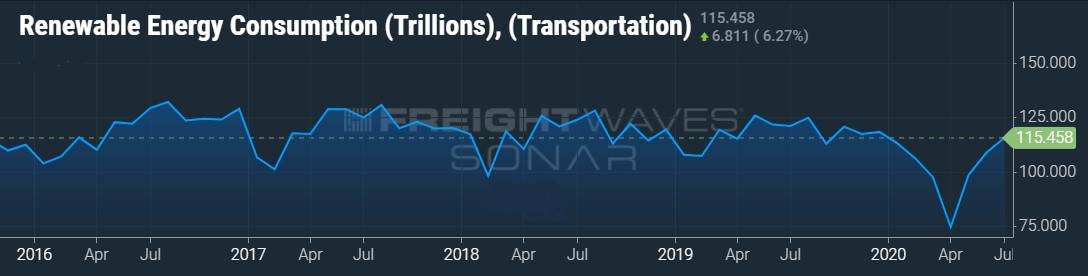
The Democrats’ plan preceded by three months California Gov. Gavin Newsom’s executive order, signed in September, that aims to end the sale of new gasoline- and diesel-powered passenger cars in California by 2035. The California Air Resources Board plan would also develop regulations requiring medium- and heavy-duty vehicles on the road to be 100% zero-emission by 2045 “where feasible,” with the mandate going into effect by 2035 for drayage trucks.
Related articles:
Brokerage Compliance Symposium
The day before F3. Every compliance issue you face - fraud exposure, carrier liability, FMCSA rules, cargo theft, insurance gaps - navigated by attorneys and operators defining best practices in a changing industry.
F3 Awards Dinner
The night before F3. FreightTech100 companies honored. FreightTech 25 and Shipper of Choice winners revealed live. Cocktail reception into dinner and live music - 300 industry leaders in one purpose-built room.
F3: Future of Freight Festival
Industry-defining keynotes, rapid-fire technology demos, and industry leaders networking in experiences across Chattanooga - plus the inaugural F3 Awards Dinner featuring the FreightTech and Shipper of Choice reveals.
The day before F3. Every compliance issue you face - fraud exposure, carrier liability, FMCSA rules, cargo theft, insurance gaps - navigated by attorneys and operators defining best practices in a changing industry.
The Signal at Chattanooga Choo Choo • Chattanooga, TN Register NowThe night before F3. FreightTech100 companies honored. FreightTech 25 and Shipper of Choice winners revealed live. Cocktail reception into dinner and live music - 300 industry leaders in one purpose-built room.
The Signal at Chattanooga Choo Choo • Chattanooga, TN Register NowIndustry-defining keynotes, rapid-fire technology demos, and industry leaders networking in experiences across Chattanooga - plus the inaugural F3 Awards Dinner featuring the FreightTech and Shipper of Choice reveals.
The Signal at Chattanooga Choo Choo • Chattanooga, TN Register Now