








The views expressed here are solely those of the author and do not necessarily represent the views of FreightWaves or its affiliates.
The World Trade Organization (WTO) is like a parent – somewhat. It oversees a family sharing common values – somewhat. It has enough respect within the family to settle any dispute between family members – somewhat. The WTO is the best hope for international trade – again, somewhat.
The WTO practices a curious form of parenting. Instead of punishing little Johnny for hurting little Jane, the WTO simply sets the guidelines to allow little Jane to retaliate. This is because little Johnny and little Jane are sovereign nations that have adopted their WTO “parent” instead of the other way around. This is the best multilateral arrangement one can hope for short of one-world government. Similar to a central bank being a “lender of last resort,” the WTO has been a “judge of last resort” for its 164 member nations since its formation in 1995. These nations represent about 95% of international trade by value.
However, since December 11, 2019 the dispute settlement function of the WTO has been in limbo because the United States has vetoed further appointments to a key group. The WTO Appellate Body, based in Geneva, is supposed to consist of seven judges. Its role is to uphold, modify or reverse the findings of lower panels made up of trade experts within the WTO if a member nation wishes to appeal. The WTO replaced a post-World War II system known as the General Agreement on Tariffs and Trade (GATT). One of its innovations was the Appellate Body. The intent was to add an enforcement mechanism on top of GATT trade rules.
In effect, the WTO reverted to simply being a rule-making body. The WTO Appellate Body needs three judges for a quorum but the recent retirement of two judges leaves it with only one. Under current WTO rules any member nation has veto power; and this was designed to bring about trade rules by consensus rather than by majority vote. Of course, the Trump Administration has been a vocal critic of WTO trade rules and its rulings while other countries have – sometimes grudgingly – respected the process. Of course, the U.S.’s imposition of trade tariffs on the grounds of national security (i.e., Section 232 of the U.S. Trade Expansion Act of 1962) clashes in many ways with the intent of the WTO, which uses international law rather than those of particular countries to settle trade disputes.
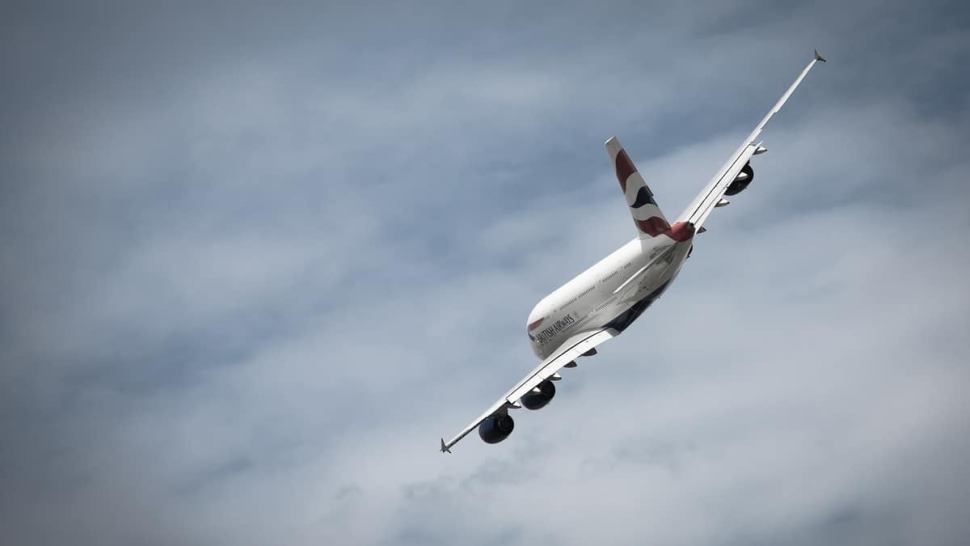
It is worth noting that the U.S. has chalked up important wins at the WTO Appellate Body over the years. The most recent was in October 2019 with an approval for the U.S. to impose countervailing tariffs on $7.5 billion of European Union (EU) imports in retaliation for the subsidies and easy government loans given to Airbus that were judged to harm Boeing. In fact, this is the largest tariff retaliation the WTO has ever sanctioned. Of course, this trade dispute has been ongoing since 2004 with the EU still countering that U.S. tax breaks and defense contracts for Boeing are simply government subsidies by another name.
The EU case is in limbo now and that may suit the Trump Administration just fine. On the other hand, this could be the calm before a further trade storm without the WTO’s power or at least moral suasion to mediate. Airbus delivered 863 aircraft in 2019, which set a company record. By contrast, Boeing delivered only 380 aircraft, an 11-year low. This is particularly tough for Boeing since it set its own company record with 806 deliveries in 2018. Airbus’ partnership with Canada’s Bombardier to produce the A220 has pushed Airbus’ production upward. Of course, the grounding of the 737 MAX as a result of two fatal crashes within five months contributed to Boeing’s recent decline. Given the commercial stakes involved no one should expect a modus vivendi between these two aviation giants any time soon.
It is a big debate. Rules-with-enforcement may be a zero-sum game of litigation (setting aside all the sunk costs that both sides must incur) compared to a rules-with-negotiation process. The latter means that the two parties must try to negotiate a solution given the particulars of their own unique case. The Airbus-Boeing dispute is a case in point. Two large trade partners are trying to protect important domestic industries and prefer to sue each other at the WTO rather than come together and negotiate an agreed-to resolution. Meanwhile the sunk costs of legal fees keep piling up. Of course, larger countries have more economic and political leverage relative to smaller ones; hence the value of an independent dispute settlement mechanism like the WTO Appellate Body.
Is the world gravitating to a global trading system with one “parent” or is it gravitating to a small set of regional trade blocs which may or may not be hostile to one another? This is the big strategic question for international trade in the decades to come. Trade deals are like clubs, meaning that membership has its privileges. Thus, it is always of interest to determine how the club treats non-members. We will see this play out if the United Kingdom implements Brexit and yet wishes to trade with other EU members. The real test will come if and when a global economic recession occurs. Countries may find it tempting to impose trade tariffs or other restrictions on one another. This zero-to-negative-sum game may be harder to control without the WTO’s ability to enforce its trade rules.
These frictions in international trade, combined with the unavoidable frictions of transportation and communication, determine the value, volume and direction of trade flows. As far as WTO parenting is concerned, is the U.S. a problem child or has it grown up and now ready to leave the nest? Other big players may follow suit. When that happens how many adults will there be in the room?
Brokerage Compliance Symposium
The day before F3. Every compliance issue you face - fraud exposure, carrier liability, FMCSA rules, cargo theft, insurance gaps - navigated by attorneys and operators defining best practices in a changing industry.
F3 Awards Dinner
The night before F3. FreightTech100 companies honored. FreightTech 25 and Shipper of Choice winners revealed live. Cocktail reception into dinner and live music - 300 industry leaders in one purpose-built room.
F3: Future of Freight Festival
Industry-defining keynotes, rapid-fire technology demos, and industry leaders networking in experiences across Chattanooga - plus the inaugural F3 Awards Dinner featuring the FreightTech and Shipper of Choice reveals.
The day before F3. Every compliance issue you face - fraud exposure, carrier liability, FMCSA rules, cargo theft, insurance gaps - navigated by attorneys and operators defining best practices in a changing industry.
The Signal at Chattanooga Choo Choo • Chattanooga, TN Register NowThe night before F3. FreightTech100 companies honored. FreightTech 25 and Shipper of Choice winners revealed live. Cocktail reception into dinner and live music - 300 industry leaders in one purpose-built room.
The Signal at Chattanooga Choo Choo • Chattanooga, TN Register NowIndustry-defining keynotes, rapid-fire technology demos, and industry leaders networking in experiences across Chattanooga - plus the inaugural F3 Awards Dinner featuring the FreightTech and Shipper of Choice reveals.
The Signal at Chattanooga Choo Choo • Chattanooga, TN Register Now